

Ramblings: Two Wild Games in Tampa and Colorado; Takes on Cozens, Sennecke and Wilson (May 4th)
Puneet Sharma
2026-05-04
It was a night that wrapped up the first round and set the stage for what should be a heavyweight matchup in Round 2, with outcomes that couldn't have been more different.
The Habs pulled off one of the more unusual Game 7 wins taking the series 4–3 against the Lightning. This had nothing to do with control or dominance, it was all about Jakub Dobes putting the team on his back and dragging Montreal through. He turned aside 28 of 29 shots and handled extended stretches of pressure, including a full second period where the Canadiens did not register a single shot. Over the series, Dobes has been solid posting a 2.03 GAA and a .923 save percentage.
Montreal managed just nine shots on goal, one of the lowest totals you will see in a playoff win, but made them count. Nick Suzuki and Alex Newhook provided the offence, with Newhook scoring the game-winner after capitalizing on a broken play in the third.
On the other side, Tampa Bay controlled the game but couldn't convert. Andrei Vasilevskiy faced just nine shots, stopping seven, and never really had the chance to influence the outcome. The top six was held off the scoresheet, with the only goal coming from Dominic James.
Montreal now moves on to face the Buffalo Sabres in what sets up as a much different test in the second round.
–
The Colorado Avalanche and Minnesota Wild game was the complete opposite of what we saw earlier in the night. Colorado took Game 1 by a 9–6 score, and it felt like any defensive structure both teams had in Round 1 was left behind. This turned into a track meet early and never really slowed down.
There were 14 different goal scorers, constant momentum swings, and neither side had any ability to settle things down.
Cale Makar led the way with 2 goals and 1 assist, including key third-period production that helped Colorado pull away.
Nathan MacKinnon added a goal, including the empty-netter, and drove the pace all night, while Nazem Kadri and Devon Toews chipped in with goals of their own.
On the Minnesota side, Quinn Hughes led the push with a goal and two assists, carrying over his strong play from the opening round.
In goal, Scott Wedgewood made 30 saves but still gave up six, while Jesper Wallstedt was hit with eight goals on 42 shots, completely overwhelmed by the volume and quality. This was one both goalies would want back.
To make sense of it, here's a quick production tracker on a few players from a game where offense was everywhere:
Cale Makar – 3pts(2G, 1A) with 3 SOG, 2 BLKS
Devon Toews – 4pts (1G, 3A) and 27.35 minutes TOI
Nathan MacKinnon – 3PTS (1G, 2A)
Nazem Kadri – 1G, 8 SOG, 1 Hit
Sam Malinski – 2pts (1G, 1A) with 2 SOG, 3 Hits
Martin Necas – 3A
Quinn Hughes – 3Pts (1G, 2A), 28.57 minutes TOI
Ryan Hartman – 1G, 7SOG and 2 Hits
Marcus Foligno – 1G, 3SOG and 3 Hits
–
Last week I took a look at few players who stood out to me from a regular season production standpoint. I have a fairly long list of players that I thought should be covered so over the next couple of weeks, this one included I will be going over players that are hovering around that 60-point range, that look as if they have a shot at pushing past it but still sitting just under that 70-point tier. That's usually the sweet spot in fantasy where managers are quietly hoping for a step forward next season, while still having a chance to grab them a bit later in drafts before anyone realises. I wouldn't necessarily consider these under the radar because they are fairly well known, either way, here we go.
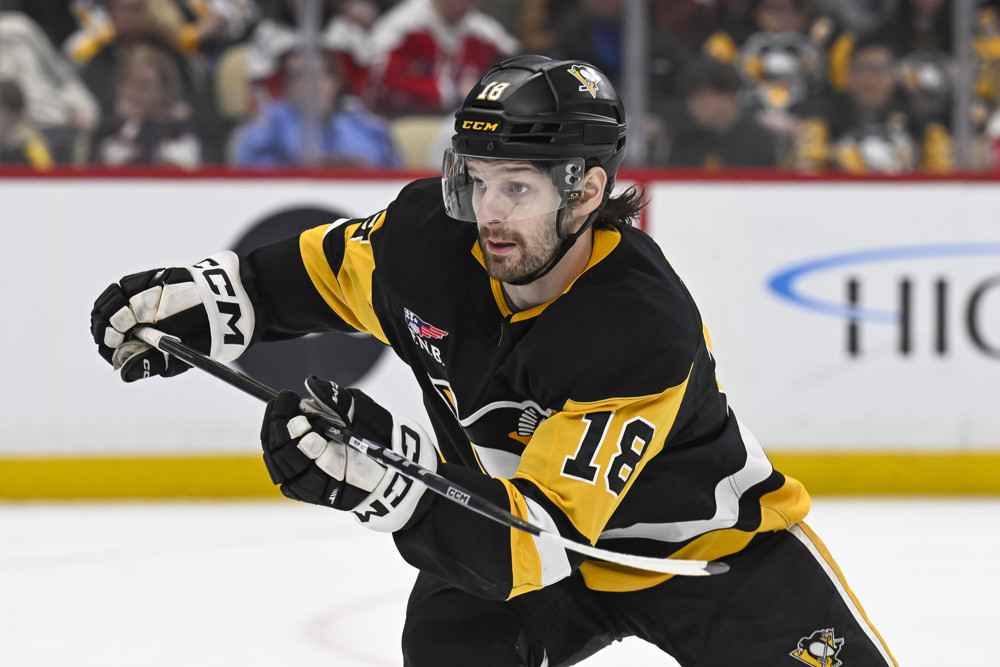
Dylan Cozens sits in that frustrating middle tier where the tools suggest there's another level, but the role and underlying profile keep anchoring him in the 55–65-point range. His 68-point breakout in 2022–23 still stands as the benchmark, and when you stack it against the rest of his body of work, it looks more like a high-end outcome than something he consistently drives. The biggest thing working for him right now is situation. In Ottawa, he's surrounded by far more offensive talent than he had in Buffalo (at the time), and that's helped stabilize his production. His most common looks with Brady Tkachuk and Ridly Greig pushed play in the right direction (hovering around a 60% CF), and the power play usage is doing a lot of the heavy lifting. Nearly 60% of his ice time coming with the man advantage, along with 29 power-play points, is what carried him to 59 points despite fairly modest 5v5 output.
At even strength, Cozens is productive, but not a true offensive driver. A 5v5 PTS/60 around 2.5 is solid, but not something that jumps out at you. The shooting profile backs that up. His volume and efficiency both sit in a fairly average range, and there's no clear signal that a major finishing jump is coming. You are not projecting a clean jump into the 30–35 goal tier without a meaningful shift in usage or shot generation. Add in that over half of his assists were also secondary points so we may see a slight regression. He fits into lines, supports play well, but is not the focal point dictating offense. He's not jumping ahead of Tim Stützle in terms of offensive priority, and that caps both opportunity and consistency. Even within the top six, there's pressure from players like Shane Pinto, so nothing is fully locked in long term.
He needs a full season in a stable top-six role with high-end finishers, not just short stretches. The power play has to stay elite, with him locked into the top unit, likely needing 30+ PPP again. There also has to be a small efficiency bump, ranging around that 13–14% shooting rate with a slight increase in volume to push him closer to that 30-goal range but you can see how narrow that margin is for him.
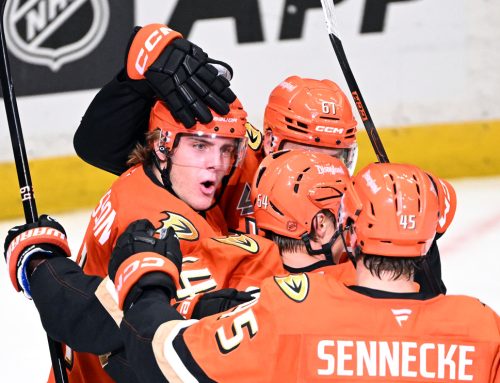
Beckette Sennecke
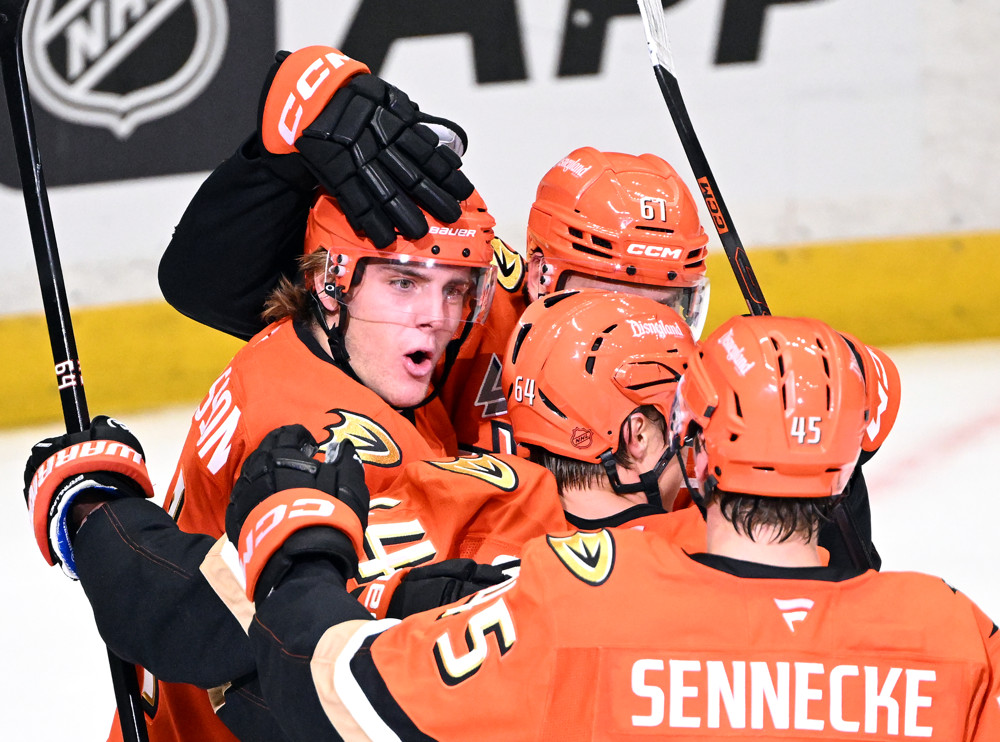
Beckett Sennecke's 60-point rookie season is a solid baseline, but the more important takeaway is how sustainable it looks. This was not driven by inflated shooting or percentages that are likely to fall off. If anything, there's a case he left production on the table, which is why a jump into the 70-point range feels realistic next season.
At 5v5, his most consistent run with Mason McTavish and Cutter Gauthier worked. That line-controlled play in the mid-to-high 50% range in both shot share and possession, which tells you this is not a player relying on isolated offense. His 2.5 P/60 at even strength is solid and not far off low-end first-line production. Pair that with a 69% IPP, and it's clear he is actively involved in the offense rather than just riding along. The biggest area for growth is more power play opportunities. Despite averaging over two minutes per game, he finished with just 13 PPP. Players who push past 70 points usually land in the 20–30 PPP range, so there's a natural bump available here. With Leo Carlsson, Cutter Gauthier and a young core that should continue to trend upwards and he does not need to change much individually for that number to climb.
The limitations are more about ceiling than flaws. His shot rate sits at 2.4 per game, which is fine, but not high enough to drive a major goal spike on its own. His S% is already in a reasonable range, so you are not projecting a big jump there either. At the moment he still profiles more as a complementary top-six winger rather than a primary driver but his path forward is pretty clear. Locking in a consistent role on the top power-play unit is the biggest lever. Even a moderate increase in efficiency there pushes him toward the high-60s. From there, a bump in ice time into the 18–19-minute range, along with natural team progression, does the rest.
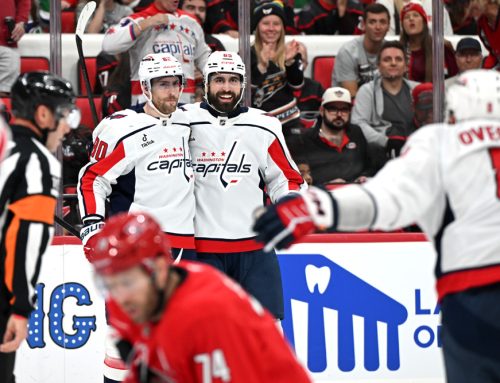
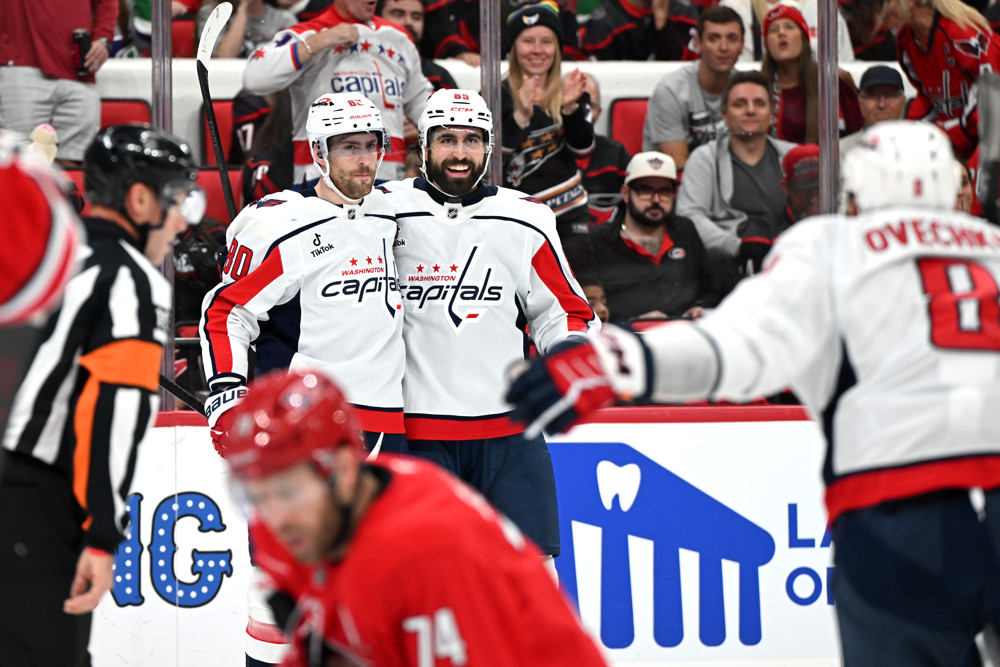
Tom Wilson has hovered close enough to 70 points that it's worth discussing, especially because at this stage, you're probably looking at a player who has already shown his ceiling. His 62 points in 72 games this past season (a 71-point pace) is about as clean a look as you will get at his upper range, and even that came with a lot going right.
At 5v5, there's not much to question. A 2.7 PTS/60 is strong, and the underlying profile supports it. He's driving play north of 53% CF with a 55% expected goal share, and the on-ice results push closer to 60%. He's contributing offensively while still playing a heavy, physical game. His chemistry with Aliaksei Protas and Connor McMichael has been steady, and he's shown he can hold a top-six scoring pace.
The limitations aren't at even strength, they show up everywhere else. Health is the first one. Wilson has played 72, 81, 74, and 33 games over the last four seasons, with last year being one of the few times he's come close to a full slate. Given how physical his game is, missed time is always part of the equation.
Then there's the shooting profile. He's been running close to 20% over the last two seasons, which is well above his career norm. With a shot rate just over two per game, that's a tough number to hold. Even a slight regression likely trims a few goals off his total, which then shifts more pressure onto his assists and overall production to compensate. On the powerplay Wilson only registered 12 PPP which isn't enough for a 70-point season. Most players in that tier are clearing 20. His role is more net-front and complementary, which limits touches compared to primary distributors. Unless that usage shifts or the unit takes a step forward, it's hard to find the extra 8–10 points he needs. He is already pushing close to 19:30 mintues per night, which is a lot given how he plays. There isn't much room to scale that up, and durability always lingers in the background with his style of play.
Thanks for reading! See you next week! For more fantasy hockey content and analysis, follow me on X @Punters_hockey. If you have any questions about your team or a trade? My DMs are always open, happy to help!
Related Posts
Starting Goalies











Top Skater Views
| Players | Team | |
|---|---|---|
| COLE PERFETTI |
 WPG WPG | |
| LUCA CAGNONI |
 S.J S.J | |
| IGOR CHERNYSHOV |
S.J | |
| TOMMY NOVAK |
 PIT PIT | |
| TRISTAN LUNEAU |
 ANA ANA
| |
Top Goalie Profile Views
| Players | Team | |
|---|---|---|
| DAN VLADAR |
 PHI PHI | |
| JOSEPH WOLL |
PHI | |
| SEBASTIAN COSSA |
 UTA UTA | |
| JAKUB DOBES |
 MTL MTL | |
| KAREL VEJMELKA |
UTA
| |
LINE COMBOS
| Frequency |
PHI Players
| |
|---|---|---|
| 23.2 | TREVOR ZEGRAS OWEN TIPPETT CARL GRUNDSTROM | |
| 20.2 | SEAN COUTURIER ALEX BUMP NOEL ACCIARI | |
| 13.6 | MATVEI MICHKOV TRAVIS KONECNY CHRISTIAN DVORAK | |
DobberHockey Podcasts

Keeping Karlsson: Cole, There’s No Time!
Elan and Brian cover all the action from the first week of the NHL season, and identify our earliest must-adds, can-drops, sell highs and buy lows in your fantasy hockey leagues.
Keeping Karlsson: Matchup Maximizer 2026/27 Week 2
Elan takes a look at the schedule for the upcoming weeks of NHL action and recommends players with good schedules that you should consider streaming in to win your head to head matchups.

Fantasy Hockey Life: Tidy Takes Part 1
TiDy Admiral Ryan Downey and Victor Nuno break down recent trades in the FHL Tiered Dynasty’s top division, the Lord Stanley division. Tune in to consider trades between some of the best dynasty sharks we know, including patron polls on the trades and Victor’s analysis. Have a listen! Our show is part of the Dobber […]
Keeping Karlsson: Short Shifts – I Tried to be Like Parker Kelly
Elan is joined by Ryan Downey for the premiere of season 8 of Short Shifts! — KKUPFL late registration is ongoing! We’re still filling new divisions in the world’s greatest fantasy hockey league. Details at https://www.kkupfl.com/. Join the Keeping Karlsson patron community! Patrons get access to all our perks all year round, including KKUPFL […]
Keeping Karlsson: Shabanov Ranks
Elan and Brian fly through the final preseason lines for every NHL team ahead of opening night, and share their guys to watch– or look away from– in your fantasy hockey leagues.