

Ramblings: Vilardi Signed, Joshua Trade, Shooting Percentage Regression Candidates (Jul 19)
Ian Gooding
2025-07-19
The Winnipeg Jets have locked up one of their top 6 forwards long-term, signing Gabriel Vilardi to a six-year extension with a $7.5 million AAV. Vilardi was two seasons away from becoming a UFA.
Vilardi had a career season in 2024-25, finishing with 27 goals and 61 points in 71 games. His numbers were helped by the fact that he was on the Jets' top line with Mark Scheifele and Kyle Connor as well as the top power play, where his 12 power-play points led the Jets. A certified Band-Aid Boy, Vilardi also played 70 games for the first time in six NHL seasons. Vilardi's shooting percentage was also higher than 20% for the first time in his career, although he is a high-accuracy shooter anyway with a near-19% success rate in his previous two seasons.
I have Vilardi ranked #90 on the Top 100 Roto Rankings, which were recently updated for July.
–
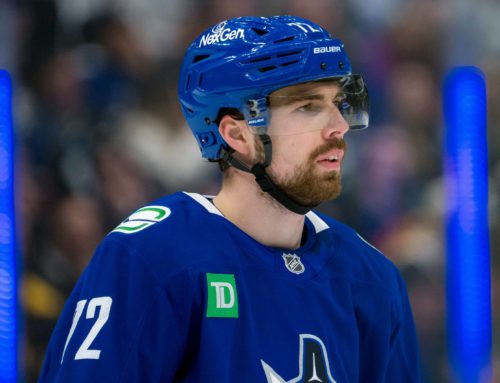
In case you missed it on Thursday, the Leafs acquired Dakota Joshua from the Canucks for a fourth-round pick. Joshua has held some bangers league value in the past; in particular, the 2023-24 season where he scored 18 goals and 32 points and was credited for 244 hits. Joshua's numbers regressed to just seven goals and 14 points in 57 games last season, but it should be noted that Joshua missed the first month of the season due to testicular cancer and also dealt with a leg injury.
2025-26 should be a better season for Joshua, although getting to 20 goals again might prove to be difficult. Not only is Joshua likely to play in the Leafs' bottom 6, but he has never taken 100 shots in a season. His 18-goal performance was fueled by a 21.4 SH%, although he is known as a selective shooter. To make room for Joshua, the Leafs could be trading another forward. Nicholas Robertson has been rumored to be on the trade block for a while, and he is currently scheduled to go to arbitration.
Meanwhile, the Canucks made this trade to clear cap space, as Joshua has a $3.25 million cap hit. The Canucks' biggest need is currently at the center position, and they are believed to be shopping around for one. To give you an idea, the oft-injured Filip Chytil is currently their best option at 2C.
–
The Ducks have signed defenseman Drew Helleson to a two-year contract with a cap hit of $1.1 million. The 24-year-old Helleson played 56 games in his first full season with the Ducks in 2024-25, registering 13 points. He appears to be a regular option on the third pair, although he does not offer the scoring upside of the young trio of Jackson LaCombe, Pavel Mintyukov, and Olen Zellweger.
–
Today I'm using Frozen Tools to look up players who might experience shooting percentage regression in 2025-26. The criteria are players that have played at least 40 games last season with a much higher shooting percentage than previous seasons. All of these players will have high shooting percentage, but these aren't all the shooting percentage leaders from last season. For example, Brayden Point was second among these players with a 22.8 SH% while scoring 42 goals, but I don't think he'll regress a ton next season because he has shot at least 20% in each of the last three seasons.
Here are the players I've picked out. I haven't started a "bust" list yet for the coming season, but these players are worth considering for it.
Protas might be the most unexpected 60+ point player from 2024-25, and a look under the hood at the advanced stats shows why. It starts with a shooting percentage of 21.4%, which is far and above the range of 5-9% that he had reached in his previous three seasons. In addition, his 14.1% 5-on-5 SH% was the second-highest in the league among all players who played at least 40 games. Throw a 3.2 PTS/60 and a 1041 PDO, which are also well above career norms, and you have the recipe for a potential bust this coming season.
Another thing: Protas is a giant on skates at 6-6 and 247 lbs. The impulse might be to draft him in bangers leagues; however, he has never reached 50 hits or 20 PIM in a season in his four NHL seasons. Add to that the fact that Protas has averaged fewer than two shots per game in each of those four seasons, as well as logging microscopic amounts of power-play time (2.9% of the Caps' available minutes), and you have a player with far too many red flags.
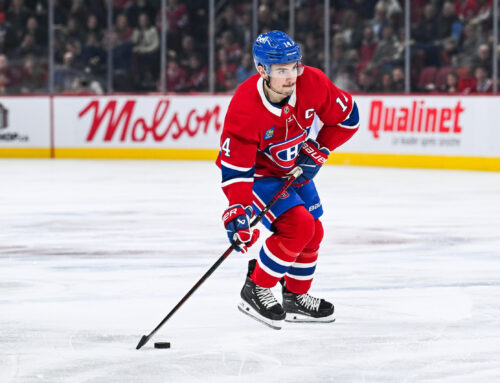
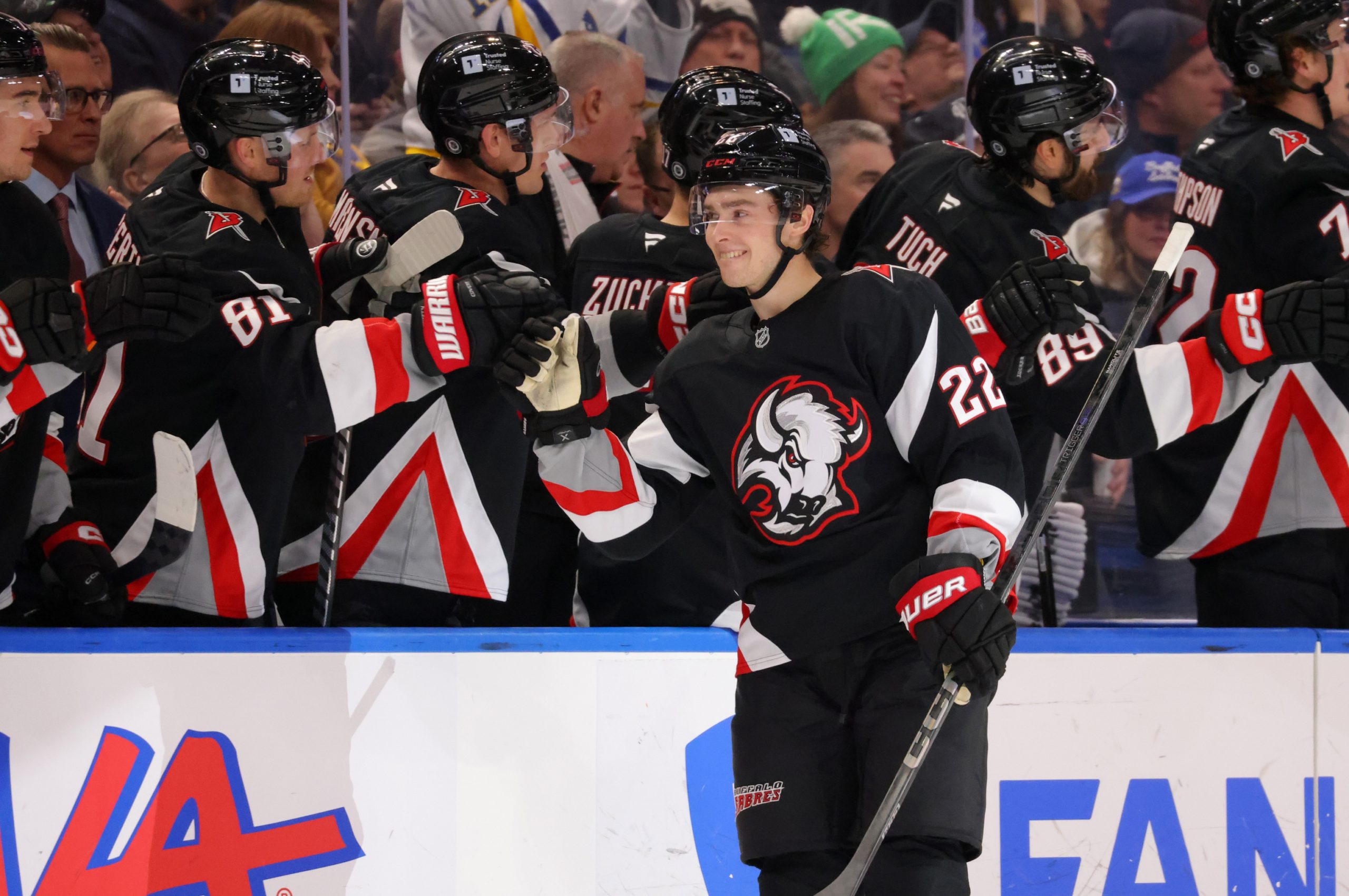
When the Sabres acquired McLeod for prospect Matt Savoie last summer, they were probably expecting a center who could reach 30 points and take on some tough matchups while winning faceoffs. McLeod surpassed those expectations, reaching career highs in goals (20) and assists (33). Even though he saw very little power-play time with more shorthanded points (6) than power-play points (2), McLeod's point total was aided by the fact that he averaged more than two and a half minutes more icetime per game than he saw in Edmonton.
Reaching those offensive totals again will be a tall order. McLeod reached 20 goals by benefitting from a 20.6 SH% on only 97 shots for the entire season. On top of that, he registered a 11.9% 5-on-5 SH%, 2.4 PTS/60, and a 45.5 Sec. Asst%. With both a high shooting percentage and a high secondary assist percentage, McLeod could see both his goal total and assist total drop this coming season. Even though McLeod is only 25 years of age, I'd be surprised if he is actually a player on the rise. His value has improved in Buffalo, but not to what we saw in 2024-25.
Barbashev was a frequent linemate of Jack Eichel in 2024-25, but that doesn't mean he was consistent. Barbashev started the season with 10 goals and 25 points in his first 23 games, making him look like a serious breakout candidate scoring at over a point per game. Then after that, Barbashev was held to 26 points in his last 47 games, which is a 45-point pace over 82 games. He was the classic in-season sell high.
Some advanced stats point to potential further regression from what turned out to be a 51-point season over 70 games (a near 60-point pace over 82 games). Barbashev's shooting percentage worked out to be 20.7%, which is not that far off considering he has had double-digit shooting percentages throughout his career. Barbashev simply doesn't shoot enough, as he took 111 shots in 2024-25 and has a career high of 125 shots. Barbashev's 2.6 PTS/60 was also above his career average.
Overall, Barbashev has higher value in multicategory leagues than in pure points leagues because of his hit totals (consistently double digits). However, be careful not to overestimate Barbashev, even if he is back on the Eichel line.
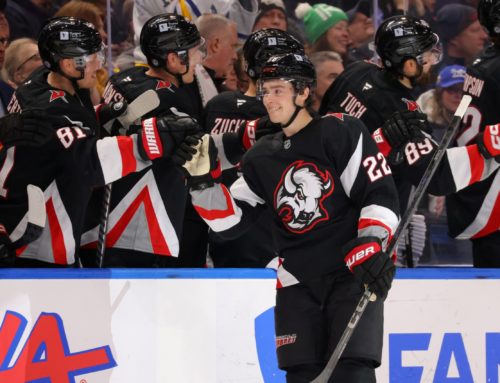
Geekie made a huge leap forward in 2024-25, scoring a career-high 33 goals. After being buried down the lineup in both Carolina and Seattle, he has found a firm top-6 role with the Bruins. However, he managed to score those 33 goals on just 151 shots, shooting at a high 21.9% accuracy. Typically, Geekie has had a shooting percentage ranging between 10-13% in a season.
Since Boston didn't make any major upgrades at forward during the offseason, Geekie should have the inside track on lining up with David Pastrnak and on the top power play again. However, I'd caution about a possible goal regression, especially since Pasta is the true sniper on the line. Geekie did increase his shot total slightly from previous seasons to 2.0 SOG/GP. Although he could be productive in non-shallow fantasy leagues, I would look elsewhere for players who are on the cusp of a major breakout.
–
Get the Dobber Hockey Fantasy Guide. You’ll have a sky full of stars on your fantasy team.
Follow me on X @Ian_Gooding and Threads @goodsfantasyhockey and Bluesky @goodsfantasyhockey.bsky.social
Related Posts
Starting Goalies













Top Skater Views
 N.J
 T.B
 BUF
 EDM


Top Goalie Profile Views
| Players | Team | |
|---|---|---|
| STUART SKINNER |
 WPG | |
| LINUS ULLMARK |
 OTT | |
| DYLAN GARAND |
 NYR | |
| DAN VLADAR |
 PHI | |
| JOEL HOFER |
 STL | |
LINE COMBOS
| Frequency |
 PIT Players | |
|---|---|---|
| 21.8 | RICKARD RAKELL TOMMY NOVAK SIDNEY CROSBY | |
| 20.5 | RUTGER MCGROARTY BLAKE LIZOTTE ANDREI KUZMENKO | |
| 18.7 | ELMER SODERBLOM NICK ROBERTSON CONNOR DEWAR | |
DobberHockey Podcasts

Keeping Karlsson: Matchup Maximizer 2026/27 Week 5
Jeremy takes a look at the schedule for the upcoming weeks of NHL action and recommends players with good schedules that you should consider streaming in to win your head to head matchups.
Keeping Karlsson: Short Shifts – Injuries, Outjuries, and Duds
Elan talks about all the latest injuries, outjuries, big performances and duds over a tight 20 minutes in this week’s episode of Short Shifts.
Keeping Karlsson: Never Tell Me the Podz
Elan and Brian do a wellness check on the Maple Leafs, lament Chicago and Buffalo snoozers, wonder whether and which Flyers have figured it out, and pick out the Capital standing out from the crowd.

Fantasy Hockey Life: Ep 505 Prospects With Plenty to Prove Part 1
Victor and Jesse return to talk about prospects with plenty to prove. This week it’s: Tij Iginla, Berkly Catton, Konsta Helenius, Zayne Parekh, Igor Chernyshov, Jett Luchanko, Axel Sandin-Pellikka, Artyom Levshunov, Michael Hage, and Carter Bear. Have a listen! Our show is part of the Dobber Podcast Network and sponsored by Fantrax.com. Email [email protected] and […]
Keeping Karlsson: Matchup Maximizer 2026/27 Week 4
Elan takes a look at the schedule for the upcoming weeks of NHL action and recommends players with good schedules that you should consider streaming in to win your head to head matchups.