

The Journey: Top Prospects from the QMHJL Playoffs
Victor Nuno
2026-05-23
The QMJHL playoffs once again served as a showcase for some of the top young talent in hockey, with several high-end prospects elevating their games in meaningful postseason situations. While regular season production often drives fantasy conversations, playoff hockey can reveal a different layer of projection, how players adapt to tighter defensive structures, increased physicality, and the pressure that comes with high-leverage moments. This year's postseason featured dominant performances from established stars, breakout moments from lesser-known names, and continued growth from several NHL-affiliated prospects already building momentum toward professional careers.
Gabe Smith, C, Moncton Wildcats (Utah Mammoth)
Smith led the playoffs with 33 points in 21 games while helping drive Moncton's deep run. The Mammoth prospect plays a mature two-way game built around intelligence, pace, and offensive anticipation. His ability to consistently arrive in dangerous areas without sacrificing defensive detail made him one of the more complete forwards in the tournament. What stood out most was Smith's ability to elevate his offense under pressure. His 19 goals led the playoffs, and many came in key moments where his timing and composure around the net became major factors.
In addition to total points and goals, Smith finished as the top point-per-game producer among all playoff skaters who appeared in at least six games. Although the Wildcats ultimately fell short in the QMJHL championship series, Smith did everything possible to keep them in contention and was still named playoff MVP, a rare accomplishment for a player on the losing side. After spending several seasons projecting below 40 pNHLe, he pushed that number to nearly 60 following this breakout campaign. While he may not possess the elite dynamic skill of some of the flashier names in his class, his blend of reliability, competitiveness, and offensive touch increasingly points toward a legitimate NHL middle-six center with strong two-way value.
Teddy Mutryn, C, Moncton Wildcats (San Jose Sharks)
Mutryn put together one of the best overall playoff performances in the QMJHL, finishing with 30 points in 21 games while driving play as Moncton's primary facilitator. The Sharks prospect recorded 20 assists, showcasing the vision and playmaking ability that make him such an intriguing long-term project. His offensive style leans heavily on puck distribution and processing speed rather than individual flash. Mutryn consistently manipulated defensive coverage to open passing lanes and create secondary opportunities, allowing linemates to capitalize. While there may still be questions about his ultimate offensive ceiling because he is not an explosive skater or high-volume shooter, players with his intelligence and pace of decision-making often outperform expectations over time.
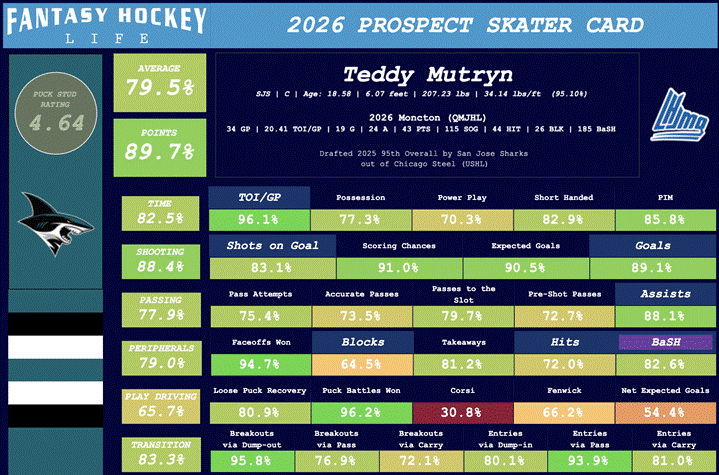
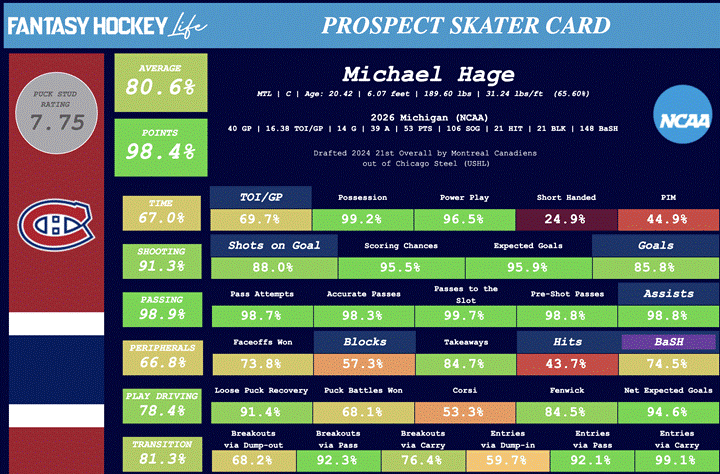
This playoff run should absolutely be viewed as a stock-up moment for Mutryn. His Fantasy Hockey Life skater card shows a truly well-rounded player profile, and this postseason demonstrated a meaningful step forward offensively. Beyond the scoring increase, his blocks, shots, and hits are all solid for a player with his style, giving him sneaky multi-category upside in fantasy formats that reward peripherals. He may never be a flashy superstar, but there is a growing case that Mutryn could develop into the type of reliable possession-driving, bottom-six center who becomes valuable in deeper dynasty leagues.
Tommy Bleyl, D, Moncton Wildcats (Draft-Eligible)
Bleyl's postseason showcased just how impactful a modern puck-moving defenseman can be in playoff environments. The draft-eligible blueliner finished with 28 points in 21 games, the highest points-per-game rate among defensemen in the QMJHL playoffs and third overall among all players who appeared in at least seven games. His production was driven by excellent offensive instincts, clean puck movement, and an ability to activate at the right moments without sacrificing structure. Perhaps the most encouraging aspect of Bleyl's game was how composed he remained under pressure. Defensemen who can maintain poise while still contributing offensively tend to transition well to higher levels, and his playoff run only strengthened the belief that he has legitimate NHL upside as a transitional defender capable of quarterbacking a power play.
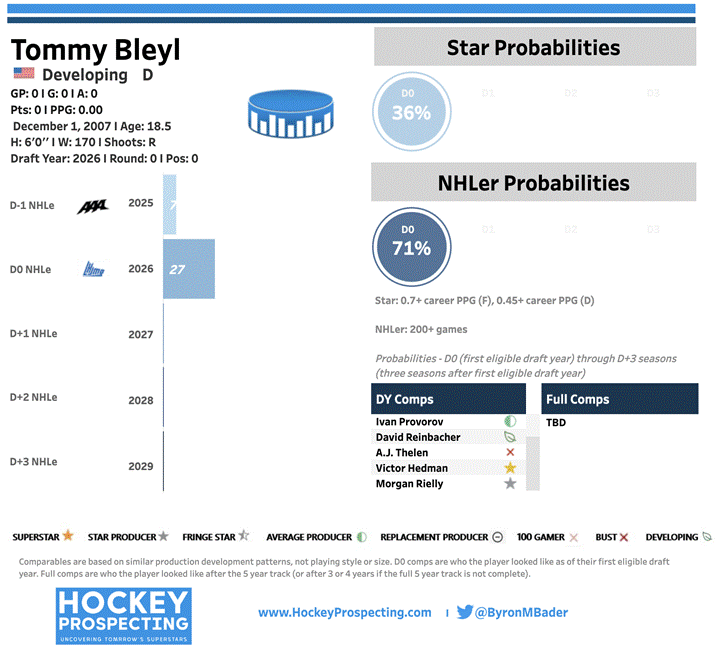
Bleyl's analytical profile is also extremely intriguing. The Hockey Prospecting model gives him a 36% chance of becoming a star and a 71% chance of reaching the NHL, excellent marks for a defenseman in his draft class. His top comparables include players like Morgan Rielly and Victor Hedman, obviously elite outcomes if he approaches anything close to those trajectories. While there are still some defensive details to refine, the offensive upside here is significant, and his playoff performance reinforced just how high the ceiling could be. At this point, it would be surprising if Bleyl is not selected on Day 1 of the NHL Draft, and from a fantasy perspective, he is absolutely someone dynasty managers should be targeting aggressively.
Caleb Desnoyers, C, Moncton Wildcats (Utah Mammoth)
Desnoyers continues to look like one of the safer long-term center projections from this group. The Mammoth prospect recorded 25 points in 21 playoff games while once again showcasing the complete two-way profile that has made him so highly regarded. His game is not built around high-end flash, but rather positioning, awareness, puck support, and consistency. Desnoyers processes the game extremely well and rarely looks overwhelmed regardless of the pace or pressure, traits that become especially valuable in playoff environments where mistakes are magnified.
Interestingly, his scoring rate dipped slightly this season compared to prior expectations, which may actually create a buying opportunity in dynasty formats. There remains significant upside here because Desnoyers does so many little things that help drive play and contribute to winning hockey. Coaches are going to trust him in every situation, and players with that type of deployment often end up producing more offense than initially projected. There should also be a fairly solid peripheral floor thanks to his physical engagement and willingness to finish checks, adding additional value in multi-category leagues. He may never be the flashiest player in a prospect pool, but Desnoyers projects as the kind of reliable top-six center who can quietly become extremely valuable in fantasy formats over time.
Maxim Massé, RW/LW, Chicoutimi Saguenéens (Anaheim Ducks)
Massé continued to reinforce why the Anaheim Ducks invested heavily in his offensive upside. He finished the QMJHL playoffs with 24 points in 20 games, combining strong playmaking instincts with a dangerous release that allowed him to remain a constant offensive threat. His versatility across both wings also gave Chicoutimi flexibility in how they deployed him offensively. Massé's game translates particularly well to playoff hockey because of how effectively he protects pucks and extends offensive possessions along the wall. He does not rely purely on rush offense, instead creating through patience, puck control, and physical strength in tight areas. Long term, he still projects as a potential middle-six winger with potential power-play utility and enough skill to contribute offensively at higher levels.
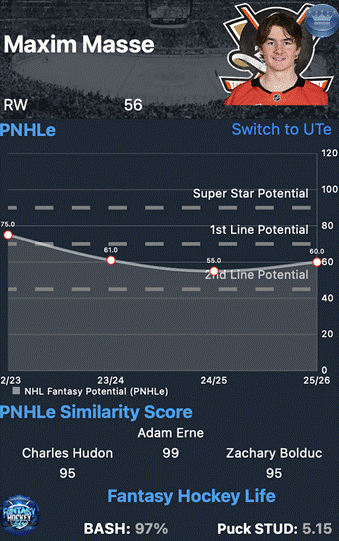
That said, this may also represent a strong opportunity to sell from a fantasy perspective. This was Massé's fourth and final QMJHL season before heading to the University of Massachusetts Amherst, and despite the strong playoff showing, his pNHLe projection has hovered around the 60-point range for several seasons without taking a major step forward. While that is certainly respectable, it becomes more difficult to project him as a true impact fantasy asset unless he significantly outperforms those expectations. He likely still reaches the NHL because of his well-rounded offensive game and puck protection ability, but in most fantasy formats, he may ultimately settle into more of a complementary scoring role rather than becoming a high-end producer. Unless you are in very deep dynasty leagues, this postseason may be a good time to capitalize on the increased excitement surrounding his profile.
Mavrick Lachance, C, Chicoutimi Saguenéens (Double Overager, Draft-Eligible)
Lachance is an interesting late-round gamble heading into the draft. The double overager put together an impressive offensive season, finishing as the only other player on Chicoutimi above a point-per-game pace while contributing to one of the QMJHL's strongest rosters. His production has steadily climbed over the last few seasons, and he has consistently shown an ability to generate offense despite not receiving much NHL draft attention previously.
The biggest obstacle working against Lachance is likely his projection profile. At 5-11, he does not bring the size teams often look for in older CHL forwards, and there is some question about how much more upside remains in his game as a double overager. Still, players who continue producing at that rate on contending teams tend to earn a second look, especially when they show consistency and offensive instincts. Someone may very well decide to take a late chance on him this time around.
Justin Carbonneau, RW, Blainville-Boisbriand Armada (St. Louis Blues)
Carbonneau's offensive toolkit remained on full display throughout the QMJHL playoffs, finishing with 20 points in 17 games while serving as one of the primary offensive drivers for the Blainville-Boisbriand Armada. The Blues prospect combines a heavy shot with strong puck skills and enough physical engagement to make life difficult on defenders. What continues to stand out is his ability to generate offense in multiple ways. He can score off the rush, create from the cycle, or capitalize on power-play opportunities with his release. There are still moments where his decision-making can become overly aggressive, but the offensive upside here is very real, particularly for fantasy formats that reward goal scoring and shots.

Carbonneau did just about everything he could for the Armada during this postseason run and consistently looked like the player opposing teams were most focused on slowing down. Following the QMJHL season, he joined the Springfield Thunderbirds for a brief taste of professional hockey, though he was held pointless in two games. That is not particularly concerning given the adjustment from junior to the AHL at the end of a long season. More importantly, his Fantasy Hockey Life skater card demonstrates improvements across nearly every major category from a year ago, most notably in his Corsi impacts, Fenwick metrics, loose puck recoveries, and transition offense generation. Those underlying trends reinforce the eye test that his overall game is becoming translatable and more complete. If his consistency continues improving, Carbonneau still projects as a very intriguing NHL scoring winger with meaningful fantasy upside.
Thomas Verdon, LW, Rouyn-Noranda Huskies (Double Overager, Draft-Eligible)
Rouyn-Noranda Huskies forward Thomas Verdon emerged as one of the more surprising offensive standouts of the postseason, producing 22 points in 17 games while serving as a major catalyst for Rouyn-Noranda's attack. The double overager plays a direct, pressure-driven style, consistently attacking defenders with pace and creating turnovers through an aggressive forecheck. His offensive confidence appeared to grow throughout the playoffs, and he repeatedly found ways to stay involved in dangerous areas of the ice.
What makes Verdon particularly interesting is the balance between skill and physical engagement. He plays with enough edge to remain effective even when the offense dries up, and that type of playoff translation tends to attract attention from professional organizations. While he may not receive the same level of recognition as some of the drafted prospects around him, this postseason run likely elevated his profile considerably. After putting up 22 points in 17 playoff games, there is a legitimate chance that someone takes a chance on signing him. If not, his move to Bowling Green Falcons men’s ice hockey next season could become an important stepping stone in continuing to build his pro résumé.
This year's QMJHL playoffs reinforced how valuable postseason environments can be for evaluating projection beyond raw talent alone. Players such as Smith, Mutryn, and Massé elevated their profiles considerably through strong playoff performances, while others continued solidifying themselves as reliable long-term NHL projects. For dynasty managers, this is often where meaningful value gaps emerge, identifying players whose playoff habits and translatable traits may foreshadow larger future roles before broader perception fully catches up.
Thanks for reading! See you next week. For more fantasy hockey analysis, or if there's a prospect, topic, or theme you'd like me to cover, follow and message me on X: https://x.com/VictorNuno12
Related Posts

Starting Goalies













Top Skater Views
 COL
COL ANA
ANA CHI
CHI

Top Goalie Profile Views
| Players | Team | |
|---|---|---|
| DEVON LEVI |
 EDM EDM | |
| JOSEPH WOLL |
 PHI PHI | |
| FREDERIK ANDERSEN |
EDM | |
| AKIRA SCHMID |
 FLA FLA | |
| KAREL VEJMELKA |
 UTA UTA
| |
LINE COMBOS
| Frequency |
 S.J Players S.J Players
| |
|---|---|---|
| 22.5 | WILL SMITH MASON MARCHMENT MACKLIN CELEBRINI | |
| 21.7 | ALEXANDER WENNBERG IVAR STENBERG COLLIN GRAF | |
| 15.5 | TYLER TOFFOLI MICHAEL MISA IGOR CHERNYSHOV | |
DobberHockey Podcasts

Keeping Karlsson: Short Shifts – I Tried to be Like Parker Kelly
Elan is joined by Ryan Downey for the premiere of season 8 of Short Shifts! — KKUPFL late registration is ongoing! We’re still filling new divisions in the world’s greatest fantasy hockey league. Details at https://www.kkupfl.com/. Join the Keeping Karlsson patron community! Patrons get access to all our perks all year round, including KKUPFL […]
Keeping Karlsson: Shabanov Ranks
Elan and Brian fly through the final preseason lines for every NHL team ahead of opening night, and share their guys to watch– or look away from– in your fantasy hockey leagues.

Fantasy Hockey Life: Western Conference Catchup and Mustard
Jesse and Victor are here to Catch Up on everything in the Western Conference that transpired ofter our team previews. We also have our annual spicy mustard competition – two hot takes per team. Our show is part of the Dobber Podcast Network and sponsored by Fantrax.com. Email [email protected] and ask to join our free […]
Keeping Karlsson: Matchup Maximizer 2026/27 Week 1
Elan takes a look at the schedule for the upcoming weeks of NHL action and recommends players with good schedules that you should consider streaming in to win your head to head matchups.
Fantasy Hockey Life: Dallas Stars with Taylor Newby
Taylor Newby joins the program to discuss the Dallas Stars.