

Ramblings – Tracking Power Play Usage for Faber, Kyrou, Tuch, and Zegras (June 8)
Puneet Sharma
2026-06-08
Utah Mammoth prospect Vadim Moroz signed a two-year ELC with the Mammoth through the 2027-28 season. Moroz’s offensive production dipped in the KHL last year as Dynamo Minsk added veteran talent but he still produced at a respectable rate. Moroz's move to North America should help his game develop, giving him an opportunity to adjust to the AHL alongside a strong wave of Utah prospects. For a deeper look at Moroz and every NHL organization’s prospect pipeline, be sure to check out the latest Dobber Prospects Report.
–
In other hockey news, former power forward Milan Lucic officially announced his retirement after a 17-year NHL career. Lucic finishes with 233 goals, 354 assists, and a Stanley Cup championship as a member of the 2011 Boston Bruins. While his fantasy relevance faded years ago, there’s no denying the impact he had during his prime as one of the league’s most physical and intimidating players.
–
Interesting note from Elliotte Friedman on X regarding Toronto's ongoing coaching search, with Joe Pavelski now emerging in the mix. It's a fascinating angle, and at this stage of the process it feels like the Leafs are clearly in the "leave no stone unturned" phase. Given some of their previous front office and organizational choices around names like John Chayka and Mats Sundin, nothing really seems off the table. The Martin St. Louis comparison being floated for Pavelski is an intriguing one, even if it's more of a stylistic reference than a direct parallel. At this point, it's one to watch rather than anything concrete.
–
As we know, a lot can change over the course of an NHL season. What looks like a secure fantasy situation in October can suddenly become far less certain by April as younger players emerge, coaching staffs adjust deployment, and teams begin reshaping their offensive identities. I took a look at a handful of players and their powerplay production this past season. While the overall fantasy value remains intact in most cases, the outlook on the man advantage may not be quite as straightforward as it appears.
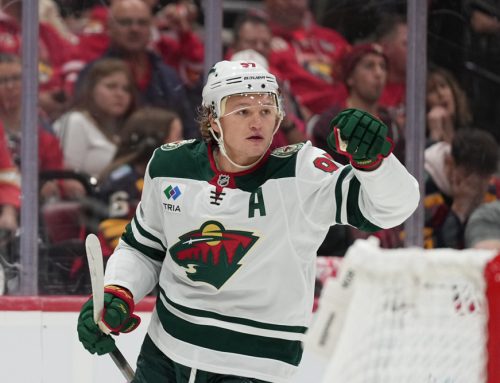
Faber finished with 11 power-play points in 80 games this season after recording 16 as a rookie. While his overall fantasy value remains extremely strong thanks to his massive workload, all-situations deployment, and heavy even-strength usage, the power-play production itself actually dipped despite seeing time on the top unit. He posted an 84.6% PPIPP, a number that is exceptionally high for a defenseman and often difficult to maintain over multiple seasons. Typically, defensemen who sustain those levels are functioning as the primary offensive engine of the power play. Faber’s individual creation metrics suggest a different story. His 1.5 shots per 60 minutes and 5.2 individual shot attempts per 60 on the power play are fairly modest and numbers that fall well short of what is usually seen from elite fantasy quarterbacks.
We already know that Quinn Hughes is a true offensive engine on the man advantage and is the number one quarterback for any team. Hughes drives offense through his own creativity, constantly creating movement and forcing defensive adjustments. Faber is more of a facilitator within the structure, moving pucks efficiently and keeping plays alive rather than serving as the focal point of the attack. Both approaches are be effective, but one naturally produces more fantasy-friendly power-play numbers. The sustainability conversation really comes down to role versus offensive ceiling. Faber's overall fantasy value still looks extremely safe because the foundational usage remains elite. He logs massive minutes and contributes reliable peripherals and none of that appears likely to disappear. The concern is specifically tied to the power play ceiling itself.
When you also add in healthier linemates such as Mats Zuccarello, JEEK and a small obstacle in Quinn Hughes it becomes difficult to see a jump in power play production from where Faber currently sits. A realistic and sustainable range is closer to what he produced this past season (10 -15 PPP). Pushing beyond 20 PPP likely requires either permanent uncontested PP1 control or a major offensive evolution in his game which is unlikely to happen with Hughes in the picture. Any opportunity within Minnesota's structure and also playing alongside Quinn Hughes will also boost your production but expecting another major jump on the man advantage may be overly optimistic.
Jordan Kyrou is one of the more difficult power-play evaluations right now because the talent remains largely unchanged, but the security of his role has become increasingly unstable. For years, the expectation was that Kyrou and Robert Thomas would serve as the offensive foundation of the Blues. Thomas has firmly established himself as the franchise centerpiece while Kyrou’s place in the hierarchy has become far less secure. His production still carries value, but his deployment is no longer guaranteed. On the surface, 14 power-play points in 72 games is respectable but his power-play ice time fell to 1:44 per game after sitting below the two-minute mark in previous seasons, and there were stretches where he was pushed off the top unit altogether. Kyrou's The underlying numbers are strong. He continues to generate shots at a high rate, creates scoring chances consistently, and remains one of the Blues’ most dangerous transition players. His 74.2% PIPP shows he was still heavily involved in the offense when he was on the ice while stills seeing a decline in his deployment.
The bigger issue is that the role is no longer untouchable. The connection between Kyrou’s ice time and his production was impossible to ignore this season. When he was deployed in offensive situations and given relatively meaningful minutes, the points followed. When his role was reduced, so was the scoring. The Blues no longer rely on the Thomas-to-Kyrou connection as heavily as they once did, while players such as Dylan Holloway, Jimmy Snuggerud, Jake Neighbours, and even Dalibor Dvorsky continue to push for meaningful power-play minutes. Under Jim Montgomery, St. Louis has leaned toward a balanced 1A/1B power-play structure rather than loading up one dominant unit, which may benefit the team but limits the fantasy upside of individual players. Kyrou’s situation is further complicated by concerns that have followed him throughout his career. Multiple previous coaching staffs have questioned his consistency, defensive play, and overall reliability away from the puck. Whether fair or not that can affect his deployment and that uncertainty is what matters most. Elite power-play producers typically have stable roles where their deployment is predictable and their usage is protected. Kyrou no longer fits that description. The encouraging news is that the goal-scoring upside remains intact. His shooting percentage finished well below his established norms, and the underlying expected-goal data still supports a return to the 30-goal range if his deployment stabilizes. The skill set has not disappeared but the environment around him has changed.
Alex Tuch's overall production still looks stable on the surface, but the long-term security of his premium offensive deployment is becoming much shakier as younger players continue pushing into larger roles within the organization. Tuch still had another strong season with 33 goals and 66 points in 79 games with strong category coverage through shots, hits, blocks, and shorthanded production. From a multi-category fantasy perspective, he remains an extremely valuable player. So, what is the concern? Well, the bigger question now is whether his power play ceiling has already peaked as Buffalo's offensive structure continues evolving around a younger core.
Tuch's PPTOI dropped to just 1:40 per game this season after previously sitting above 2:30 during his peak years in Buffalo, including over three minutes per game during the 2022-23 season when he exploded for 20 power play points. He posted nine PPP this year and the deployment underneath that production became far less stable and more rotational. Players like Zach Benson, Jack Quinn, Jiri Kulich, and Josh Doan have all started earning larger roles through their play which in turn has created far more internal competition for offensive opportunities than Buffalo had a few years ago. Not long ago, the pecking order behind Tage Thompson and Alex Tuch felt relatively secure, but that is no longer the case. What makes Tuch difficult to evaluate is that the individual profile itself still looks highly sustainable. He scored 33 goals while shooting 16.9%, averaged 2.5 shots per game, produced 2.6 P/60, and maintained a strong 51.5 xG% at 5v5. His overall game remains extremely effective because he contributes in transition, creates forechecking pressure, wins battles around the net, and continues to complement Thompson very well at even strength. In many ways, he is still one of Buffalo's most complete forwards.
It is the organizational timeline component that is slowly creeping into the conversation. Let's also not forget that Tuch is set to be a free-agent this summer so that also complicates things. However, the encouraging part for fantasy managers is that Tuch's floor remains very safe because his value is not entirely dependent on power play scoring. His contributions as a multi-cat player is what creates his stability even if the PPP totals fluctuate. Where the risk enters is expecting a return to the elite power play production levels from earlier in his career because his current deployment trends do not support that projection right now.
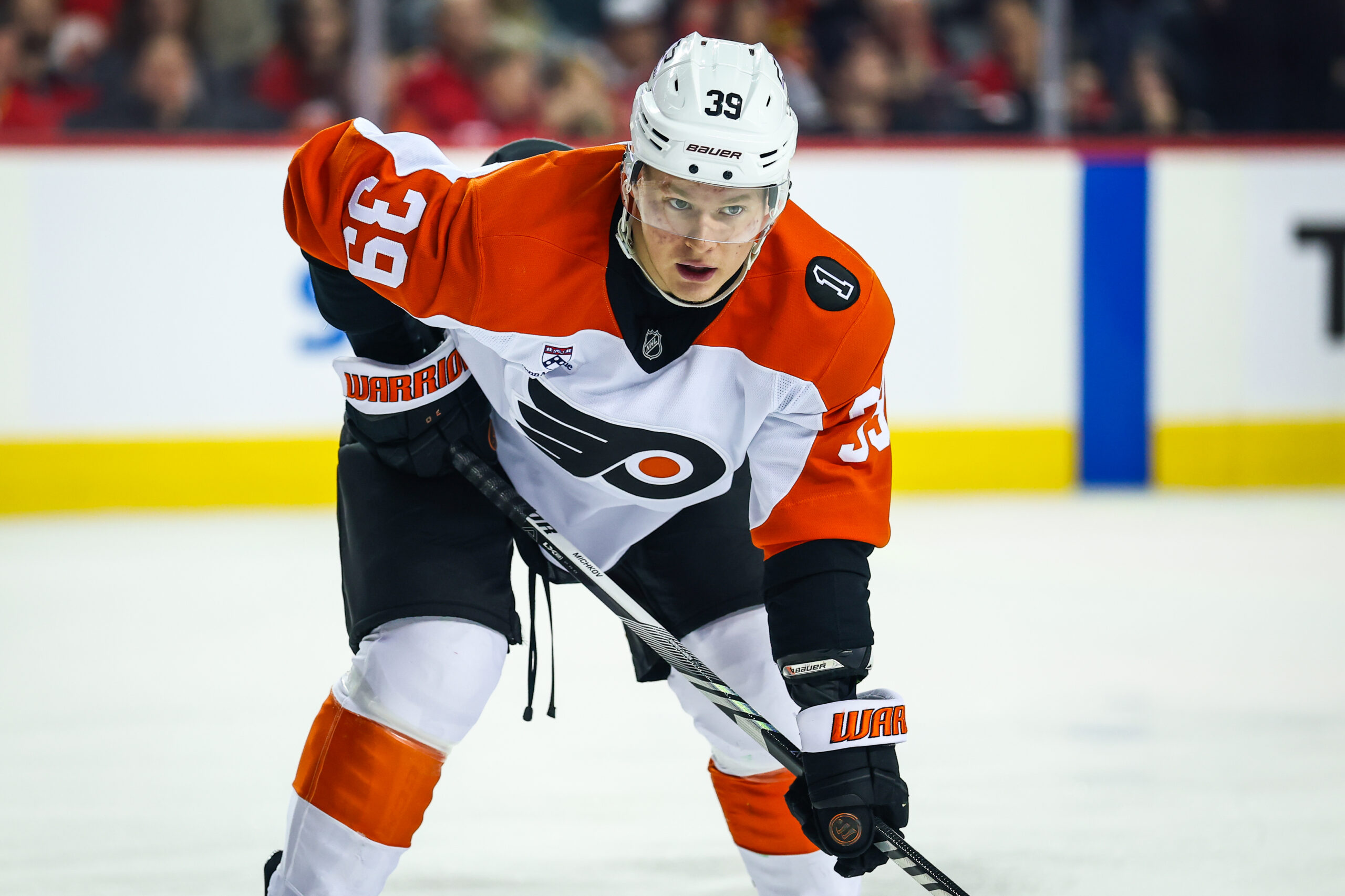
Trevor Zegras is one of the more fascinating power play evaluations right now because his move to Philadelphia stabilized his fantasy value after two extremely turbulent years in Anaheim. Unlike the cases above in Kyrou or Alex, where the concern revolves around younger talent slowly eating into their deployment, Zegras is the opposite case. His transition to the Flyers gave him a clearer offensive identity again. He rebounded with 26 goals and 67 points in 81 games in Philadelphia while producing a career-high 23 PPP and the underlying deployment trends were encouraging. His PPTOI climbed to 2:59 minutes per game, the highest of his career as Philly consistently used him as one of the central offensive facilitators within the power play structure. His strongest power play chemistry came with Konecny, who factored into 14 of his power play points, while Bobby Brink, Tyson Foerster, Matvei Michkov, and Owen Tippett all became meaningful secondary offensive partners.
Zegras posted 2.7 points per 60, a 68.4 IPP, and a strong 76.7 PPIPP while producing a career-best 53.6 xG% at 5v5. Philadelphia controlled play with him on the ice rather than simply trading chances, which was often the problem during his Anaheim years, but to be fair that was a younger Ducks team with less veterans rostered that this past year. There are still a few areas worth keeping in mind when it comes to Zegras. He valuable in formats that heavily focus on points and power play production than multi-cat leagues. His shot volume remains fairly modest for a player with his offensive skill level at just 2.1 shots per game, and his fantasy profile still relies heavily on assists and power play involvement rather than elite goal scoring. That said, Zegras currently feels much more secure within Philadelphia's offensive hierarchy than he did during the final stages of his Anaheim tenure. The Flyers appear committed to using him as a major offensive catalyst as his nearly three minutes of PPTOI per game reflects that trust level directly.
This feels more like a genuine rebound and the power play production also looks much more repeatable now because the role itself appears stable and clearly defined within the Flyers structure. Environment matters enormously. Anaheim's instability slowly dragged down both his confidence and deployment, while Philadelphia immediately gave him clearer offensive structure, stronger surroundings, and landing in a system that properly supported his strengths.
Thanks for reading! See you next week! For more fantasy hockey content and analysis, follow me on X @Punters_hockey. If you have any questions about your team or a trade? My DMs are always open, happy to help!
Related Posts


Starting Goalies







Top Skater Views
 PHI
 T.B
 N.J
 L.A


Top Goalie Profile Views
| Players | Team | |
|---|---|---|
| JACOB FOWLER |
 MTL | |
| DANIIL TARASOV |
 DET | |
| DYLAN GARAND |
 NYR | |
| DEVON LEVI |
 EDM | |
| ALEX NEDELJKOVIC |
 S.J | |
LINE COMBOS
| Frequency |
 CHI Players | |
|---|---|---|
| 24.1 | ROMAN KANTSEROV PATRICK KANE CONNOR BEDARD | |
| 18.3 | TEUVO TERAVAINEN ANTON FRONDELL TYLER BERTUZZI | |
| 16.8 | FRANK NAZAR OLIVER MOORE RYAN DONATO | |
DobberHockey Podcasts

Keeping Karlsson: Never Tell Me the Podz
Elan and Brian do a wellness check on the Maple Leafs, lament Chicago and Buffalo snoozers, wonder whether and which Flyers have figured it out, and pick out the Capital standing out from the crowd.

Fantasy Hockey Life: Ep 505 Prospects With Plenty to Prove Part 1
Victor and Jesse return to talk about prospects with plenty to prove. This week it’s: Tij Iginla, Berkly Catton, Konsta Helenius, Zayne Parekh, Igor Chernyshov, Jett Luchanko, Axel Sandin-Pellikka, Artyom Levshunov, Michael Hage, and Carter Bear. Have a listen! Our show is part of the Dobber Podcast Network and sponsored by Fantrax.com. Email [email protected] and […]
Keeping Karlsson: Matchup Maximizer 2026/27 Week 4
Elan takes a look at the schedule for the upcoming weeks of NHL action and recommends players with good schedules that you should consider streaming in to win your head to head matchups.
Keeping Karlsson: Short Shifts – NHL Frozen Frenzy Recap
Elan and Lewis recap the Frozen Frenzy as well as two big returns and more!
Keeping Karlsson: Delusions of Garandeur
Elan and Brian dive into the latest NHL hot streaks, cold streaks, line changes, outjuries, injuries, buy-lows and sell-highs to give you top notch tips in your fantasy hockey league