

Ramblings: Players Who Could Be Affected by Lower Shooting Percentages in 2026-27 (Aug 8)
Ian Gooding
2026-08-08
The 2026-27 Fantasy Guide is now available! Projections, writeups on each team, and much more! Get yours at the Dobber Sports store.
–
Last week I wrote about several players who ran into some bad luck when it came to shooting percentage in 2025-26. That resulted in a disappointing season for these players.
Today I'll examine the other side of the coin, which is players who rode high shooting percentages to successful 2025-26 campaigns. Being listed here doesn't necessarily mean they will be busts entering the 2026-27 season, but a decline in goals for each of these players should not be a surprise.
Thomas is coming off a season where his finishing spiked well beyond his norms. His shooting percentage jumped from 14.5% to an inflated 24.5% in 2025‑26, despite being a career 16% shooter. That boost alone helped him climb from 21 goals to 25, even though he actually played in fewer games and took fewer shots — dropping from 1.8 to roughly 1.3 shots per game and finishing with just 102 total.
Durability remains a concern as well. Thomas has averaged only 67 games over the past two seasons, putting him firmly in Band‑Aid Boy territory.
A regression in shooting percentage doesn't mean Thomas is headed for a poor year, but it does cap his goal upside. If his shot volume doesn't rise, a 25-goal pace over a full season might become a challenge. Fortunately, goals aren't what drive his fantasy value anyway. He hit 60 assists in both 2023‑24 and 2024‑25, and that playmaking profile remains intact.
With minimal contributions in shots, hits, and blocks, Thomas is far more valuable in pure points formats than in multicategory leagues. In points‑only setups, he's a reliable engine. In bangers leagues, you'll need to supplement him with better cross-category options.
At this time last year, the high shooting percentage king was Morgan Geekie, who leaped to 33 goals with a 21.9% shooting accuracy in 2024-25. Turns out that's the norm for Geekie, whose shooting percentage only dipped to 21.5% to go with 39 goals this past season. Of note: 25 of Geekie's goals last season were in the first half, with only 14 in the second half, including five in the last 21 games.
Zacha rode an unsustainably hot shooting year in 2025‑26. His shooting percentage ballooned to 22.9%, more than double the 10.7% he posted the season prior and well above his 13.1% career average. That spike pushed him to his first 30‑goal season, a notable jump for a player whose previous career high over a decade in the league was 21.
The underlying numbers point to puck luck as well. His 3.0 PTS/60 was a career best, and his 13% 5‑on‑5 shooting percentage was inflated. He also loses one of his most effective linemates, Viktor Arvidsson, who departed for Detroit in free agency.
Zacha remains the closest thing Boston has to a true No. 1 center, but his name continues to surface in trade chatter as he enters the final year of his contract. He delivered an impressive 2025‑26, yet it's wise to bet the under on him repeating 65 points.
Mantha delivered one of the biggest surprise seasons of 2025‑26, setting career highs with 33 goals and 64 points. The headline number is his 21.7% shooting percentage — high, but not entirely out of character given he's been over 20% in each of the past three seasons.
The real driver was his 5‑on‑5 finishing. Mantha led the Penguins with a 13.3% 5‑on‑5 shooting percentage, up from the 11–12% range he'd posted the previous two years. Even that level is difficult to sustain, and any dip would likely pull down both his goal and assist totals.
He finally shed his Band‑Aid Boy label by appearing in 81 games, though fantasy managers still carry some lingering injury skepticism. We've waited a long time for Mantha to break out, and he finally did so after he turned 30. That means age is another factor.
Mantha's breakout was legitimate but also buoyed by factors unlikely to repeat. Unless he spends extended time on Jack Hughes' wing (and with that, assuming Hughes can stay healthy), expect regression. He'll remain useful, but last season's peak is a tough bar to clear.
Stamkos finally delivered on his four‑year, $32 million deal with Nashville in Year 2. After opening the season with just four goals and one assist in his first 20 games, he caught fire and finished with 42 goals, which was tied for ninth in the NHL.
Expecting a repeat in 2026‑27 is a stretch. Stamkos is now 36, and his production was fueled by a career‑high 20.4% shooting percentage, the highest mark of his 18‑season career. His shot has always been elite, so elevated shooting percentages are nothing new, but this level is well beyond what's sustainable.
Stamkos should still score, and he'll remain a valuable fantasy asset, but betting against another 42‑goal season is the safe play.
Cooley's 23.5% shooting percentage in 2025–26 jumps off the page, especially considering he sat between 13–16% in his first two NHL seasons. But context matters: he scored those 24 goals in only 54 games because of a lower‑body injury, so the sample size is small enough that you shouldn't treat last year's rate as a new baseline.
If you stretch his production over a full 84‑game season and land on a 37‑goal projection, that's likely too ambitious. Cooley isn't a volume shooter, as he averages roughly two shots per game. Most 35‑plus‑goal scorers clear 200 shots. Cooley would barely reach 160 over a full schedule, making that tier difficult to hit without an outlier shooting percentage.
He's also a streaky scorer. His consistency percentage on Frozen Tools sits at 50%, lower than teammates Dylan Guenther, Clayton Keller, Nick Schmaltz, and Mikhail Sergachev, all of whom fall in the 55–60% range. Consistency percentage refers to the percentage of games that the player recorded at least one point. The number doesn't mean Cooley can't produce, but it does suggest you should expect some dry spells along the way.
–
Follow me on X @Ian_Gooding and Bluesky @goodsfantasyhockey.bsky.social
Related Posts

Starting Goalies



Top Skater Views
 S.J
S.J CBJ
CBJ ANA
ANA CHI
CHI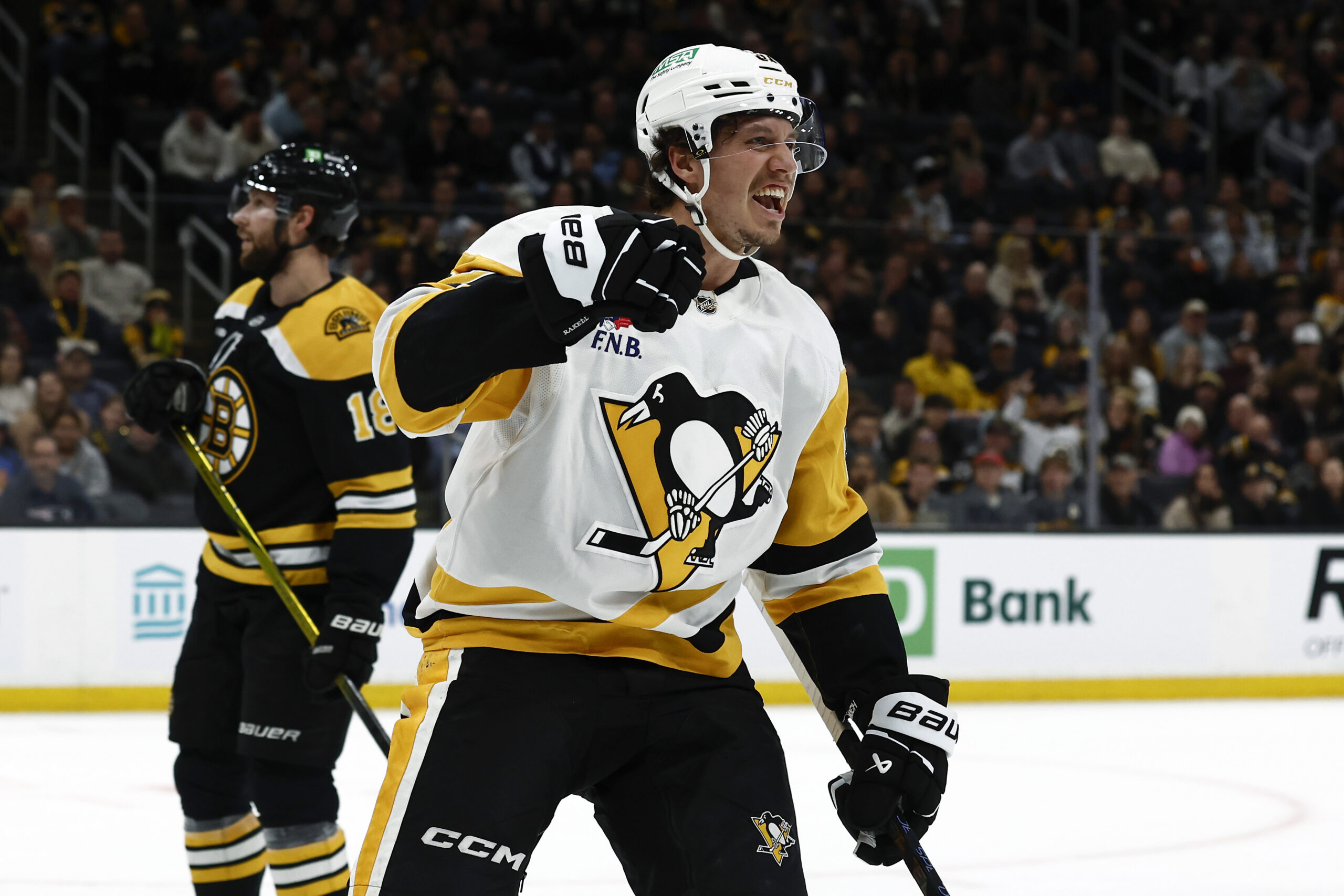

Top Goalie Profile Views
| Players | Team | |
|---|---|---|
| JAKUB DOBES |
 MTL MTL | |
| JOSEPH WOLL |
 PHI PHI | |
| SERGEI MURASHOV |
 PIT PIT | |
| FREDERIK ANDERSEN |
 EDM EDM | |
| CARTER HART |
 VGK VGK
| |
LINE COMBOS
DobberHockey Podcasts

Keeping Karlsson: KKUPFL Tier 1 Draft Roundtable
Elan and Brian are joined by several KKUPFL Tier 1 managers, to bring you inside their draft table decisions and thought processes in building the teams competing in the top division of the world’s best fantasy hockey league.

Fantasy Hockey Life: New Jersey Devils with James Nichols
James Nichols joins the program to discuss the New Jersey Devils. Jesse and Victor ask about pros Jack Hughes, Jesper Bratt, Nico Hischier, Timo Meier, Connor Brown, Arseni Gritsyuk, Anthony Mantha, Dougie Hamilton, Luke Hughes, Jake Allen, David Rittich, and Nico Daws. In Cat’s instincts, Cat Silverman of InGoal magazine joins to discuss prospect goalies […]
Fantasy Hockey Life: Nashville Predators with Emma Lingan
Emma Lingan joins the program to discuss the Nashville Predators
Keeping Karlsson: The 2026-27 Keeping Karlsson Breakfast Club
Don’t you forget about them! Elan and Brian remind you of at least one player on each NHL team whose name you might forget to consider at the draft table.
Fantasy Hockey Life: Tampa Bay Lightning with Erik Erlendsson
Erik Erlendsson joins the program to discuss the Tampa Bay Lightning. Jesse and Victor ask about pros Nikita Kucherov, Jake Guentzel, Brandon Hagel, Brayden Point, Anthony Cirelli, Ilya Mikheyev, Gage Goncalves, Conor Geekie, Benjamin Rautiainen, John Carlson, Victor Hedman, Charle-Edouard D’Astous, Andrei Vasilevskiy, Jonas Johansson, and Dennis Hildeby. In Cat’s instincts, Cat Silverman of InGoal […]