

The Journey: AHL Live Viewing vs Analytics
Victor Nuno
2026-03-21
Watching AHL hockey live offers a perspective that analytics alone cannot fully capture. Elements such as off-puck play, urgency, gap control, one-on-one compete rates, and the subtle habits players bring to each shift often escape both public models and video review. Seeing a game in person reveals the pace of decision-making, how players manage pressure, and the consistency of their effort away from the puck, factors that can significantly shape a prospect's true development trajectory.
This analysis draws on a recent matchup between the Tucson Roadrunners and the San Diego Gulls, which provided an ideal live setting to compare eye-test observations with commonly referenced prospect analytics. What follows is a look at how those live impressions align with, or differ from, what NHLe projections, usage data, and underlying possession metrics suggest about these players, and how that combination of information should influence dynasty league evaluation.
Calle Clang, San Diego
The calm was the first thing that stood out. Clang played with controlled depth, stayed square through layers of traffic, and absorbed pucks rather than kicking them into chaos. His rebound management was particularly noticeable, steering shots into low-danger areas instead of scrambling for second saves. Analytics can tell us save percentage and workload, but live viewing highlighted something more important, economy of movement. He did not chase the game, instead relying on positioning and structure to let the puck come to him. That kind of composure tends to translate well as competition increases, particularly for a goalie whose profile relies more on technical discipline than explosive athleticism.
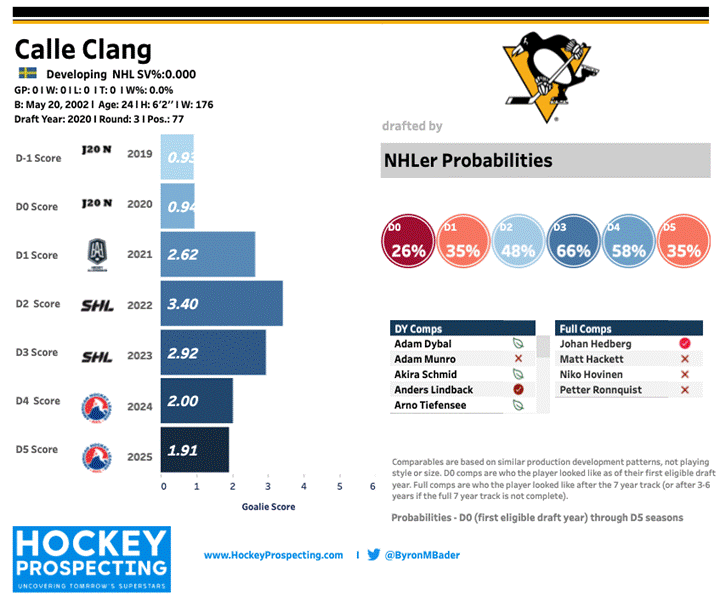
From an analytics perspective, Clang graduated from Hockey Prospecting with a 35% percent chance of becoming an NHL goaltender. His early AHL results initially improved his equivalency projections, but subsequent performances brought those numbers back down, reflecting the uneven nature of his transition to North American play. That statistical profile captures the volatility in his results, with stretches of strong play followed by more challenging outings. In this viewing, however, the structural foundation of his game was evident, suggesting a goaltender whose long-term outlook may hinge less on raw numbers and more on continued adaptation to the pace and shot quality of the AHL.
Jaxson Stauber, Tucson
Stauber looked like a goaltender who trusts his reads. He was early on his feet, held his edges effectively on lateral plays, and rarely gave shooters clean second looks. There was an assertiveness to his positioning without overcommitting, and the overall impression was of a goalie playing with repeatable habits, square, controlled, and efficient. Public goaltending models often struggle with small sample noise, and in Stauber's case there is also no Hockey Prospecting equivalency available to help frame his development statistically. What the live viewing did show, however, was a strong structural base, positioning first with athleticism layered on top. Stauber already has 12 NHL games across two seasons on his résumé, though none this year, and with this type of composed, technically sound play he looks like a goaltender who should earn another look at the NHL level before long.
Tucson Roadrunners
Defensemen
Lamoureux is impossible to miss. His reach alone alters passing lanes and forces forwards to adjust their entries earlier than they want, and live viewing makes it clear why coaches trust him with difficult defensive matchups even if the offensive ceiling remains a point of debate. Analytics do not always capture how much ice he erases through positioning and stick detail, but the defensive impact is noticeable shift to shift. The puck play is still developing, though his play driving has improved during this AHL season as he has become more comfortable moving the puck under pressure. With his size, reach, and improving mobility, he has a clear pathway to NHL utility. For fantasy purposes, however, the value will likely come more from hits and blocks than points, unless the offensive confidence eventually begins to match the defensive presence.
Onyebuchi played with clear intent. Physical, assertive, and willing to close quickly, his value comes from denying time and space rather than generating offense. The live viewing reinforced a shutdown profile, stepping into contact early and limiting extended cycle time. He brings a strong physical presence and is capable of contributing more than a hit and a block per game, though he does not shoot much and offers limited play-driving ability. Analytics may not highlight him given the lack of offensive production, but players with consistent defensive habits can still find roles at the professional level. That said, the overall profile currently projects more as a tweener than a player likely to secure a significant number of NHL games.
Perunovich was the most dynamic puck mover on Tucson's blue line. His edgework and deception stood out, particularly in retrieval-to-exit sequences, and he was consistently the defender most capable of turning a defensive touch into immediate transition. At times, he looked too good for the AHL level, controlling pace and creating space with ease, though there were also stretches where he was less noticeable. When the game mattered most, his experience showed. In overtime, he slowed things down, regrouped, waited for the right opportunity, and beat both the defenders and goalie cleanly to secure the win.
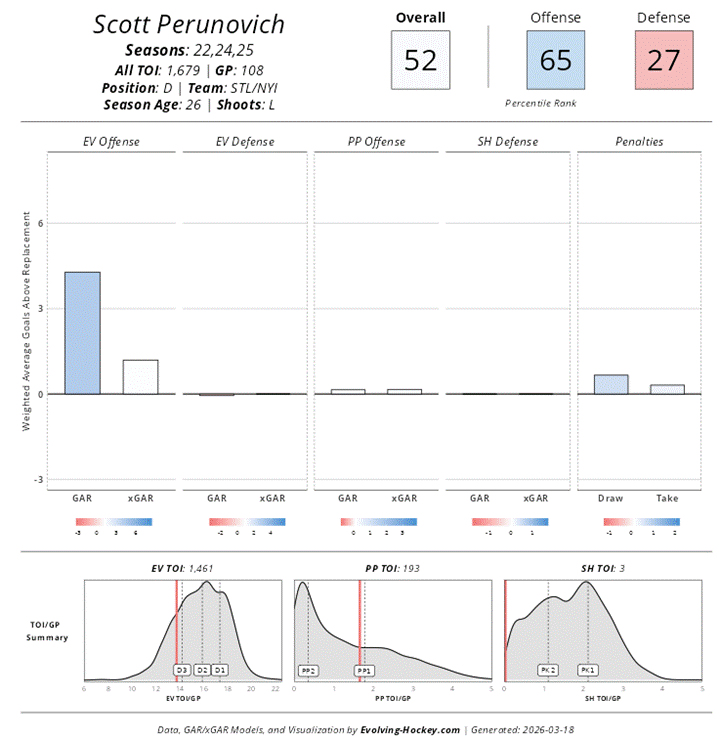
His evolving hockey profile over the past three seasons, however, paints a more complicated picture, with consistently poor defensive metrics despite strong offensive results. With that in mind, his defensive details became a focal point in this viewing, and his gap control and stick work looked sharp and purposeful, suggesting potential improvement beyond what the models capture. The lingering question remains durability and whether he can secure a sustained NHL role, but the foundation of skill and puck movement is clearly intact. Perunovich looked every bit like a player with over 100 NHL games of experience, and if the defensive gains hold, it is certainly possible he earns another NHL opportunity.
Simashev's length and skating combination make the game feel compressed for opposing forwards, as he closes gaps quickly and uses his reach to disrupt plays before they develop. The live view reinforced how advanced his defensive foundation already is, with controlled pivots, patient stick detail, and consistently strong rush defense. He looked like one of the best players on the ice, dictating space and limiting time in a way that few defenders at this level can. He's already played more than two dozen NHL games this season and that number will likely increase dramatically in the coming years.
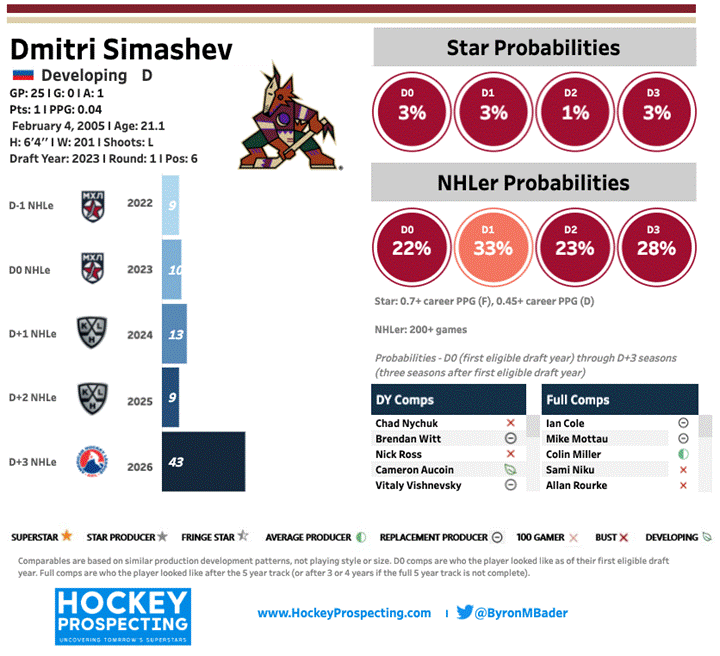
The offensive ceiling will continue to be debated, and that is where the fantasy outlook becomes more complicated. His Hockey Prospecting profile shows just a 3 percent chance of becoming a star producer, which aligns with the limited offensive output seen to date, even if he is likely to log heavy NHL minutes in a real-life role. He does not generate much in the way of scoring or peripherals, which may make him difficult to roster in many formats despite his clear on-ice impact. Unless the puck play becomes more assertive, his value will likely remain much stronger in real hockey than in fantasy.
Allard remains a developing piece, but the live viewing showed encouraging habits. He was willing to absorb contact to make plays and did not shy away from interior routes. That is often a key AHL development marker, learning to execute under pressure rather than around it. The analytics may not yet project major upside, but the competitive detail suggests a player building a reliable pro foundation.
Daniil But's size and puck protection show up immediately, as he imposes his will along the wall and around the crease, extending possessions and drawing defenders into his orbit. Even when the play does not convert into points, he tilts shifts by maintaining control in contested areas. Analytics may still be catching up to how his physical profile translates, but the live view supports legitimate power-forward upside if his skating consistency continues to improve.
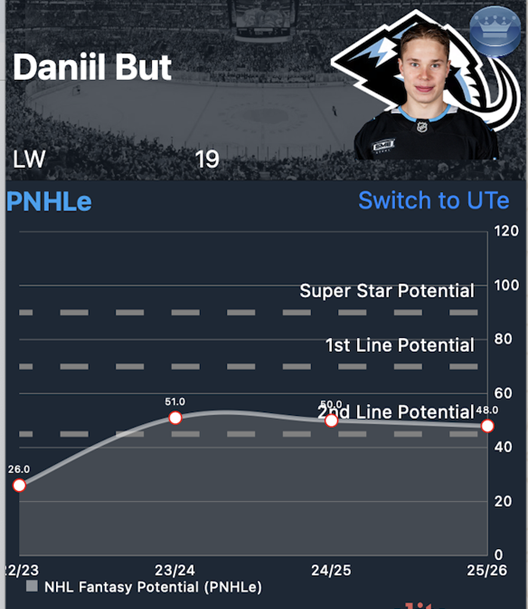
His pNHLe has hovered in the 45 to 50 range over the past few seasons, which may ultimately reflect his realistic offensive ceiling. If he earns consistent top-line deployment, there is room for that number to climb, though as it stands, his profile suggests more modest fantasy returns outside of deeper formats.
Lipkin's two-way detail was one of the more mature forward profiles on the ice, as he supported low in the zone, managed pucks responsibly, and made efficient decisions through the neutral zone. The offense was not loud, but the reliability was evident, and he consistently made the right play without forcing situations, the type of foundation that can earn trust from coaches. However, after a stellar career at Quinnipiac, his first two AHL seasons have not demonstrated an ability to consistently produce at the professional level, and there was little in this viewing to suggest a significant offensive step forward is coming. The overall profile points more toward a tweener than a player likely to secure a meaningful NHL scoring role.
Lutz played a direct, north-south game with more pace than his box score reputation might suggest, attacking open ice decisively and avoiding unnecessary puck handling. The live impression was of a winger who understands how to stay engaged even when not driving play, using his physical tools to pressure defenders and contribute physically with hits and blocks. A second-round pick by the Coyotes in 2022, the German forward brings an imposing style, but across nearly 100 AHL games with fewer than 25 points, there is little to suggest that scoring will become a meaningful part of his NHL profile. While there may be a pathway as a depth player, his limited offensive impact and lack of play-driving ability make him look more like a fringe NHL option than a regular.
Jalen Luypen
Luypen profiles as a depth forward who consistently executes the small details that keep a line functional, tracking back hard, supporting outlets, and playing within structure. While analytics may not highlight him prominently, players who stabilize lines can often extend their time within organizations. That said, the overall profile still leans toward a tweener, and based on both production and projection, he appears unlikely to develop into a regular NHL player.
Jack Ricketts
Ricketts played a clean, coachable game, supporting defensively and making simple, effective plays within structure. The consistency in his shifts stood out, but at 26 and in his first AHL season without much offensive production, his profile points to a depth player unlikely to see meaningful NHL time.
Tullio brought energy and edge to nearly every shift, pressuring defenders, contesting pucks despite size disadvantages, and consistently finding ways to stay involved in the play. The motor stands out and helps drive opportunity, but the overall profile remains limited. Originally drafted by the Edmonton Oilers and now on his third NHL organization, he has settled in as roughly a half-point-per-game player in the AHL, which is unlikely to translate into a regular NHL role despite the strong compete level.
Many of the Gulls players were covered in a previous article. Players will be mentioned here if anything changed based on this viewing or their projection.
Defensemen
Hinds has the frame and skating base that suggest upside, but the timing of his activations is still developing. He was often paired with Noah Warren, he appeared more composed, making better decisions and handling pressure more calmly. With his size, mobility, and improving reads, there is a pathway to an NHL role, likely as a depth defender if the refinement continues.
Myatovic looked comfortable with the pace of play and did not appear overwhelmed, supporting transitions and making simple, effective plays. The habits are trending in the right direction, but in his second full AHL season, the offense has yet to translate from his WHL production. At this stage, the profile points more toward a developing depth option than a player driving offense at the professional level.
The skill flashes are still present, as Mysak handles pucks confidently in space, but the question remains whether he can consistently access the middle of the ice against stronger competition. The live viewing emphasized a need for more consistent pace and inside engagement, as too many shifts stayed on the perimeter. Now in his fourth AHL season, his production has been inconsistent, and while it has improved since joining San Diego compared to his time in Laval, he still projects as a bottom-six NHL option at best. Without an NHL call-up to this point, there is growing risk that he settles in as a career AHL player.
Nesterenko was more noticeable live than many might expect, finding soft pockets and making quick, efficient plays with limited time and space. That type of processing speed is essential for production at higher levels, and while his analytics may not yet highlight him prominently, his subtle offensive instincts suggest sneaky fantasy value down the line.
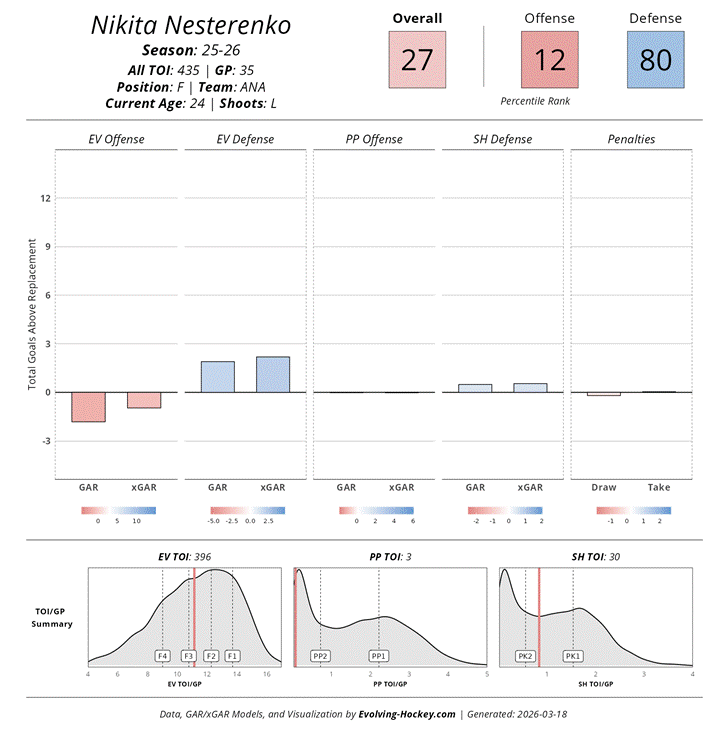
He has shown those same good offensive instincts in the AHL, though they have yet to fully translate at the NHL level. What has translated, however, is his defensive game, as his Evolving Hockey player card shows he has been excellent defensively in the NHL. That combination of defensive reliability and underlying offensive tools suggests Nesterenko could carve out a regular bottom-six role while providing useful depth offense for dynasty managers willing to be patient.
Phillips processed the game quickly and created in tight spaces, with small-area skill that remains genuinely impressive to watch. The talent is clearly there, but the concern is that opportunity has come and gone without him being able to translate it to the NHL level. Watching him live makes it easy to understand why, as despite his puck skills, his small stature works against him in a significant way. He loses far too many battles even at the AHL level to conceive of him winning them with any consistency in the NHL, and that physical limitation ultimately undermines everything else he brings to the table. Unless something changes dramatically, Phillips profiles as a player whose skill will always be more impressive in highlights than in sustained NHL deployment.
Sidorov showed creativity and willingness to attack defenders one-on-one, looking confident handling pucks in motion and pushing pace when possible. The next step will be aligning those flashes with consistent usage and production, and from a dynasty standpoint he is worth monitoring closely relative to opportunity trends.
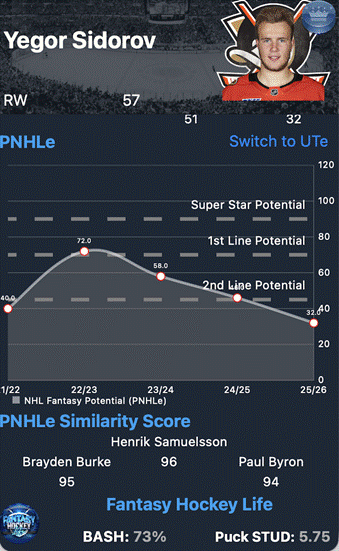
His AHL production of roughly half a point-per-game is solid if unspectacular, and his pNHLe suggests a ceiling in the neighborhood of 40 NHL points. However, there is more upside here than that number alone implies, as the tools he showed live suggest a player still putting the pieces together rather than one who has already found his ceiling. If it all clicks, a middle-six NHL forward role is not out of the question, making him a worthwhile name to stash in deeper dynasty leagues while his price remains modest.
Final Thoughts
Live viewings are not meant to replace analytics, but to provide the missing context that shapes how those numbers should be interpreted, and across this game, the biggest takeaway was how often details like defensive positioning, pace of decision-making, and off-puck habits either reinforced or challenged statistical profiles. Players like Perunovich and Nesterenko showed elements that suggest their underlying numbers may not fully capture their current impact, while others with stable production continued to raise questions about translatability based on how they handled pressure and interior play. For dynasty evaluation, the key is in balancing both lenses, as analytics remain critical for setting realistic ceilings while live viewings help identify which players have the habits to outperform or fall short of those projections. Goaltending composure, repeatable defensive detail, and the ability to consistently influence play away from the puck stood out as traits that translate even when the box score does not, and in the end, the combination of data and live evaluation offers the clearest path to understanding which prospects are truly progressing toward NHL roles and which may be plateauing despite what the numbers suggest.
Thanks for reading! See you next week. For more fantasy hockey analysis, or if there's a prospect, topic, or theme you'd like me to cover, follow and message me on X: https://x.com/VictorNuno12
Related Posts

Starting Goalies













Top Skater Views
 S.J
S.J COL
COL ANA
ANA CHI
CHI

Top Goalie Profile Views
| Players | Team | |
|---|---|---|
| DEVON LEVI |
 EDM EDM | |
| JOSEPH WOLL |
 PHI PHI | |
| FREDERIK ANDERSEN |
EDM | |
| KAREL VEJMELKA |
 UTA UTA | |
| AKIRA SCHMID |
 FLA FLA
| |
LINE COMBOS
| Frequency |
 STL Players STL Players
| |
|---|---|---|
| 25.3 | ROBERT THOMAS JIMMY SNUGGERUD DYLAN HOLLOWAY | |
| 13.1 | ALEXEY TOROPCHENKO PIUS SUTER ZACH DEAN | |
| 12.4 | MASON MCTAVISH CONNOR MCMICHAEL PAVEL BUCHNEVICH | |
DobberHockey Podcasts

Keeping Karlsson: Short Shifts – I Tried to be Like Parker Kelly
Elan is joined by Ryan Downey for the premiere of season 8 of Short Shifts! — KKUPFL late registration is ongoing! We’re still filling new divisions in the world’s greatest fantasy hockey league. Details at https://www.kkupfl.com/. Join the Keeping Karlsson patron community! Patrons get access to all our perks all year round, including KKUPFL […]
Keeping Karlsson: Shabanov Ranks
Elan and Brian fly through the final preseason lines for every NHL team ahead of opening night, and share their guys to watch– or look away from– in your fantasy hockey leagues.

Fantasy Hockey Life: Western Conference Catchup and Mustard
Jesse and Victor are here to Catch Up on everything in the Western Conference that transpired ofter our team previews. We also have our annual spicy mustard competition – two hot takes per team. Our show is part of the Dobber Podcast Network and sponsored by Fantrax.com. Email [email protected] and ask to join our free […]
Keeping Karlsson: Matchup Maximizer 2026/27 Week 1
Elan takes a look at the schedule for the upcoming weeks of NHL action and recommends players with good schedules that you should consider streaming in to win your head to head matchups.
Fantasy Hockey Life: Dallas Stars with Taylor Newby
Taylor Newby joins the program to discuss the Dallas Stars.