

The Journey: Top Prospects from the WHL Playoffs
Victor Nuno
2026-05-30
The WHL playoffs provided an excellent showcase for some of hockey's top developing talent, with several NHL-affiliated prospects and draft-eligible players stepping up in high-pressure situations. Playoff hockey often reveals which players can maintain offensive impact while adapting to tighter checking and more physical environments, and this postseason featured no shortage of impressive performances across the league. Everett's deep run helped push several of its top players near the top of the scoring race, while teams like Prince George, Medicine Hat, and Prince Albert also saw major contributions from key prospects. Here's a look at some of the standout performers from the WHL postseason.
Julius Miettinen, C/W, Everett Silvertips (Seattle Kraken)
Miettinen was one of the most productive players in the WHL postseason, leading all skaters who played at least eight games in points-per-game with 27 points in 18 contests. The offensive production reinforced the steady developmental trajectory that made him an appealing draft pick for Seattle in 2025. His game is built more around intelligence, timing, and puck support than dynamic explosiveness. Miettinen consistently finds soft areas in coverage, supports possession well through the middle of the ice, and processes offensive sequences at a high level. During Everett's playoff run, he showed an improved ability to facilitate in transition while also contributing within sustained offensive zone pressure. His versatility to play both center and wing further strengthens his projection.
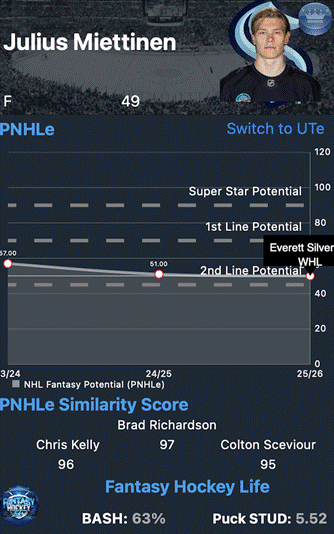
Despite the outstanding playoff numbers, there are still questions surrounding his long-term fantasy ceiling. Miettinen's underlying projection models remain relatively modest, with his pNHLe still hovering around the 50-point range. While there is clear value in his well-rounded offensive approach and strong hockey sense, he still projects more safely as a middle-six NHL winger than a true top-line offensive driver. That reality may create an interesting dynasty market inefficiency. After such a strong playoff performance, this could represent an opportunity to sell high to a manager who believes there is another offensive tier still to unlock.
Matias Vanhanen, F, Everett Silvertips (Draft Eligible, Overager)
Vanhanen was a reliable forward during Everett's playoff run, recording 24 points in 18 games. His game is built less around dynamic individual skill and more around detail-oriented efficiency. Vanhanen consistently supported possession through smart positioning, responsible puck management, and strong two-way awareness. He complemented skilled linemates well while still contributing offense of his own, frequently arriving in the right areas at the right time rather than forcing plays individually. Players with this type of profile often earn extended professional opportunities because they can contribute in multiple situations without compromising structure.
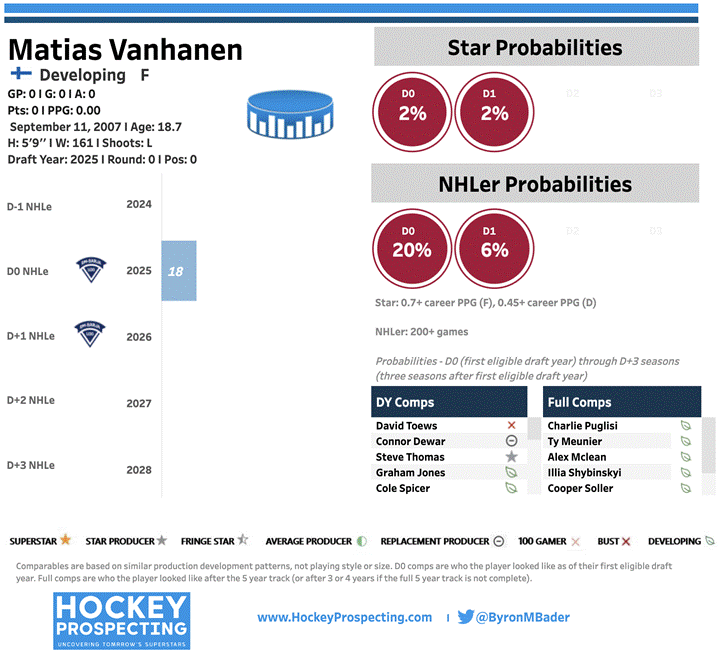
As a draft-eligible overager, Vanhanen's postseason likely generated at least some additional attention ahead of the 2026 NHL Draft, particularly in the middle rounds where organizations often target mature, reliable players coming off strong developmental seasons. Elite Prospects ranks him as the eighth best overager. Still, the long-term projection remains fairly modest. Despite the excellent playoff performance, he continues to profile as a significant longshot to become an NHL regular. Hockey Prospecting currently gives him just a two percent chance of becoming a star, reinforcing the idea that his upside is likely more organizational depth than impact scorer. Even so, strong playoff runs from overagers can occasionally create draft momentum, and Vanhanen may have done enough to put himself more firmly on the radar.
Carter Bear, LW/C, Everett Silvertips (Detroit Red Wings)
Bear's postseason further reinforced why he is viewed as one of the WHL's most complete forwards. He recorded 22 points in 18 playoff games while continuing to impact play in virtually every phase of the game. Bear combines relentless puck pursuit with strong offensive instincts and enough physical engagement to remain effective when games become tighter and more demanding. He consistently forced turnovers through pressure, drove possession through intelligent positioning, and created offense through effort and anticipation rather than relying solely on high-end skill. His ability to influence the game in multiple ways continues to support the projection of a reliable NHL forward capable of contributing in a variety of situations.
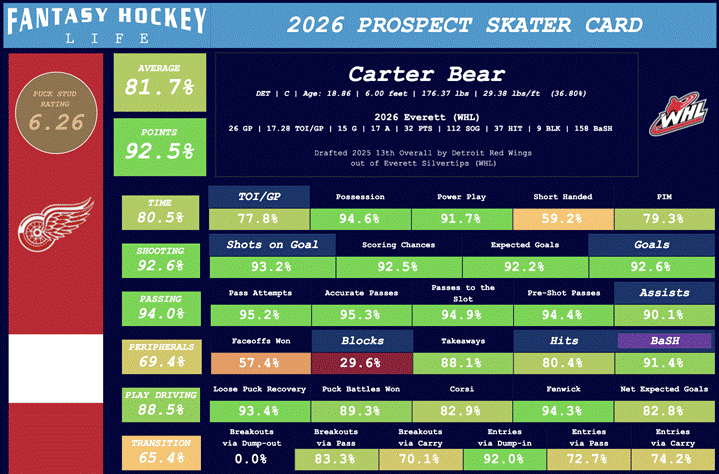
A healthy Bear was a major reason Everett captured the WHL championship. His Fantasy Hockey Life skater card highlights just how dominant he was relative to his peers, particularly in transition play and overall play-driving metrics. Bear excelled at moving play in the right direction, generating controlled offensive opportunities while limiting mistakes in his own end. Bear's profile is especially appealing in leagues that count peripheral categories. His physical style and willingness to engage consistently generate hits, providing a strong fantasy floor even during stretches when the scoring is less prominent.
Landon Dupont, D, Everett Silvertips (Draft-Eligible in 2027)
What Dupont accomplished this postseason was extraordinary. The WHL exceptional-status defender was not just one of the best young defensemen in the league, he was one of the WHL’s best defensemen, period, despite not being draft eligible until 2027. His poise, decision-making, and maturity were evident throughout Everett’s championship run, routinely handling responsibilities that are rarely entrusted to players his age. Dupont led the entire Silvertips roster in total time on ice, an astonishing accomplishment. He was also third on the team in power-play ice time, trailing only Bear and Vanhanen, underscoring the immense trust the coaching staff placed in him in critical offensive situations.
What stands out most is how complete his profile already appears. Dupont drives play at both ends of the ice, controls possession through intelligent puck movement, and consistently impacts games regardless of situation. His offensive instincts are elite, but they are paired with the composure and defensive awareness necessary to handle major minutes against top competition. At this point, Dupont is the favorite to go first overall in the 2027 NHL Draft, and that raises an interesting dynasty question: if you held a top pick in the 2026 draft, would you trade it for a guaranteed opportunity to select Dupont in 2027? Given the scarcity of true franchise defensemen in fantasy hockey, the answer may very well be yes. His combination of offensive upside, play-driving ability, deployment, and long-term projection gives him a value-over-replacement profile that few prospects can match. If his development continues on its current trajectory, he could enter the draft conversation alongside the very best defense prospects of the salary-cap era comparable to Matthew Schaefer.
Miroslav Holinka, C/W, Edmonton Oil Kings (Toronto Maple Leafs)
Holinka was the most efficient offensive performer of the WHL postseason, producing 11 points in just seven playoff games for the Oil Kings. The Maple Leafs prospect plays a smart, detail-oriented offensive game that relies on timing, anticipation, and puck support. He consistently finds soft areas in coverage, supported transition play effectively, and processed offensive sequences quickly. What stood out most during the playoffs was how frequently he generated offense without needing to dominate puck possession. His transition play, loose puck recoveries, and takeaway ability were all notable strengths and helped drive positive possession sequences throughout his limited postseason sample.
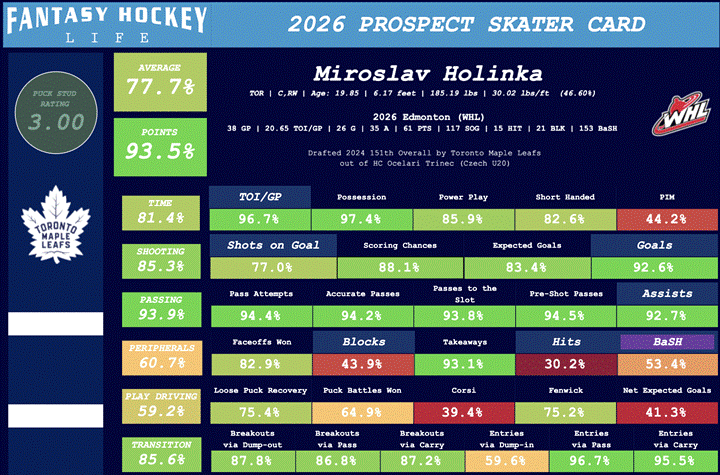
That said, the overall projection remains more tempered despite the strong production. Holinka's Fantasy Hockey Life skater card still highlights positives and negatives in his profile. While the offensive IQ and adaptability remain encouraging, he still profiles as a longshot to become a meaningful NHL contributor, and even if he reaches that level, the fantasy upside likely remains fairly limited. Given the strong playoff production and eye-catching point-per-game pace, this could represent a reasonable opportunity to move him in dynasty formats before expectations outpace the long-term projection.
Daxon Rudolph, D, Prince Albert Raiders (Draft Eligible)
Rudolph raised his stock one of the most offensively gifted defensemen in the 2026 draft class during the regular season, and his WHL playoff performance only strengthened that case. He recorded 27 points in 19 games, leading all defensemen in playoff points-per-game and finishing fifth overall among all WHL skaters. His offensive confidence consistently stood out, particularly in the way he activated into space, supported attacks below the tops of the circles, and created opportunities through quick puck movement from the blue line. Rudolph does not need to overpower opponents physically to drive offense. Instead, he relies on pace, vision, deception, and an aggressive offensive mindset to tilt play in his team's favor.
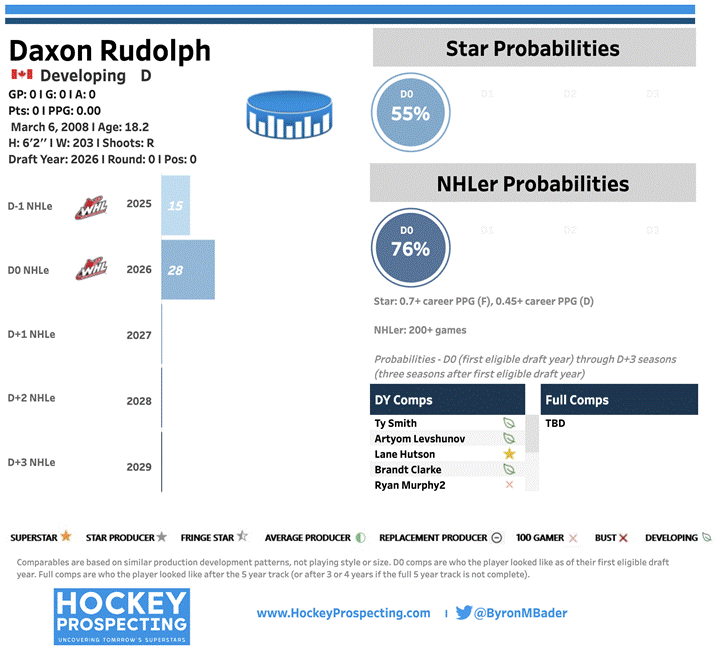
There is still refinement needed in his all-around game, especially with some of the risk-reward decisions that come with such an attack-oriented profile. However, this is not a case of empty offense from a player whose deficiencies overwhelm the upside. Think less Ryan Merkley and more Evan Bouchard-lite, a dynamic, offensively tilted defender whose fantasy value could significantly outpace his real-life draft slot. Hockey Prospecting gives Rudolph a 55% chance of becoming a star and more than a 75% chance of reaching the NHL, which speaks to the strength of his statistical profile. If he slips a little in fantasy drafts because managers are worried about the defensive details, he could become one of the better upside swings available.
Brock Souch, F, Prince George Cougars (Draft Eligible, Overager)
Souch went undrafted in 2025, which was not particularly surprising given that he spent the 2024-25 season in the BCHL and produced respectable, but not standout, offensive numbers. His breakout campaign with Prince George this season, coupled with a productive playoff run, has significantly improved his prospect profile. While he lacks the high-end skill typically associated with top prospects, his pace, competitiveness, and ability to contribute within a structured system give him a chance to carve out a professional role. With a commitment to St. Cloud State beginning in 2026-27, Souch will have an opportunity to continue developing against stronger competition and could emerge as an intriguing late-round selection or free-agent target.
Vojtech Cihar, LW, Kelowna Rockets (Los Angeles Kings)
Cihar showed encouraging offensive flashes during Kelowna's postseason run, finishing with 13 points in nine games. The Kings prospect plays with a noticeable blend of pace and skill and was particularly effective attacking off the rush throughout the playoffs. His ability to generate controlled entries and create through movement remains one of the more intriguing parts of his projection. Cihar also displayed improved confidence attacking high-danger areas rather than remaining exclusively on the perimeter. There is still development needed physically and away from the puck, but the offensive toolkit remains intriguing.
Andrew Basha, LW/RW, Medicine Hat Tigers (Calgary Flames)
Basha’s season was an interesting one. After recording just five points in 27 AHL games, he was returned to Medicine Hat, where he rediscovered his confidence and offensive rhythm. His playoff performance, 21 points in 15 games, including 18 assists, was a reminder of the high-end vision and playmaking ability that made him such a highly regarded prospect. While the transition to professional hockey was challenging, this postseason run should provide valuable momentum as he returns to the AHL next season looking to establish himself as a legitimate NHL prospect.
Tij Iginla, LW, Kelowna Rockets (Utah Mammoth)
After battling injuries, it was great to seeIginla return to a strong upward trajectory throughout the season, producing 12 points in nine playoff games. His combination of pace, shooting ability, and offensive competitiveness makes him extremely difficult to defend in transition. Iginla consistently attacked dangerous areas and showed a willingness to engage physically despite not being the biggest player on the ice. The offensive tools are obvious, but what continues to stand out is his motor and ability to remain involved shift after shift. There is legitimate top-six offensive upside here if his development continues progressing. He should compete for a job with the Mammoth out of training camp.
Jonas Woo, D, Medicine Hat Tigers (Draft Eligible, Overager)
Woo’s name may be familiar to prospect followers as the younger brother of Jett Woo. Like his brother, Jonas is an undersized defender whose skating and puck-moving ability drive his value. While players of this profile often face an uphill battle translating to the professional level, Woo’s outstanding overage season and strong playoff performance may be enough to convince an organization to take a chance on him. At the very least, he has significantly improved his professional outlook over the past year.
Final Thoughts
This year's WHL playoffs highlighted a strong mix of offensive skill, transition ability, and playoff translatability across the league's top prospects. Several players elevated their draft or dynasty value through impressive postseason performances, while others reinforced the long-term confidence NHL organizations already have in their development paths. For fantasy managers, playoff environments often provide some of the clearest indicators of which prospects can maintain effectiveness when games become more structured and physically demanding, and this WHL postseason offered plenty of encouraging signs for the future.
Thanks for reading! See you next week. For more fantasy hockey analysis, or if there's a prospect, topic, or theme you'd like me to cover, follow and message me on X: https://x.com/VictorNuno12
Related Posts

Starting Goalies



Top Skater Views
| Players | Team | |
|---|---|---|
| ROOPE HINTZ |
 DAL DAL | |
| ALEX LAFERRIERE |
 L.A L.A | |
| LUKE HUGHES |
 N.J N.J | |
| OWEN TIPPETT |
 PHI PHI | |
| KEVIN FIALA |
L.A
| |
Top Goalie Profile Views
 WSH
WSH CBJ
CBJ MIN
MIN UTA
UTA


LINE COMBOS
| Frequency |
 OTT Players OTT Players
| |
|---|---|---|
| 19.0 | BRADY TKACHUK RIDLY GREIG DYLAN COZENS | |
| 14.6 | SHANE PINTO CLAUDE GIROUX MICHAEL AMADIO | |
| 11.4 | TIM STUTZLE WARREN FOEGELE DRAKE BATHERSON | |
DobberHockey Podcasts

Keeping Karlsson: The 2026-27 Keeping Karlsson Breakfast Club
Don’t you forget about them! Elan and Brian remind you of at least one player on each NHL team whose name you might forget to consider at the draft table.

Fantasy Hockey Life: Tampa Bay Lightning with Erik Erlendsson
Erik Erlendsson joins the program to discuss the Tampa Bay Lightning. Jesse and Victor ask about pros Nikita Kucherov, Jake Guentzel, Brandon Hagel, Brayden Point, Anthony Cirelli, Ilya Mikheyev, Gage Goncalves, Conor Geekie, Benjamin Rautiainen, John Carlson, Victor Hedman, Charle-Edouard D’Astous, Andrei Vasilevskiy, Jonas Johansson, and Dennis Hildeby. In Cat’s instincts, Cat Silverman of InGoal […]
Fantasy Hockey Life: New York Rangers with Colin Stephenson
Colin Stephenson joins the program to discuss the New York Rangers.
Keeping Karlsson: Matchup Maximizer Schedule Deep Dive
Elan is joined by the Keeping Karlsson Accountability Czar Trev to take a deep dive into the NHL schedule for next season and how it should affect our drafting decisions.
Fantasy Hockey Life: Carolina Hurricanes with Ryan Henkel
Ryan Henkel joins the program to discuss the Carolina Hurricanes. Jesse and Victor ask about pros Sebastian Aho, Seth Jarvis, Andrei Svechnikov, Nikolaj Ehlers, Jackson Blake, Logan Stankoven, Jordan Staal, Bradly Nadeau, Felix Unger Sorum, Shayne Gostisbehere, K’Andre Miller, Alexander Nikishin, Sean Walker, Brandon Bussi, and Pyotr Kochetkov. In Cat’s instincts, Cat Silverman of InGoal […]