

Ramblings: Silovs Sent to Pittsburgh; Power-Play QBs Primed to Produce (Jul 14)
Brennan Des
2025-07-14
After a few days of peace on the trade front, the Penguins took flight again, acquiring 24-year-old netminder Arturs Silovs in exchange for Chase Stillman and a fourth-round pick in 2027.
A late first round selection in 2021, Stillman hasn't been able to produce in the AHL over the past three years and probably won't be relevant in fantasy leagues this year while he competes for a depth role in Vancouver.
On the other hand, Silovs is an intriguing addition for Pittsburgh. He's struggled in a small volume of action for Vancouver, but he was excellent in the AHL this postseason, leading Abbotsford to the Calder Cup with a 2.01 GAA and .931 save percentage through 24 games. From a fantasy perspective, this trade gives Silovs a more direct path to the NHL as he only has to battle the fallible Tristan Jarry for a starting gig since Joel Blomqvist still needs time to develop. However, it also makes his life more difficult in the short term because Vancouver was better defensively than Pittsburgh last season. Silovs has the individual ability to make waves in fantasy leagues next year, but he's still finding his footing in the NHL and won't exactly be insulated by the Penguins, so I'd temper my expectations for the upcoming campaign.
~
In today's Ramblings, we'll discuss a few promising power-play quarterbacks primed to produce more with the man advantage than they did last year.
Jackson LaCombe – Anaheim Ducks
A full season on the top unit should allow LaCombe to build on last year's underwhelming power-play point total. He only started seeing top-unit duties in mid-December but led the team with eight PPPs from that point on, seeing 56.2% of Anaheim's total power-play time. He'll face competition from 21-year-old Olen Zellweger, but LaCombe looks further along in his development thus far and has produced better results with the man advantage. The Ducks are hoping Jay Woodcroft can breathe some life into their power play after they posted a league-worst 11.8% success rate last season. I'm hoping the team finally opts for one stacked unit instead of splitting time evenly between two groups.
Charlie McAvoy – Boston Bruins
This is a tricky one because although McAvoy is the incumbent PP QB in Boston, Mason Lohrei stepped in and did an excellent job with the man advantage while McAvoy was out injured last season. McAvoy is an elite two-way defender but his results as Boston's power-play quarterback haven't been spectacular over the past few years, so there's certainly room for an offensive blueliner like Lohrei to steal time on PP1. That said, Lohrei still needs to develop his defensive game, and I imagine new coach Marco Sturm will want to see Lohrei take some strides defensively before rewarding him with top-unit PP time. As a result, I expect McAvoy to start the year on PP1. If Lohrei gets promoted midseason, the Bruins aren't exactly dripping with forward talent and could still run two blueliners on the top unit, meaning McAvoy's demotion to PP2 isn't guaranteed. Although the Bruins' top unit has lost some punch in recent years, there's enough talent in that top group – headlined by David Pastrnak – to help the unit's QB flirt with 20 PPPs over a full season. If we're talking purely from a fantasy value perspective here, Lohrei is a low-cost, high-reward pick because of his potential to snag a PP1 role in-season. McAvoy is the costlier, safer option as the PP incumbent who contributes to various fantasy categories. At your draft table, if McAvoy is being targeted in the first few rounds as if he's guaranteed to see top-unit PP time all year, then I'd probably avoid him. However, if he's falling after last year's injury struggles and dampened offensive output, then I'd certainly be interested. Even if he isn't on PP1 all year, it's a pretty safe bet he'll improve on last year's measly four PPPs. The team scored on a shockingly low 6.76% of its power-play shots while McAvoy was on the ice, which is probably half the rate I'd expect (via Natural Stat Trick), so I imagine he bounces back from that bad luck next year.
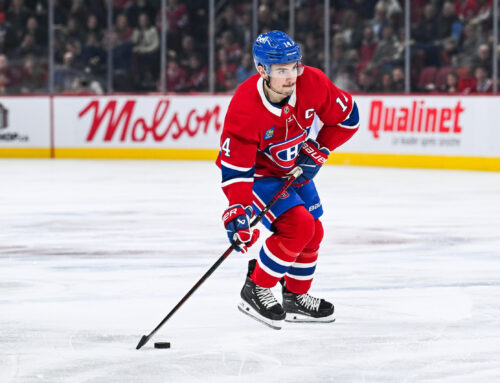
Lane Hutson – Montreal Canadiens
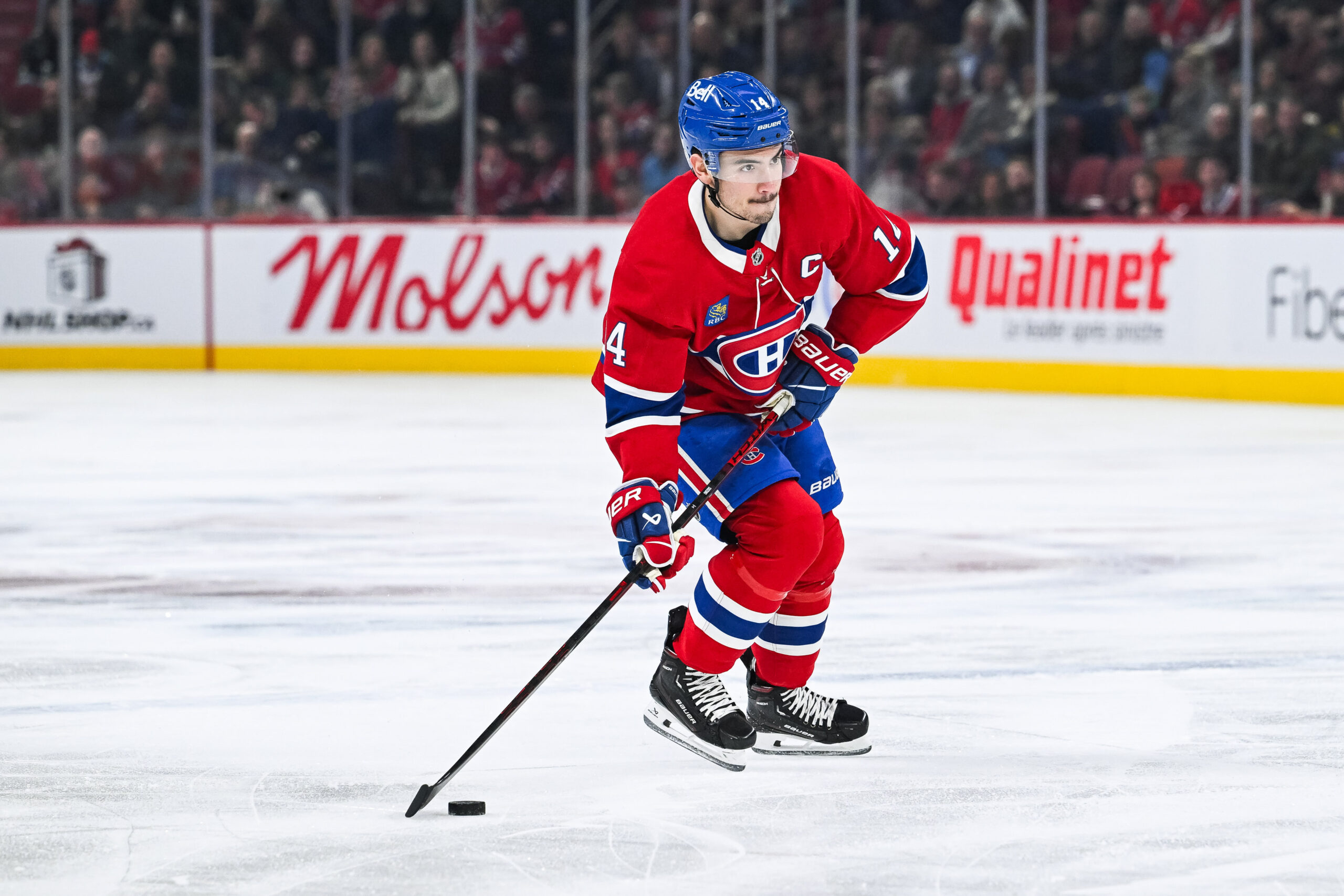
Only four defensemen in the league tallied more power-play points than Hutson last year, so suggesting he'll improve on his 26 PPPs as a rookie is a big statement, but it's one I stand by. The logic here is that Hutson had to spend the first stretch of last season on PP2, limiting his overall output. In his first 20 appearances, he saw a modest 40% of Montreal's total power-play time and posted a mediocre four PPPs. He started seeing consistent reps on the top unit from that point on and racked up 22 power-play points over his next 62 games, holding a 67% share of the team's PP time. For reference, Evan Bouchard was the only blueliner with more PPPs than Hutson during that stretch, and he had 23. A full season on PP1, with exposure to the team's top offensive talents, should allow Hutson to build on an outstanding rookie showing with the man advantage. While some might be wary of a sophomore slump, with teams having a better scouting report on Hutson one year into his NHL career, I just don't think there's much opponents can do to stop him. He's so dynamic offensively, if penalty kills stop biting on his shifty fakes and giving him space, he'll just make the perfect pass to one of his talented teammates. One wrinkle might be figuring things out with Ivan Demidov on PP1, because even supremely talented individuals need time to adjust and build chemistry together. However, Hutson and Demidov skated together on the power play very briefly in the playoffs and looked good together, so this isn't completely foreign territory such that we'd need to account for significant growing pains.
Sam Rinzel – Chicago Blackhawks
The 21-year-old blueliner had excellent results in a small sample with the Blackhawks last season. After an impressive college campaign in which he was one of the highest-scoring blueliners in the NCAA, Rinzel signed his entry deal with Chicago and racked up five points in nine games. Three of those points came with the man advantage over his final six appearances, where he saw 84% of the team's total power-play time. While most fantasy hockey nerds will be familiar with Rinzel, I don't think he has the same name recognition as Artyom Levshunov, Alex Vlasic or Kevin Korchinski – three blueliners with plenty of potential who have all been linked to Chicago's PP1 at various stages of their young careers. Again, it was in a small sample, but in my eyes, Rinzel jumped to the front of the PP QB line in Chicago with his play last season. He'll fly under the radar in most one-year fantasy drafts, but could provide great value if your league rewards power-play production. The Blackhawks are perceived as a below-average team overall, but they had a surprisingly strong showing with the man advantage last year, finishing seventh overall with a 24.9% success rate. The four forwards responsible for that success last year – Connor Bedard, Tyler Bertuzzi, Teuvo Teravainen and Ryan Donato – will all be back in the mix next season, so it's not like a high degree of turnover will make that rate harder to replicate.
John Klingberg – San Jose Sharks
It's not exactly going out on a limb to suggest that a player who tallied zero power-play points last year will be able to improve on that total in the upcoming campaign. Klingberg has been limited to just 25 regular season games over the past two years as he underwent hip resurfacing surgery in December 2023. He had a solid post-surgery showing with the Oilers and earned himself a one-year, $4-million deal with San Jose. Klingberg has always been regarded as an offensively focused blueliner with defensive deficiencies, but that won't be a huge concern for a rebuilding Sharks team that isn't overly concerned about winning or making the playoffs this year. It makes a lot of sense for San Jose to put Klingberg in a position to produce (i.e., the top power-play unit), pump up his value, and then flip him to a contender at the trade deadline. Klingberg doesn't seem to face much competition for the PP1 QB role as his offensive toolbox and track record of power-play production look better than the next best option Dmitry Orlov. 20-year-old Luca Cagnoni had excellent offensive results in the AHL last year, but probably needs more time before he's ready for full-time PP1 duties in the NHL. San Jose's power play wasn't anything to write home about last season but features an abundance of young, up-and-coming talent between Macklin Celebrini, Will Smith, and William Eklund – plus the veteran sniping smarts of Tyler Toffoli.
Related Posts
Starting Goalies







Top Skater Views
 N.J
 T.B
 BUF
 EDM


Top Goalie Profile Views
| Players | Team | |
|---|---|---|
| STUART SKINNER |
 WPG | |
| LINUS ULLMARK |
 OTT | |
| DAN VLADAR |
 PHI | |
| DYLAN GARAND |
 NYR | |
| JOEL HOFER |
 STL | |
LINE COMBOS
| Frequency |
WPG Players
| |
|---|---|---|
| 21.0 | MARK SCHEIFELE COLE PERFETTI KYLE CONNOR | |
| 16.7 | BRAYDEN YAGER ISAK ROSEN ADAM LOWRY | |
| 13.9 | GABRIEL VILARDI ALEX IAFALLO VIGGO BJORCK | |
DobberHockey Podcasts
Keeping Karlsson: Short Shifts – Injuries, Outjuries, and Duds
Elan talks about all the latest injuries, outjuries, big performances and duds over a tight 20 minutes in this week’s episode of Short Shifts.
Keeping Karlsson: Never Tell Me the Podz
Elan and Brian do a wellness check on the Maple Leafs, lament Chicago and Buffalo snoozers, wonder whether and which Flyers have figured it out, and pick out the Capital standing out from the crowd.

Fantasy Hockey Life: Ep 505 Prospects With Plenty to Prove Part 1
Victor and Jesse return to talk about prospects with plenty to prove. This week it’s: Tij Iginla, Berkly Catton, Konsta Helenius, Zayne Parekh, Igor Chernyshov, Jett Luchanko, Axel Sandin-Pellikka, Artyom Levshunov, Michael Hage, and Carter Bear. Have a listen! Our show is part of the Dobber Podcast Network and sponsored by Fantrax.com. Email [email protected] and […]
Keeping Karlsson: Matchup Maximizer 2026/27 Week 4
Elan takes a look at the schedule for the upcoming weeks of NHL action and recommends players with good schedules that you should consider streaming in to win your head to head matchups.
Keeping Karlsson: Short Shifts – NHL Frozen Frenzy Recap
Elan and Lewis recap the Frozen Frenzy as well as two big returns and more!