

The Journey: NCAA Standouts Late in the Year – Part 1
Victor Nuno
2026-04-18
As the NCAA season comes to a close, it's a good time to reflect on player performance, late-season development, and what it all means for their long-term outlook. This is Part 1 of a two-part series highlighting a mix of draft-eligible talent and NHL-affiliated prospects, each trending in different ways but unified by their impact down the stretch.
Gavin McKenna, LW – Draft Eligible
The youngest player in this group is also the one with the highest upside. While he finished fifth in total points, he ranked second in points-per-game only behind Ethan Wyttenback, reinforcing just how impactful he was on a per-game basis. McKenna continues to declare himself as one of the premier young offensive talents, driven by elite playmaking ability, high-end creativity, and the ability to process the game at elite speed. His vision and puck control allow him to dictate pace and consistently create high-danger opportunities, and he finished the year strong with four multi-point games in his final 10, including an eight-point explosion against Ohio State. He was also held off the scoresheet just once during that stretch, highlighting his consistency as the season closed.
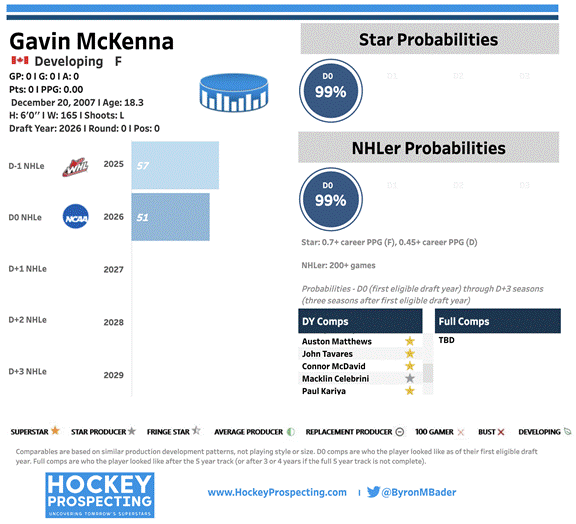
McKenna was also impressive at the World Junior Championship, where he was one of Team Canada's top performers, trailing only Michael Hage in production. His Hockey Prospecting profile supports the eye test, placing him firmly in elite company. All of his comparables in the model are either current or former NHL superstars. One of the comparables in the model with strong stylistic similarities is Patrick Kane. As he continues to add strength, his ceiling remains extremely high, projecting as a future offensive centerpiece capable of driving play and producing at an elite level.
James Hagens, C – Boston Bruins
With Gabe Perreault and Ryan Leonard no longer at Boston College, Hagens had far less offensive support this season, yet still took a meaningful step forward. After producing at roughly a point-per-game pace previously, he elevated his output to 47 points in 34 games, carrying a larger share of the offensive load. Even though Boston College fell short of qualifying for the NCAA tournament, this represented significant individual progress. Since then, Hagens has turned professional, recording four points in six games with Providence before joining Boston for their Stanley Cup playoff run.
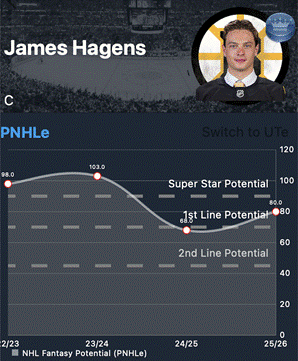
Hagens was one of the most dynamic offensive drivers in college hockey, blending pace, agility, and high-end puck skill to consistently generate chances. He thrives in transition, attacking defenders with speed and creating space for both himself and his linemates, and his confidence with the puck has continued to grow. His pNHLe, via the NHL Rank King model, has rebounded to 80 after dipping to 68 last season, reinforcing the upward trend in his development. While size will continue to be a point of discussion, his intelligence and skill allow him to mitigate those concerns, and he projects as a high-end offensive contributor with legitimate top-six upside at the NHL level.
Porter Martone, RW – Philadelphia Flyers
Martone had an outstanding season with Michigan State, recording 50 points in 35 games while playing a key role for one of the top teams in college hockey. Even though MSU fell short of a national title, Martone was a driving force throughout the year, consistently contributing in all situations. Since turning pro with Philadelphia, he has continued that momentum, producing at over a point-per-game pace and quickly establishing himself as one of the most impactful young players in the league. His finishing data from HockeyViz supports the eye test, showing a +15% shot danger rate, a strong indicator that he is consistently getting to high-danger areas and generating quality looks.
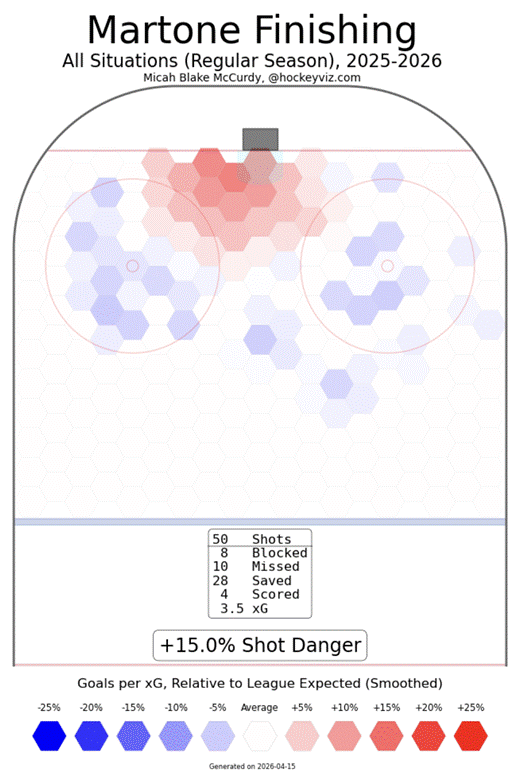
Martone brings a true power-forward presence, using his size and strength to win puck battles, protect possession, and create space in the offensive zone. What has stood out more as the season progressed is how his production has tracked with his level of engagement, when he plays assertively, he becomes a multi-dimensional threat as both a scorer and playmaker. His presence has already begun to reshape the Flyers' offensive identity, and if this trajectory continues, he has the tools to develop into a top-six winger with strong multi-category impact and the ability to influence playoff-caliber hockey.
Cole Hutson, D – Washington Capitals
Hutson's 32 points in 35 games may look like a step back from his 48 in 39 as a freshman, but context matters. Boston University took a significant step back as a team, and Hutson still led the club in scoring, finishing four points clear of Cole Eiserman and 11 ahead of Jack Harvey. Rather than regression, this was more a reflection of increased responsibility and tougher conditions, with Hutson continuing to drive offense from the back end despite reduced team support.
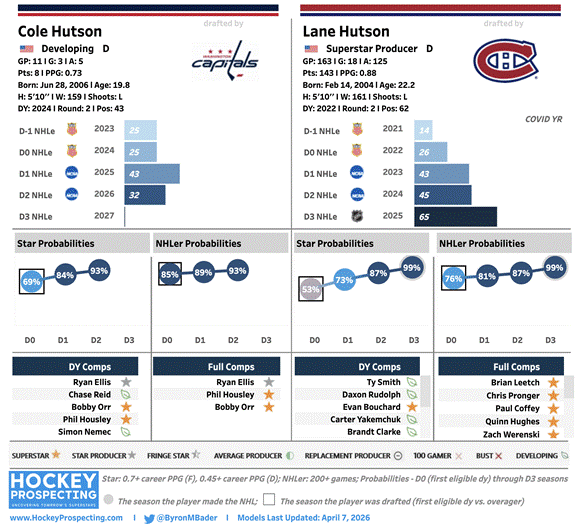
After BU failed to qualify for the NCAA tournament, Hutson signed with the Washington Capitals and made an immediate impact, posting 10 points in his first 14 games and quickly becoming a fan favorite. The comparisons to his older brother, Lane Hutson, are becoming more prominent, and in some models, including Hockey Prospecting, Cole is actually tracking ahead at the same age. It's also notable that Cole is a June birthday, making him younger for his draft class relative to Lane. Stylistically, he remains one of the most offensively gifted defensemen in his cohort, excelling in transition with elite skating, poise under pressure, and high-end puck movement. While questions about size and defensive play persist, his offensive ceiling is undeniable, projecting as a high-impact, point-producing defenseman at the NHL level.
Ethan Wyttenbach, LW/RW – Calgary Flames
Wyttenbach was one of the biggest surprises of the NCAA season. Coming straight from the USHL after being selected in the fifth round by Calgary, he made an immediate impact at Quinnipiac, leading the way in points per game and emerging as a key driver of offense. His production was not just a hot stretch either, as he maintained consistency throughout the year and finished as one of the most efficient offensive players in college hockey. His pNHLe, via the NHL Rank King model, has climbed to near 80, a significant jump that underscores just how strong his transition to the NCAA has been.
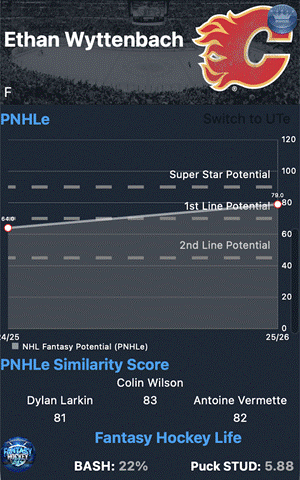
Wyttenbach's game is built on intelligence, positioning, and efficiency rather than flash. He consistently makes the right play, supports well in all three zones, and finds ways to stay involved offensively without needing to dominate possession. While a top-end comparable like Dylan Larkin may be optimistic, a more realistic range of outcomes between Colin Wilson and Antoine Vermette highlights his potential to carve out a meaningful NHL role. With his well-rounded skill set and strong foundation, he projects as a reliable middle-six option capable of providing stability and secondary production.
Max Plante, C/W – Detroit Red Wings
Plante put together an exceptional season at Minnesota Duluth, elevating his production from 28 points in 23 games to 52 points in 40 games, ultimately earning the Hobey Baker Award as the NCAA's most outstanding player. His offensive growth was driven by his elite playmaking ability, consistently creating opportunities through vision, anticipation, and precise puck distribution. He processes the game quickly, thrives in transition, and is especially dangerous on the power play where his passing ability can take over shifts.
Looking ahead, Plante has announced he will return for his junior season, where he is expected to play alongside his brothers, Zam and Victor. While his offensive toolkit already looks the part of a future top-six contributor, continued physical development will be key in determining just how high he can climb. As he adds strength and continues to handle pace and contact more consistently, his projection becomes even more promising. If this trajectory holds, he could play a meaningful role in helping Detroit push toward ending its playoff drought in the coming years.
Ty Hanson, D – Undrafted
Hanson, a teammate of Max Plante at Minnesota Duluth, took a significant step forward this season, nearly doubling his production from under half a point per game to just shy of a point-per-game pace. Despite being undersized at 5-9, he found ways to consistently impact play, using his pace and energy to close gaps, create turnovers, and drive possession. As the season progressed, that effort began to translate into more reliable offensive contributions, making him a more complete and noticeable presence shift to shift. Currently undrafted, Hanson is generating enough interest that an NHL team could look to sign him as a free agent following this breakout campaign.
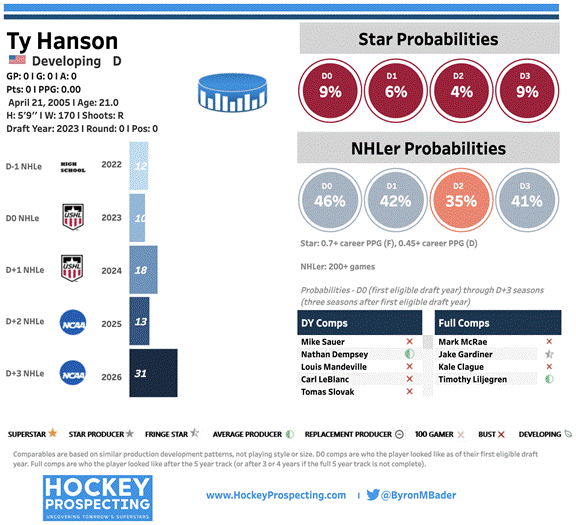
Hanson projects as a strong puck-moving defender who sees the ice extremely well and is highly competitive. While his Hockey Prospecting profile still pegs him as a long shot, with star potential rising to 9 percent, the upward trend is notable. Players with his style often find ways to carve out roles, Nick Blankenburg comes to mind as a reasonable comparable. His ceiling may be limited offensively, but his improving production and translatable habits give him a stronger foundation than previously expected.
Michael Hage, C – Montreal Canadiens
Hage was one of the very best players in college hockey this season, building on a strong freshman year at Michigan by elevating his production to 52 points in 39 games. His blend of size, skill, and offensive instincts made him a constant threat, as he used his frame effectively to protect the puck, create space, and finish plays. That momentum carried into the World Junior Championship, where he was one of Canada's standout performers, posting 15 points in seven games en route to a bronze medal. He led the tournament in both assists and total points and was named to the All-Star team, further cementing his status as a high-end offensive talent.
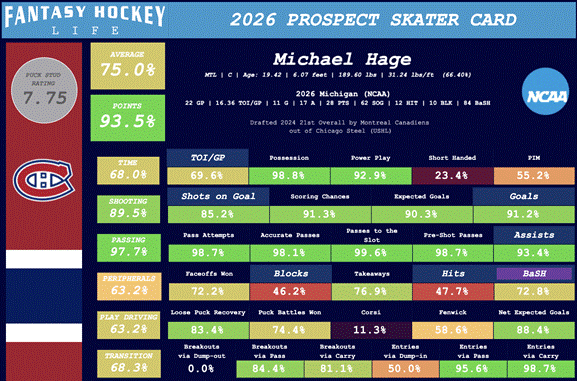
Hage's confidence grew as the season progressed, leading to more assertive play and a greater ability to take over games. Despite a disappointing end to Michigan's season with an overtime loss to Wisconsin in the Frozen Four, Hage made the somewhat surprising decision to return for his junior year rather than join Montreal for a potential Stanley Cup playoff run. Long term, his combination of size and skill gives him a clear path to a top-six role, and if he continues to build on this trajectory, he has the tools to become a highly impactful offensive forward at the NHL level.
This group of NCAA standouts reflects a wide range of developmental paths, from high-end offensive talents to steady, projectable role players. Late-season performance often provides valuable insight into how players respond to increased pressure and responsibility, and many of these prospects have taken meaningful steps forward. As the offseason approaches, the focus will shift to which of these players can carry this momentum into next year. For dynasty managers, this is a key window to identify both rising assets and potential value opportunities before roles and perceptions solidify further.
Thanks for reading! See you next week. For more fantasy hockey analysis, or if there's a prospect, topic, or theme you'd like me to cover, follow and message me on X: https://x.com/VictorNuno12
Related Posts

Starting Goalies









Top Skater Views
| Players | Team | |
|---|---|---|
| JACK QUINN |
 BUF BUF | |
| MASON MCTAVISH |
 STL STL | |
| T.J. HUGHES |
 COL COL | |
| QUINTON BYFIELD |
 L.A L.A | |
| FRASER MINTEN |
 BOS BOS
| |
Top Goalie Profile Views
| Players | Team | |
|---|---|---|
| JACOB FOWLER |
 MTL MTL | |
| SERGEI MURASHOV |
 PIT PIT | |
| DYLAN GARAND |
 NYR NYR | |
| JET GREAVES |
 CBJ CBJ | |
| CARTER HART |
 VGK VGK
| |
LINE COMBOS
| Frequency |
 VAN Players VAN Players
| |
|---|---|---|
| 13.8 | PAUL COTTER FILIP CHYTIL BROCK BOESER | |
| 13.2 | LIAM OHGREN DREW O'CONNOR LINUS KARLSSON | |
| 12.4 | ELIAS PETTERSSON JONATHAN LEKKERIMAKI JAKE DEBRUSK | |
DobberHockey Podcasts

Keeping Karlsson: Short Shifts – NHL Frozen Frenzy Recap
Elan and Lewis recap the Frozen Frenzy as well as two big returns and more!
Keeping Karlsson: Delusions of Garandeur
Elan and Brian dive into the latest NHL hot streaks, cold streaks, line changes, outjuries, injuries, buy-lows and sell-highs to give you top notch tips in your fantasy hockey league

Fantasy Hockey Life: TiDy Takes Part 2
Last week, Victor Nuno and Ryan Downey broke down trades from our top tier dynasty league. This week, they consider some dynasty trades from other divisions. Have a listen! Our show is part of the Dobber Podcast Network and sponsored by Fantrax.com. Email [email protected] and ask to join our free discord. Join our Patreon at […]
Keeping Karlsson: Matchup Maximizer 2026/27 Week 3
Elan takes a look at the schedule for the upcoming weeks of NHL action and recommends players with good schedules that you should consider streaming in to win your head to head matchups.
Keeping Karlsson: Short Shifts – Sharks Looked Like Celebweenies
Elan recaps the major injuries, outjuries, game results and changed line combos that we’ve seen since Sunday’s mega-show.