

Ramblings: Breaking Down Fantasy Production for Norris, Mantha, Dorofeyev, and Byfield
Puneet Sharma
2026-05-18
We're starting to hit those lighter nights on the NHL schedule where there's just not much to cover, and tonight is one of them. With no games on tap, I decided to take a deeper dive into a few players for one reason or another, didn't fully take that next step. In a lot of cases, it comes down to opportunity not quite catching up yet such as shifting roles, inconsistent linemates, or teams still figuring out how to best deploy them in the lineup. The key difference in this group is how the production is actually being generated. Some players lean on shot volume and steady involvement in the offense, others are more finish-driven and power-play dependent, and a few are still waiting on stable roles before their numbers can fully scale. Once you strip away the raw point totals, the separation becomes clearer between those producing within strong environments and those whose output is still heavily context-driven.
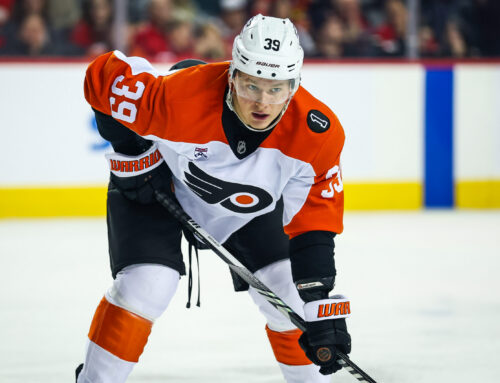
Josh Norris reaching the 70-point mark really comes down to one factor above everything else: health. The offensive talent has never really been the concern, but durability continues to prevent him from fully putting everything together over a complete season. Norris still has not played a full NHL season and has yet to even hit the 70-game mark once in his career. His high remains 66 games back in 2021-22, which also happened to be the best offensive season of his career from a PPG perspective at 0.83. This past season followed a familiar pattern, limited to just 44 games because of multiple injuries, though the production remained strong with a 0.77 PPG pace, the second-best mark of his career. Buffalo looks far more competitive than in previous years, and the roster has started trending in the right direction. More support throughout the lineup should help create better offensive conditions overall, especially for a player like Norris who thrives when he has skilled playmakers around him and consistent power-play deployment.
That said, once you dig into the underlying profile, there are still reasons for caution. Norris produced at a 63-point pace this season and his 5v5 scoring results were strong, but a lot of the production leaned heavily on efficiency rather than volume. His on-ice numbers were inflated by percentages that are difficult to confidently project year over year. Norris finished with a 1024 PDO at 5v5, driven largely by a 12.5% on-ice S%. There was also a gap between actual and expected goals, with his line scoring 37 at even strength on just 25.1 expected. That level of overperformance usually points to regression risk. Role also remains part of the equation. His deployment has been more balanced than heavily offensive, which naturally caps some of the upside from a fantasy perspective. At the end of the day, Norris still profiles more like a strong 60–65-point player than a player who can take hit that next tier. It's not to say it isn't possible; however, he would need to stay healthy, keeps his power-play role, and gets stable top-six deployment for a full year. Everything would need to break perfectly for that to happen.
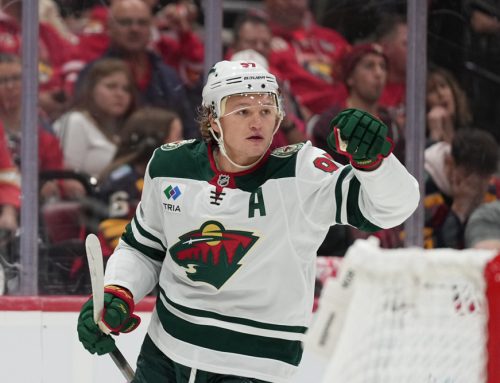
Mantha's career arc tells a pretty consistent story: strong per-minute production, flashes of top-line finishing ability, and just enough inconsistency in usage and health to cap his ceiling in the mid-60s.
This past season in Pittsburgh was another example of that balance. Mantha finished with 64 points in 81 games, producing at a 65-point pace. On the surface, that looks close enough to suggest a 70-point season could still happen under the right circumstances. There are definitely positives in the profile that support that idea. His 21.7 S% was extremely high, but even with some regression, Mantha still projects as an efficient finisher. His 3.1 PTS/60 at 5v5 was legitimately strong, while his 7.4 SOG/60 showed he remained involved enough offensively to sustain solid production. He also benefited from favorable deployment, starting over 63% of his shifts in the offensive zone, which naturally helped boost his counting stats.
The problem is that the limitations show up just as clearly once you dig deeper. Mantha still is not a true play driver. His 47.9 CF% and near break-even 50.7 xGF% point toward a player who benefits more from his environment than controls it himself. That matters when trying to project a jump from the mid-60s into the 70-point range because players who consistently reach that level usually drive play at even strength or produce at an elite level on the power play. Mantha has not consistently done either. Despite spending time with high-end talent, he finished with just 13 PPP's and has never really profiled as a high-end playmaker.
At even strength, he moved throughout the lineup, spending significant time with players like Justin Brazeau and Ben Kindel while only getting brief stretches alongside Evgeni Malkin and Sidney Crosby. His best offensive runs usually came in short bursts with stronger linemates, but overall, the deployment leaned more middle-six than true top-line usage.
The uncertainty around Pittsburgh's veteran core is of concern and it cuts both ways for Mantha. On one hand, should Mantha return to Pittsburgh it could open up more usage, potentially pushing him into a larger offensive role with increased TOI and more power-play responsibility. On the other hand, it likely weakens the overall offensive ecosystem. Mantha has historically been a complementary scorer, so removing those elite linemates from the equation could probably hurt his efficiency more than increased volume would help it.
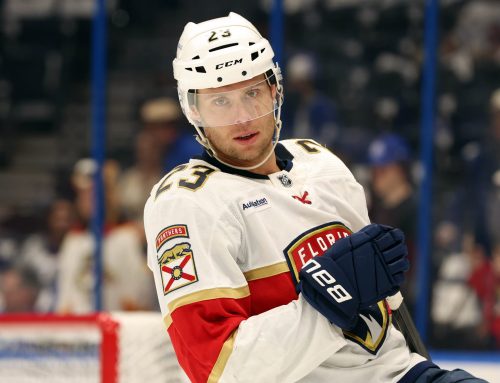
Dorofeyev is a very different case compared to the previous names you've worked through. He is a player who has already taken that next step and is now trying to prove the production is repeatable at a higher tier.
His 64-point season jumps off the page and the biggest driver has been elite deployment. He spent significant time riding shotgun with Mitch Marner and Tomas Hertl at even strength, and was also a staple on a loaded top power-play unit alongside Jack Eichel and Mark Stone. That unit alone accounted for 20 of his 30 power-play points, which is a massive chunk of his overall production. His S% at 16.1% is elevated, but not outrageous for a player getting high-end looks in a premium offensive role. His 2.8 shots per game rate paired with 9.6 SOG/60 suggests this wasn't a passive passenger role. He was actively driving offense within those lines, not just finishing plays.
Even his xGF at 5v5 (49.33) closely align with actual output (48 GF at 5v5), which is a strong indicator that what we saw wasn't purely luck-driven. The key question isn't whether Dorofeyev can produce, but whether he can maintain this exact environment. His value is heavily tied to role insulation. He benefited from elite linemates and a top-tier power play that was operating at an extremely efficient clip. He has currently posted 11 points in 12 playoff games with nine of those being goals and his primary line mates have been Jack Eichel and Ivan Barbashev while also seeing time on the to man-advantage.
Dorofeyev finished at a 64-point pace over a full 82-game season, so we're not asking for a massive leap, just marginal growth. The key is, if he holds the same role, a bump to 70 is absolutely within reach. Even a slight increase in assists, which is possible given the talent around him, could get him there without needing another jump in goal scoring.
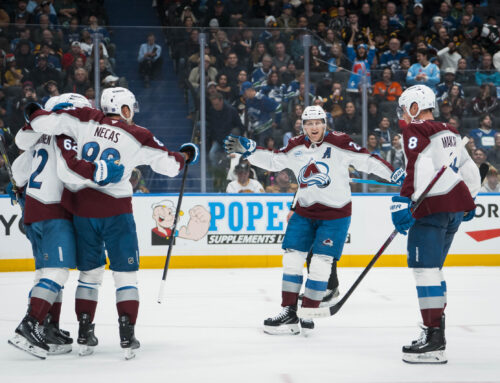
Byfield' s tools, progression, and impact are all there, but the way he was being deployed was capping him in the box score. The numbers are clearly underwhelming with back-to-back seasons hovering in the mid-50s followed by a slight dip to 49 points giving the impression of stalled growth. However, all of his underlying numbers suggest that Byfield is still driving play at a strong level. He is actively involved in generating offense rather than just riding shotgun. His PTS/60 dropped from 2.5 to 1.9, and his shot rate sits at 6.8 SOG/60, which is modest for someone expected to anchor a top line. That's the key tension in his profile right now. A big part of that comes back to deployment. His offensive zone start rate fell and he has been leaned on in more balanced situations which pulled down his counting stats. The revolving door of linemates didn't' helped either. While there have been stretches alongside Kevin Fiala and Adrian Kempe, his longest run came with Trevor Moore and Alex Laferriere. Solid players, but not the kind of elite finishers who consistently convert chances at a high rate. Add in time with more defensively inclined wingers like Joel Armia and Warren Foegele, and the offensive environment has lacked consistency. For a player still defining his offensive identity, that matters.
The clearest cap on his upside shows up on the power play. Despite logging close to two minutes per game, similar to is PP TOI the previous season, he finished with just 11 power play points four more than last season. The issue isn't inefficiency, it's role. He's not the focal point. That still ran through Anze Kopitar, Fiala, and Kempe. Byfield's PPIPP sat at 52.4%, which reflects more of a secondary, support role rather than a primary creator or shooter. Until those changes, the ceiling remains limited.
We may see his production change for the better next season now that Anze Kopitar will no longer be in his way and the recent addition of Artemi Panarin prior to the trade deadline. He's already logging over 20 minutes a night and holding his own in all situations, which is a strong foundation. The question isn't ability, it's environment. Until we see more of a stable offensive role, it's hard to believe the jump in production.
Thanks for reading! See you next week! For more fantasy hockey content and analysis, follow me on X @Punters_hockey. If you have any questions about your team or a trade? My DMs are always open, happy to help!
Related Posts
Starting Goalies












Top Skater Views
 N.J
 L.A
 DET

Top Goalie Profile Views
| Players | Team | |
|---|---|---|
| DYLAN GARAND |
 NYR | |
| JOSEPH WOLL |
 PHI | |
| YAROSLAV ASKAROV |
 S.J | |
| ARTURS SILOVS |
 PIT | |
| JACOB FOWLER |
 MTL | |
LINE COMBOS
| Frequency |
 BUF Players | |
|---|---|---|
| 24.7 | JACK QUINN NOAH OSTLUND ZACH BENSON | |
| 17.1 | TAGE THOMPSON RYAN MCLEOD JOSH DOAN | |
| 15.9 | BECK MALENSTYN PEYTON KREBS JUSTIN DANFORTH | |
DobberHockey Podcasts

Keeping Karlsson: Never Tell Me the Podz
Elan and Brian do a wellness check on the Maple Leafs, lament Chicago and Buffalo snoozers, wonder whether and which Flyers have figured it out, and pick out the Capital standing out from the crowd.

Fantasy Hockey Life: Ep 505 Prospects With Plenty to Prove Part 1
Victor and Jesse return to talk about prospects with plenty to prove. This week it’s: Tij Iginla, Berkly Catton, Konsta Helenius, Zayne Parekh, Igor Chernyshov, Jett Luchanko, Axel Sandin-Pellikka, Artyom Levshunov, Michael Hage, and Carter Bear. Have a listen! Our show is part of the Dobber Podcast Network and sponsored by Fantrax.com. Email [email protected] and […]
Keeping Karlsson: Matchup Maximizer 2026/27 Week 4
Elan takes a look at the schedule for the upcoming weeks of NHL action and recommends players with good schedules that you should consider streaming in to win your head to head matchups.
Keeping Karlsson: Short Shifts – NHL Frozen Frenzy Recap
Elan and Lewis recap the Frozen Frenzy as well as two big returns and more!
Keeping Karlsson: Delusions of Garandeur
Elan and Brian dive into the latest NHL hot streaks, cold streaks, line changes, outjuries, injuries, buy-lows and sell-highs to give you top notch tips in your fantasy hockey league