

The Journey: Dobber’s Prospect Defense Rankings – The Biggest Risers and Fallers Heading Into 2026-27
Victor Nuno
2026-09-12
Last week, we looked at the biggest risers and fallers in Dobber's forward prospect rankings. This week, we turn to the defensemen, where there was much less movement from July to September.
Most of the larger changes since June came from the addition of the 2026 draft class, so context matters. As always, we'll look beyond the rankings at production, development, NHL opportunity, and fantasy upside to determine which moves actually matter heading into 2026-27.
Risers
Ryan Lin, D, San Jose Sharks
July: 17 | September: 16 | Change: +1
Calling Lin a “riser” requires some context because moving from 17th to 16th is hardly dramatic. In fact, his one-position move illustrates just how little Dobber’s defense rankings changed between July and September. But I’m considerably more bullish on Lin than this ranking suggests. In my own evaluation, I have only five defense prospects ahead of him in terms of pure upside. Even playing on a poor WHL team, Lin was elite in several areas, something that really stands out on his Fantasy Hockey Life skater card. The production and underlying profile are particularly impressive considering the environment around him, and I’m excited to see what he can do as that situation evolves.
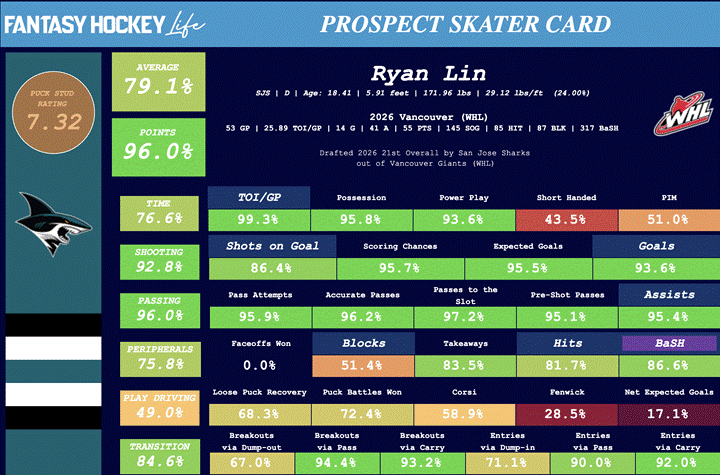
For dynasty managers, I think the bigger question isn’t whether Lin deserved to move from 17th to 16th, but whether he should already be considerably higher. His arrival as part of the 2026 draft class pushed established prospects down the rankings, but in this case, I think that’s justified. The offensive ceiling is substantial, and if his post-draft development continues in the direction his underlying profile suggests, I wouldn’t be surprised to see Lin make a much more significant move up these rankings over the next year.
Ryan Ufko, D, Nashville Predators
June: 17 | July: 25 | September: 24 | Change since June: -7; since July: +1
Ufko is probably the most interesting true riser in an otherwise remarkably static September update. He ranked 17th in June before dropping to 25th when the 2026 draft class entered the pool, and has already started working his way back up to 24th. More importantly, there is legitimate performance behind the optimism. Ufko’s pNHLe rose following an impressive NHL stint in which he recorded 11 points in just 18 games despite averaging fewer than 14 minutes per night. That’s pretty exceptional production for a young defenseman in limited minutes and gives us tangible evidence that his offensive game can translate at the NHL level.
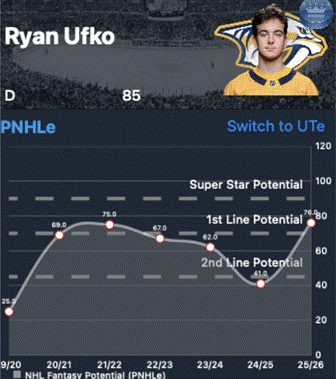
That’s why I wouldn’t get caught up in Ufko sitting seven spots lower than he did in June. Much of that decline is simply the result of new prospects entering the rankings, while Ufko himself may actually be a better fantasy prospect today. He’s already demonstrated that he can generate offense in the NHL, and if increased opportunity and eventually power-play time follow, there could be considerable upside from here. Rather than viewing the ranking decline as a reason for concern, I’d see Ufko as a potential buying opportunity if another dynasty manager is focusing too heavily on the number next to his name.
Artyom Duda, D, Utah Mammoth
June: 35 | July: 43 | September: 42 | Change since June: -7; since July: +1
Duda follows a similar ranking pattern, falling from 35th to 43rd when the new draft class arrived before moving back up one spot to 42nd. He has now graduated the Hockey Prospecting model with a 55% chance of becoming a star, which is certainly eye-catching, although that projection feels optimistic to me. Duda missed time with injury during his second AHL season, but there was encouraging progress when he played, as he increased his scoring rate to nearly half a point per game. For a young defenseman at the professional level, that’s enough improvement to keep the upside interesting.
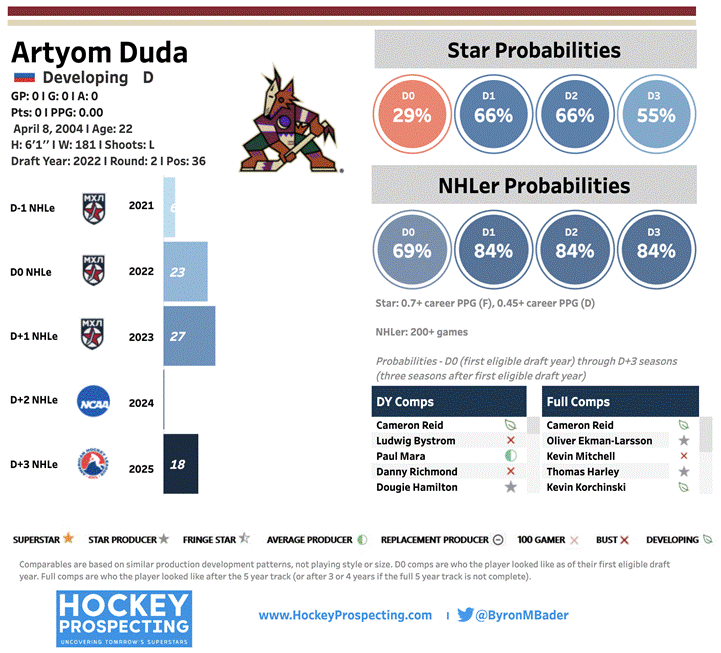
Still, I’d exercise some caution here. Duda’s underlying AHL metrics were not particularly favorable, so I’m not ready to treat the improved scoring or that 55% star projection as evidence that a breakout is inevitable. If he can take another meaningful step forward this season, particularly in the underlying numbers, he could start getting much closer to realizing the upside that once made him such an intriguing prospect. At 42nd, he’s certainly worth holding and monitoring in deeper dynasty formats, but I wouldn’t be aggressively buying based on the model or this modest ranking rise just yet.
Fallers
Luca Cagnoni, D, San Jose Sharks
June: 25 | September: 33 | Change: -8
Cagnoni’s eight-position decline initially looks like another example of the new draft class pushing an established prospect down, but in this case, I think the drop is pretty fair. Cagnoni took a step backward offensively in the AHL this season, which is particularly concerning because so much of his fantasy appeal is tied to his ability to produce offense. His Fantasy Hockey Life skater card doesn’t provide much reassurance either, with a lot of red in the underlying metrics. For an undersized offensive defenseman, you really want the production and underlying numbers to make a compelling argument for NHL upside, and right now they aren’t doing that.
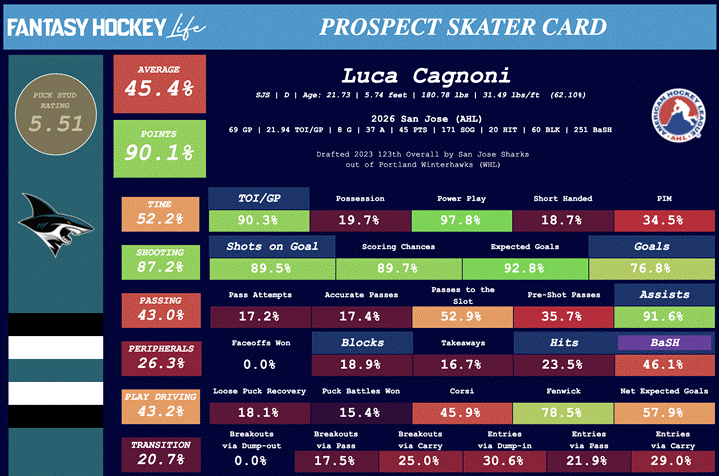
The other concern is opportunity. San Jose continues to accumulate high-end young talent, including Ryan Lin and Keaton Verhoeff on defense, so Cagnoni ultimately needs to establish himself as someone worthy of premium offensive and power-play usage. I’m not writing him off, but I think his fantasy ceiling looks less certain today than it did a year ago. Unlike some ranking declines that are largely cosmetic, there are legitimate reasons for Cagnoni to have fallen here. I’d want to see a meaningful rebound in both his production and underlying metrics this season before becoming bullish again.
Tyson Jugnauth, D, Seattle Kraken
June: 33 | September: 41 | Change: -8
Jugnauth also dropped eight positions, from 33rd in June to 41st in September. Like Cagnoni, much of that movement reflects the changing population of the rankings rather than an eight-position collapse in his actual prospect value. That's particularly important with offensively inclined defensemen, where development can be nonlinear and fantasy upside often depends on skills that aren't fully captured by where someone sits on an NHL organizational depth chart today.
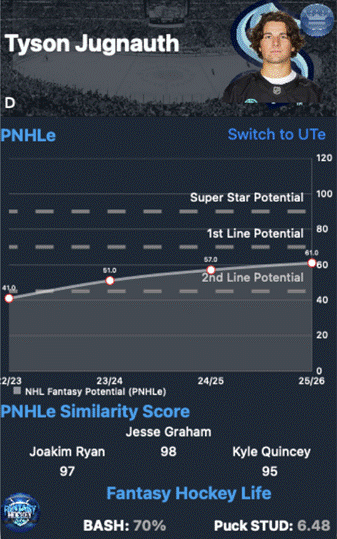
I still like Jugnauth quite a bit, and I would use this fall in the rankings as a buying opportunity. His offensive tools remain the reason to be excited, and his 61 pNHLe in Mason Black's model provides another encouraging indicator of that upside. The path to NHL minutes and eventual power-play opportunity still needs to develop, but I'm willing to be patient with this profile. If another dynasty manager is becoming impatient because Jugnauth has slipped toward the bottom of the top 50, I'd be looking to take advantage.
Seamus Casey, D, New Jersey Devils
June: 13 | September: 22 | Change: -9
Casey has the largest numerical decline among the players we're examining, falling from 13th in June to 22nd in September. He's also one of the more complicated players on this list. Casey has produced reasonably well in the AHL and his offensive instincts and puck-moving ability remain easy to see. But when you look beyond the production, his underlying metrics on the Fantasy Hockey Life Skater Card reveal several concerns with his overall profile.
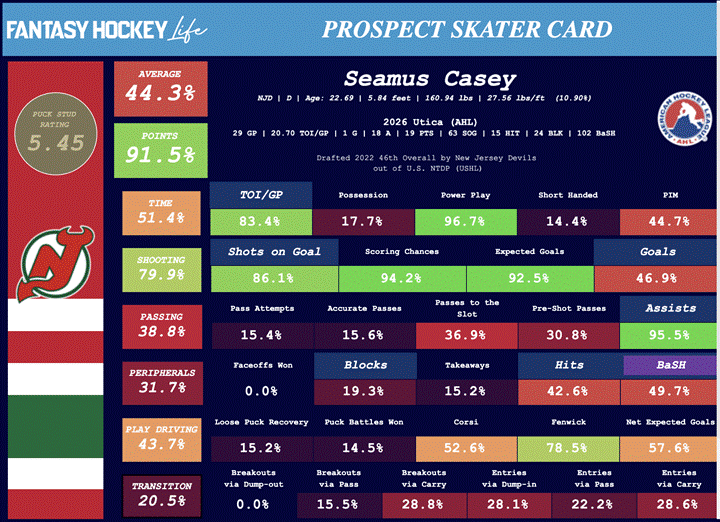
That makes this more than simply an opportunity problem. New Jersey's defensive depth certainly complicates his path, particularly for a player whose fantasy ceiling will depend heavily on offensive deployment and power-play usage. But the underlying numbers also raise questions about how completely Casey's game will translate to the NHL and whether he can earn the type of role necessary to become an impact fantasy defenseman. I still like the talent enough that I wouldn't overreact to the nine-spot fall, but unlike Jugnauth, I'm not necessarily treating the decline as an obvious buying opportunity. At 22nd, Casey still carries upside, but there is enough risk in both the profile and the opportunity that the drop feels warranted.
Tanner Molendyk, D, Nashville Predators
June: 9 | September: 17 | Change: -8
Molendyk falling from ninth to 17th feels more significant because movement near the top of a prospect list matters more than equivalent movement further down. Some of that is certainly the influx of new prospects, but I also think Molendyk's fantasy profile warrants some skepticism. His Hockey Prospecting star probability peaked at 14% and has since trended down to just 5%, which reinforces the concern that his real-life NHL value may ultimately exceed his fantasy value.
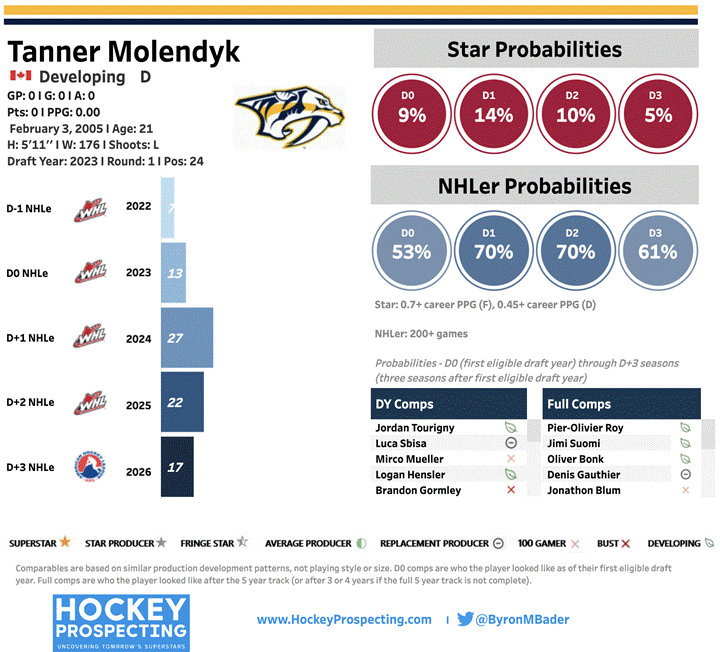
I think Molendyk is very likely to become an NHL defenseman. The bigger question is whether he ever develops into the type of defenseman dynasty managers really want. Nashville also has Cameron Reid ninth in these rankings and Ufko 24th, adding competition for the offensive and power-play opportunities that would be necessary for Molendyk to deliver meaningful fantasy upside. I still like him as an NHL prospect, but I'm considerably less enthusiastic about the fantasy ceiling. In that context, the fall from ninth to 17th feels less like a buying opportunity and more like an appropriate recalibration of his dynasty value.
Scott Morrow, D, New York Rangers
June: 8 | September: 15 | Change: -7
Morrow falls seven spots, from eighth in June to 15th in September. Some of that is structural, but Morrow is also reaching the point where actual professional performance needs to carry more weight than draft pedigree or theoretical upside. His offensive profile still gives fantasy managers plenty to like, but the underlying numbers show that there is more work to do.
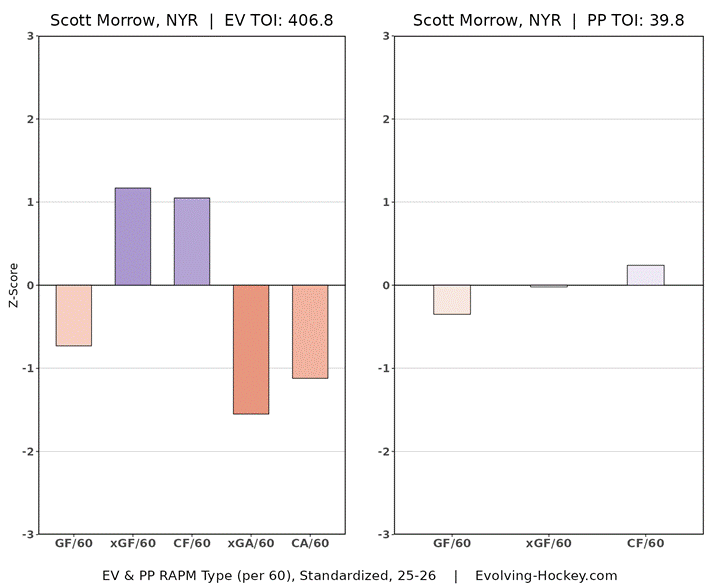
The Evolving-Hockey RAPM data is particularly interesting. At even strength, Morrow graded very well in expected goals for and Corsi for, both more than a standard deviation above average, but the defensive side was almost the mirror image. His expected goals against per 60 minutes was roughly 1.5 standard deviations worse than average, while his Corsi against per 60 minutes was more than one standard deviation below average. In other words, Morrow helped drive play offensively, but he also gave plenty back defensively. That matters for fantasy because defensive deficiencies can ultimately limit NHL minutes and, more importantly, a coach's willingness to trust a young defenseman in the situations necessary to maximize his offensive production. The upside remains intriguing, but at this stage I need to see the defensive profile improve. His fall to 15th isn’t enough for me to get out, but it makes this less of an obvious buying opportunity than the ranking change alone might suggest.
Final Thoughts
Prospect movement needs context. The addition of the 2026 draft class explains many of these declines, but a falling ranking should still prompt a closer look at production, projection, opportunity, and organizational depth. Most importantly, rankings can reveal market opportunities. If a prospect falls while your evaluation remains unchanged, it may be a chance to buy. If the market rises faster than the underlying profile, it may be time to sell. Dynasty value is created when your evaluation of a player's future differs from the market's.
Thanks for reading! See you next week. For more fantasy hockey analysis, or if there's a prospect, topic, or theme you'd like me to cover, follow and message me on X: @VictorNuno12
Related Posts


Starting Goalies



Top Skater Views
| Players | Team | |
|---|---|---|
| ROOPE HINTZ |
 DAL DAL | |
| ALEX LAFERRIERE |
 L.A L.A | |
| LUKE HUGHES |
 N.J N.J | |
| OWEN TIPPETT |
 PHI PHI | |
| KEVIN FIALA |
L.A
| |
Top Goalie Profile Views
 WSH
WSH CBJ
CBJ MIN
MIN UTA
UTA



LINE COMBOS
| Frequency |
DAL Players
| |
|---|---|---|
| 20.6 | JASON ROBERTSON MIKKO RANTANEN WYATT JOHNSTON | |
| 9.1 | JASON ROBERTSON WYATT JOHNSTON MAVRIK BOURQUE | |
| 8.0 | JUSTIN HRYCKOWIAN MICHAEL BUNTING JAMIE BENN | |
DobberHockey Podcasts

Keeping Karlsson: The 2026-27 Keeping Karlsson Breakfast Club
Don’t you forget about them! Elan and Brian remind you of at least one player on each NHL team whose name you might forget to consider at the draft table.

Fantasy Hockey Life: Tampa Bay Lightning with Erik Erlendsson
Erik Erlendsson joins the program to discuss the Tampa Bay Lightning. Jesse and Victor ask about pros Nikita Kucherov, Jake Guentzel, Brandon Hagel, Brayden Point, Anthony Cirelli, Ilya Mikheyev, Gage Goncalves, Conor Geekie, Benjamin Rautiainen, John Carlson, Victor Hedman, Charle-Edouard D’Astous, Andrei Vasilevskiy, Jonas Johansson, and Dennis Hildeby. In Cat’s instincts, Cat Silverman of InGoal […]
Fantasy Hockey Life: New York Rangers with Colin Stephenson
Colin Stephenson joins the program to discuss the New York Rangers.
Keeping Karlsson: Matchup Maximizer Schedule Deep Dive
Elan is joined by the Keeping Karlsson Accountability Czar Trev to take a deep dive into the NHL schedule for next season and how it should affect our drafting decisions.
Fantasy Hockey Life: Carolina Hurricanes with Ryan Henkel
Ryan Henkel joins the program to discuss the Carolina Hurricanes. Jesse and Victor ask about pros Sebastian Aho, Seth Jarvis, Andrei Svechnikov, Nikolaj Ehlers, Jackson Blake, Logan Stankoven, Jordan Staal, Bradly Nadeau, Felix Unger Sorum, Shayne Gostisbehere, K’Andre Miller, Alexander Nikishin, Sean Walker, Brandon Bussi, and Pyotr Kochetkov. In Cat’s instincts, Cat Silverman of InGoal […]