

Eastern Edge: Evaluating Boston’s Hot Start, Drysdale’s Production Increase, and Wilson’s Production Downturn
Khurram Sher
2026-11-17
In today's Eastern Edge article, we will look at an entire team that is long overdue for a market correction, as well as a couple of players who can bounce back after a cold start.
The luckiest team in the Eastern Conference, statistically speaking, are the Boston Bruins. Despite ranking 26th out of 32 teams in power play percentage (18.5%), they have the highest PDO in the East (103.8). At 5v5, the Bruins PDO is a league leading 104.22, meaning their shooting percentage (5th) plus their save percentage (2nd) combined is the highest amongst all teams. Theoretically, both should fall closer to league average, making them the team most in line for a market correction.
The Bruins don’t do an exceptional job in suppressing shots, as their shot attempts percentage (Corsi %) is only 48.77% which is 22nd in the league. They are being bailed out by better than average goaltending and better than average shooting luck.
Interestingly, the Bruins played in this manner all of last season. At 5v5, the Bruins PDO was second in the league (102.26). The breakdown was similar to this year: shooting percentage (6th in 2025-26) and save percentage (4th in 2025-26) were both elevated.
So which players on the Bruins are over-performing and in line for regression?
We start in nets where Jeremy Swayman (0.906%) is starting games in a 3:1 ratio over Michael DiPietro (0.925%). We don't have much of an NHL track record for DiPietro who played sparingly in previous seasons with the Vancouver Canucks. His 331:07 of ice time this season represents 71% of his career time on ice in the big leagues. He has shown that he can get it done in the minors. With the Providence Bruins he has posted 0.918%, 0.927%, and 0.930% over his past three AHL seasons. DiPietro’s 0.924 GSAx/60 ranks 6th in the league, but it is based on a small sample size. It remains to be seen if he can keep up this elite play in the NHL. Amongst all netminders, Swayman’s 5.6 GSAx is 11th in the league. His save percentage (0.906%) closely matches last year’s (0.908%), and is similar to his career (0.910%). The Bruins’ excellent team save percentage is being driven by DiPietro’s strong play.
As for the skaters, let’s try to weed out the overperformers:
Casey Mittelstadt (1086), James Hagens (1074), and Pavel Zacha (1062), have the most elevated PDO on the team.
Mittelstadt (14.7%) and Hagens (14.7%) have the highest 5v5 shooting percentage.
Matthew Poitras (87.5), David Pastrnak (83.9), Hagens (80), and Mark Kastelic (77.8) have a points participation rate (IPP) that is elevated. 83.9 is within the normal range for Pastrnak but not for the others.
Other than the defensemen that mooch secondary assists, Zacha has a high secondary assist rate (70%). He has been between 50% and 52.6% in four of the last five seasons. Zacha had an unsustainably high shooting percentage of 22.95% last year which has regressed to 14.7% in 2026-27 (career 13.1%). Zacha is seeing a jump in his usage as his average ice time has increased from last season (16:51 to 19:18).
If we look at shooting percentage, there are many Bruins in line for a drop off in goals: Mittelstadt (24.1%), Poitras (22.2%), Elias Lindholm (19.4%), Fraser Minten (17.9%), Hagens (17.6%), Mason Lohrei (17.6%), and Morgan Geekie (17.2%). They are all getting lucky on their shots, except Geekie who is a career 16.5% finisher.
Using these statistics the most likely candidates to come back down to earth are Mittelstadt, Hagens, Poitras, and to a lesser extent Zacha. Hagens (lower back) is on IR, and will miss a few weeks after receiving a cross check from Samuel Girard.
—
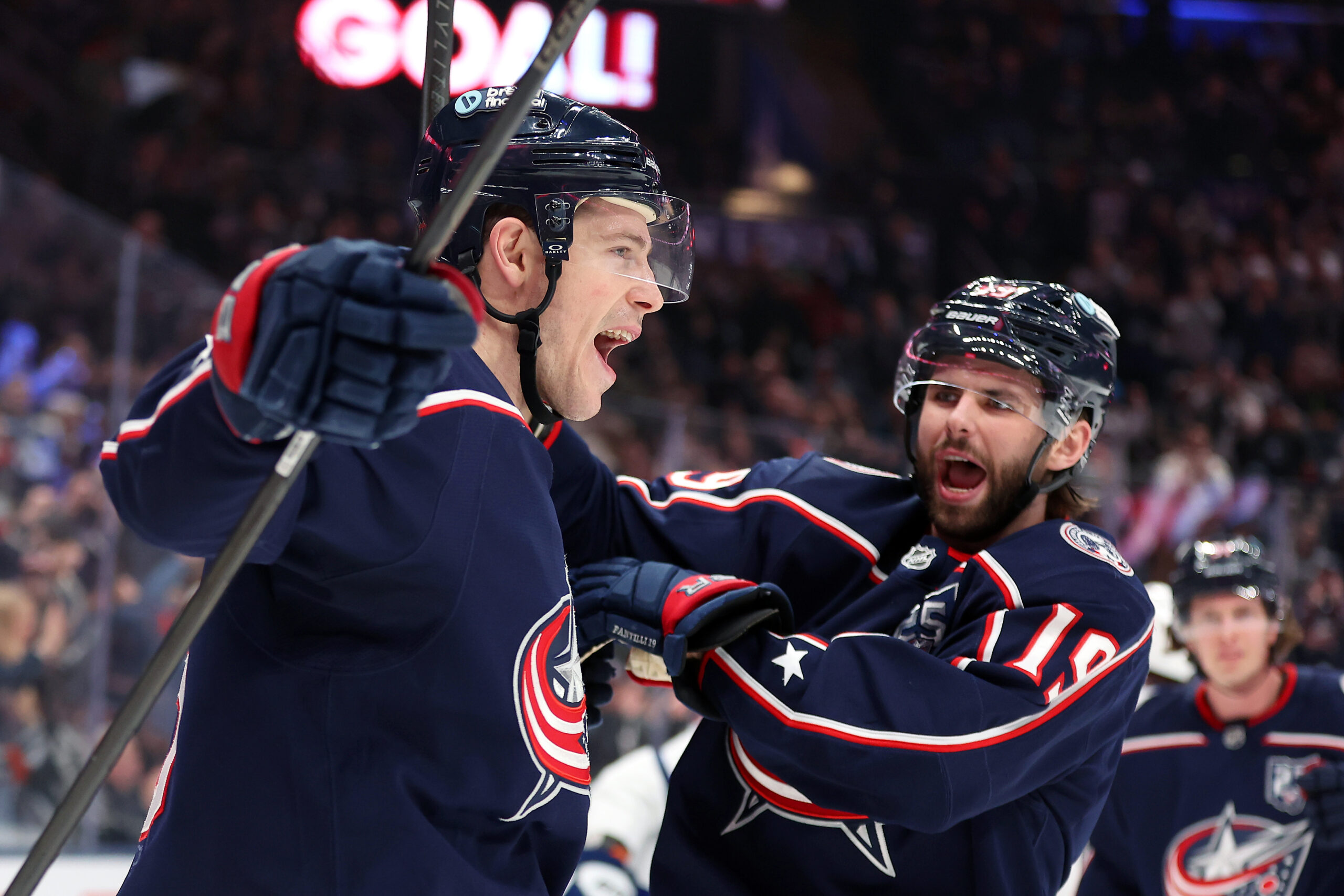
Jamie Drysdale, who started the season pointless in 11 games, but has since found his scoring touch with 10 points in 12 games, including three power play points. He was +5 in the game against the Utah Mammoth and is getting shorthanded ice time as well this season. His average ice time is 23:07, up from 21:33 last year. His goal scoring could see a slight improvement as his shooting percentage of 3.3% is lower than his career shooting percentage of 6.2%. What looks promising is that Rick Tocchet is giving about 60-65% of the power play time to a set first unit that includes Drysdale. Last year, Tocchet would spread out the talent over the two power play units and split their time more evenly. For certain stretches, Cam York and Travis Sanheim ran PP1 last season, and Drysdale finished with less than 50% of his team's power play time (this year 60.6%). The biggest factor might simply be an improved power play. The Flyers regularly finish last in the NHL in power play conversion. Thus far, they rank 27th, which is actually an improvement!
—
In 2024-25, Tom Wilson surpassed 60 points for the first time in his career. In 2025-26, he did it again. This year he has been struggling with just one point in his last 14 games. The two 60-point seasons were notable for the two highest shooting percentages of his career at 19.4% and 19.6%. He is a career 13.4% shooter. This year that number has tanked down to 6.1%. The other category that should be better is power play points where he has registered zero. Keep in mind his percentage of the team's power play time has decreased slightly from 56.9% to 49.8%, and his average ice time is down a minute and a half, from 19:28 to 17:58. His points participation rate should rebound, which is currently low at 33.3% (last year it was 67.4%). The underlying numbers indicate that Wilson should definitely be better than his current 0.38 points per game, but don't expect him to reach the 60 point plateau he was able to hit the past two years.
That is all for today! The 2026-27 season has already reached the quarter mark!
Player data from Frozen Tools. Advanced stats from Money Puck.
Follow me on X/Twitter here: @KmanHockey_DH
Related Posts


Starting Goalies













Top Skater Views
 NYI
 CHI
 UTA
 S.J
 WPG
Top Goalie Profile Views
 EDM
 MIN
 MTL
 NYR


LINE COMBOS
| Frequency |
 DAL Players | |
|---|---|---|
| 22.3 | JASON ROBERTSON MIKKO RANTANEN WYATT JOHNSTON | |
| 21.1 | SAM STEEL TYLER SEGUIN JUSTIN HRYCKOWIAN | |
| 18.1 | ARTTU HYRY ROOPE HINTZ JAMIE BENN | |
DobberHockey Podcasts

Keeping Karlsson: Cutter With All The Gs
A double whammy in Colorado, ice cold power plays and personnel in Ottawa and Buffalo, hope for a new goal scoring king, and confusing NHL creases.

Fantasy Hockey Life: Minnesota and Vancouver Dynasty Stock Watch
This week, Victor and Jesse talk Minnesota Wild and Vancouver Canucks prospects. Included: Adam Benák, Ryder Ritchie, Riley Heidt, Charlie Stramel, Aron Kiviharju, David Špaček, Zeev Buium, Braeden Cootes, Liam Öhgren, Jonathan Lekkerimäki, Tom Willander, Elias Pettersson (D). Have a listen! Our show is part of the Dobber Podcast Network and sponsored by Fantrax.com. Email […]
Keeping Karlsson: Matchup Maximizer 2026/27 Week 8
Elan takes a look at the schedule for the upcoming weeks of NHL action and recommends players with good schedules that you should consider streaming in to win your head to head matchups.
Keeping Karlsson: Short Shifts – Top Fantasy News to Know
Elan covers all the big fantasy news since last Sunday’s mega-show in a compact sub-30 minute Short Shift.
Keeping Karlsson: The Life D’Astous
Elan and Brian visit a cluster of NHL creases, highlight hot and cold power play units, and offer several sell-high opportunities around the league.