

Analytics Advantage: Usage, Special Teams, and Shot Volume in the 2026 NHL Playoffs
Stas Pupkov
2026-04-24
The playoffs are still young, so the trick is separating what matters from what is just early-series noise.
Two-game samples are not trends. Three games are not destiny. But usage moves, special teams gaps, goalie baselines, and shot volume can already tell us why a series is tilting one way.
No shot maps here. The data set has coordinates, but not enough games to make rink visuals worth the confidence they imply. When shot location matters, we'll keep it in the text and treat it as directional.
Data from NHL API
Series Snapshot Through April 23

EAST
Boston Bruins vs. Buffalo Sabres — Sabres lead 2-1
Buffalo is ahead in the series and leading by 29 shots, but the most interesting number is still the power play: 0-for-14. The Sabres have nine goals, all at even strength. That is a strange way to build a 2-1 lead, and it leaves the door open for Boston even though the Bruins have spent long stretches chasing the game.
Alex Tuch has been Buffalo's most complete forward so far: four points, nine shots, and 21:36 per night, up 2:36 from his regular-season workload. Tage Thompson has only three points, but the shot volume is loud with 16 shots in three games, nearly two shots per game above his season average.
Boston's counter is still David Pastrnak. He has five points and is involved in almost everything the Bruins generate cleanly. Jeremy Swayman has also kept the series close with a .929 save percentage, up from a .908 regular-season baseline. The goalie split on Buffalo's side is harder to ignore: Alex Lyon is at .969 in one start plus relief work, while Ukko-Pekka Luukkonen is at .825 through two starts.
This series is Buffalo's at five-on-five. It is not yet Buffalo's on special teams.
Montreal Canadiens vs. Tampa Bay Lightning — tied 1-1
Two games, two overtimes, six goals each. This is exactly the kind of series where the sample size warning matters.
The cleanest edge belongs to Montreal's power play. The Canadiens are 4-for-9, and Juraj Slafkovský has scored all three of his goals on the man advantage. That is not just a shooting-percentage note. Slafkovský is playing 23:22 per game, up 4:50 from his regular-season average, and Lane Hutson is at 30:30 per night, up 6:44. Montreal is leaning hard into its young skill, and so far, the power play is rewarding the decision.
Tampa's top players are hardly quiet. Brandon Hagel has four points and is playing 24:40, up 4:54. Jake Guentzel has four assists and eight shots. Nikita Kucherov has three points and 10 shots. The Lightning are getting offense from the right people.
The concern is Andrei Vasilevskiy. His .870 save percentage is 42 points below his regular-season baseline. In a two-game series sample, that is not a verdict. It is, however, the difference between Tampa being up 2-0 and being tied.
Ottawa Senators vs. Carolina Hurricanes — Hurricanes lead 3-0
Ottawa is down 3-0, and Linus Ullmark is not the reason. He has faced 105 shots, stopped 98 of them, and is running 42 points above his regular season save percentage. That should usually be enough to steal at least one game.
The problem is everything in front of him. Ottawa has three goals in three games and is 0-for-12 on the power play. Tim Stützle, Brady Tkachuk, Shane Pinto, and Claude Giroux have combined for zero points. Drake Batherson has two of Ottawa's three goals, and Jake Sanderson is playing 27:57 per night, but that has not translated into enough offense.
Carolina, meanwhile, has the series' only real forward wave: Taylor Hall has five points and 12 shots; Logan Stankoven has four points, three goals, 15 shots, and an 18:25 nightly workload, up 2:58 from his regular-season baseline; Jackson Blake has four points of his own.
The Hurricanes are not blowing Ottawa out on the scoreboard. They are squeezing the series: more shots, enough traffic, excellent goaltending from Frederik Andersen at .964, and no lifeline for Ottawa's power play.
Philadelphia Flyers vs. Pittsburgh Penguins — Flyers lead 3-0
The shot clock says this should be close. Pittsburgh actually leads 74-73 in shots on goal.
The scoreboard says otherwise. Philadelphia leads the series 3-0 and has outscored Pittsburgh 11-4. That is the series in one sentence: the Flyers are finishing; the Penguins are not.
Dan Vladar has been the biggest separator. He is at .946 through three starts, 40 points above his regular-season baseline. Stuart Skinner is at .873 for Pittsburgh, roughly 15 points below his weighted regular-season baseline. The Flyers have not needed to dominate territorially because the goaltending gap has covered the difference.
Philadelphia's scoring has been spread out. Porter Martone, Rasmus Ristolainen, Jamie Drysdale, Trevor Zegras, and Sean Couturier all have three points. Ristolainen's role is especially notable: 24:47 per game, a 3:24 increase from the regular season. The Flyers are getting meaningful minutes from the blue line, not just point production.
For Pittsburgh, Sidney Crosby has one assist despite 10 shots and a 21:09 workload. Evgeni Malkin has three points, and Erik Karlsson is playing 27:24, but the Penguins have only two even-strength goals in three games. That is not enough.
WEST
Colorado Avalanche vs. Los Angeles Kings — Avalanche lead 3-0
Colorado is up 3-0 despite an 0-for-9 power play. That sounds like a problem until you see the rest of the series: the Avalanche have seven even-strength goals, one short-handed goal, and Scott Wedgewood at .947.
The Kings' offense has been much more dependent on special teams. Los Angeles has four goals total — three on the power play, one at even strength. Artemi Panarin has three points, including two power-play goals, but he has only three shots in three games. Alex Laferriere has been the more interesting territorial story: three assists, 14 shots, and 22:49 per night, up 4:30 from his regular-season average. Quinton Byfield has also pushed volume with 13 shots.
Colorado has not needed the usual Nathan MacKinnon–Cale Makar takeover yet. MacKinnon, Makar, and Martin Necas each have one point. Makar's shot volume is still strong — 11 shots, up more than one per game from his regular-season baseline — and Devon Toews is playing 25:33, up 3:11.
This is the scary version of Colorado: leading 3-0 without the power play clicking and without the top names carrying the whole offense.
Dallas Stars vs. Minnesota Wild — Stars lead 2-1
This is the wildest series statistically. Minnesota leads 11-9 in goals. Dallas leads 2-1 in games. Both teams have top players producing. The special teams are doing real damage.
Dallas' power play is the biggest reason the series has tilted. The Stars are 6-for-17, with Jason Robertson, Wyatt Johnston, Matt Duchene, and Mikko Rantanen all involved. Robertson has five points and 16 shots. Johnston has five points, three goals, 14 shots, and is playing 23:46, up 3:39. Duchene has five points and is up 4:50 in nightly usage.
Minnesota has its own top-end answers. Joel Eriksson Ek has five points and is playing 24:28, up 5:23. Matt Boldy has four points and 17 shots. Quinn Hughes is at 32:17 per night. Kirill Kaprizov has four points, but his shot rate is down from regular-season form.
The goalie comparison is interesting because it does not fully match the series score. Jesper Wallstedt is at .916, essentially right on his regular-season baseline. Jake Oettinger is at .889, 10 points below his baseline. Dallas is ahead anyway because its power play has been the sharpest unit in the series.
Vegas Golden Knights vs. Utah Mammoth — tied 1-1
This one is only two games old, so the right word is "early," not "trend."
Still, the split is clear. Utah has more shots, 62-52. Vegas has more goals, 6-5. Vegas has two power-play goals in five chances. Utah is 0-for-5. In a two-game series, that is the margin.
Mark Stone has both Vegas power-play goals and six shots. Jack Eichel has two assists and is playing 23:00 per game, up 1:48. The quieter usage notes are Tomas Hertl at 13:08, down 3:54, and Pavel Dorofeyev at 14:07, down 3:29. That is not about panic; it is about how tight playoff benches get when matchups matter.
Utah's best early story is Logan Cooley. He has two goals, eight shots, and a 20:49 workload, up 3:29. Dylan Guenther has nine shots and two points. The top-end concern is that Clayton Keller, Nick Schmaltz, and Mikhail Sergachev are scoreless through two games.
Utah has had enough puck volume. Vegas has had the better special-teams finish.
Edmonton Oilers vs. Anaheim Ducks — tied 1-1
Edmonton has 71 shots on goal in two games. Anaheim has 56. Anaheim leads 9-8 in goals.
That is not a shot-volume story. It is a special-teams and finishing story. Anaheim is 3-for-5 on the power play while Edmonton is 0-for-6. The Ducks also have a short-handed goal, which means four of their nine goals have come outside standard even-strength offense.
Troy Terry has four points, Jackson LaCombe has four assists while playing 25:02 per night, Alex Killorn and Cutter Gauthier each have three points, and Gauthier's second game was one of the most direct offensive performances of the series. Leo Carlsson has only two points, but the process is strong: 14 shots in two games, seven per night.
Edmonton has Leon Draisaitl at four points, plus depth production from Kasperi Kapanen, Jake Walman, and Vasily Podkolzin. The unusual part is the zero beside Connor McDavid and Evan Bouchard. McDavid has seven shots and is playing 24:28, so the role is not the issue. Bouchard has only two shots despite 26:26 per night, which matters more.
Anaheim has not controlled the series – they have better punished Edmonton's mistakes.
What we've learned so far
- Special teams are already deciding series. Montreal, Dallas, Anaheim, and Vegas have turned power-play efficiency into real scoreboard pressure. Buffalo, Ottawa, Colorado, Utah, and Edmonton have all left goals on the table.
- Goaltending gaps are bigger than shot gaps. Philadelphia-Pittsburgh is the cleanest example: Pittsburgh has one more shot on goal, but Vladar has outperformed Skinner by enough to make the series look one-sided.
- Carolina's depth has made Ottawa's stars look isolated. Ullmark has done enough to keep games competitive. Ottawa's top forwards have not done enough to change the series.
- Colorado has not needed its best offensive version yet. MacKinnon and Makar have not taken over the scoresheet, the power play has not scored, and the Avalanche are still up 3-0.
- Dallas-Minnesota looks like the Round 1 series with the most staying power. There is star production on both sides, heavy workloads on both blue lines, and neither goalie has stolen the series outright.
Related Posts

Starting Goalies













Top Skater Views
 DET
DET CHI
CHI STL
STL BOS
BOS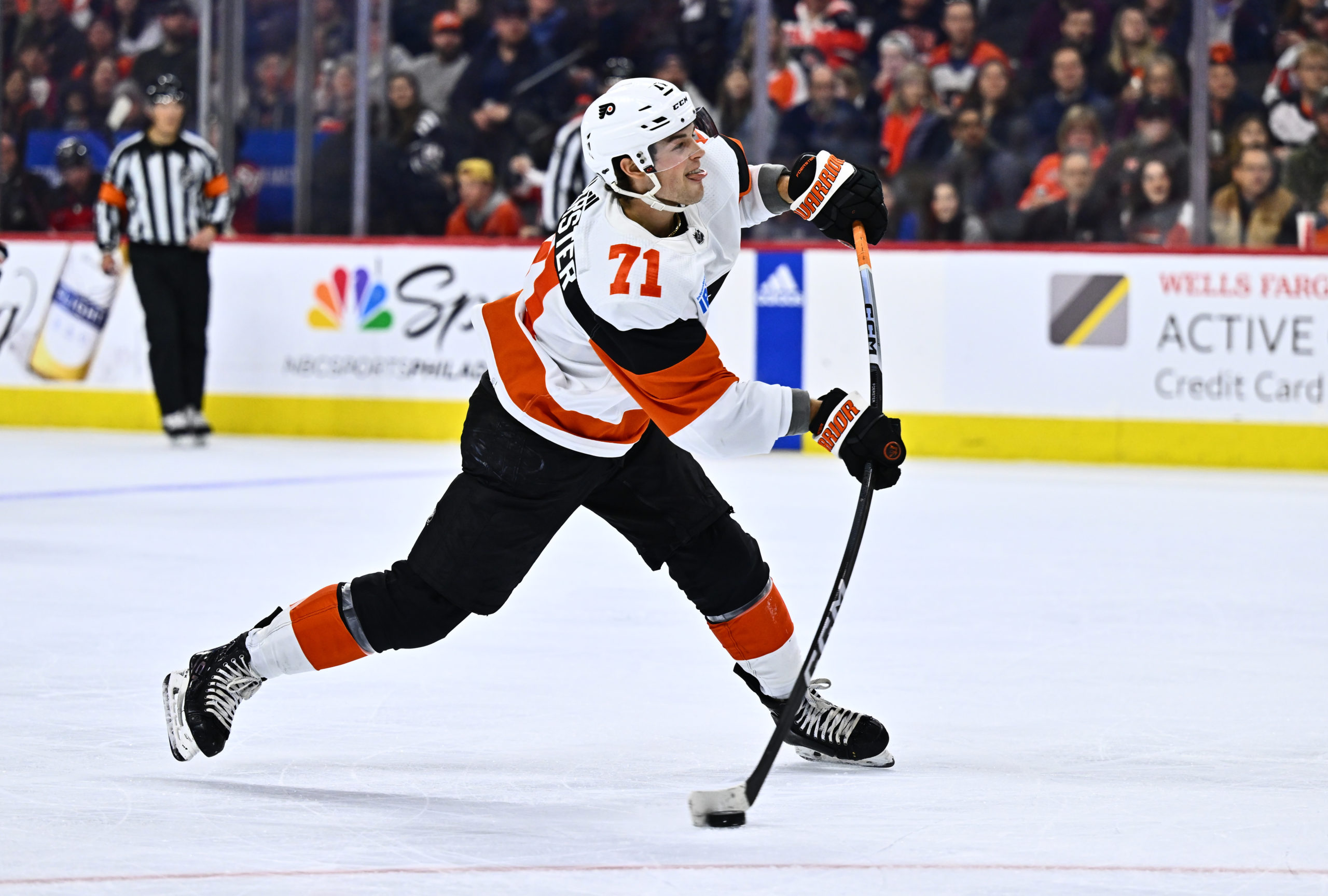


Top Goalie Profile Views
| Players | Team | |
|---|---|---|
| DYLAN GARAND |
 NYR NYR | |
| DEVON LEVI |
 EDM EDM | |
| JACOB FOWLER |
 MTL MTL | |
| JOSHUA RAVENSBERGEN |
 S.J S.J | |
| JAKUB DOBES |
MTL
| |
LINE COMBOS
| Frequency |
 FLA Players FLA Players
| |
|---|---|---|
| 21.5 | SANDIS VILMANIS EETU LUOSTARINEN ANTON LUNDELL | |
| 21.1 | CARTER VERHAEGHE SAM REINHART LARS ELLER | |
| 19.5 | MATTHEW TKACHUK BRADY TKACHUK SAM BENNETT | |
DobberHockey Podcasts

Keeping Karlsson: Short Shifts – NHL Frozen Frenzy Recap
Elan and Lewis recap the Frozen Frenzy as well as two big returns and more!
Keeping Karlsson: Delusions of Garandeur
Elan and Brian dive into the latest NHL hot streaks, cold streaks, line changes, outjuries, injuries, buy-lows and sell-highs to give you top notch tips in your fantasy hockey league

Fantasy Hockey Life: TiDy Takes Part 2
Last week, Victor Nuno and Ryan Downey broke down trades from our top tier dynasty league. This week, they consider some dynasty trades from other divisions. Have a listen! Our show is part of the Dobber Podcast Network and sponsored by Fantrax.com. Email [email protected] and ask to join our free discord. Join our Patreon at […]
Keeping Karlsson: Matchup Maximizer 2026/27 Week 3
Elan takes a look at the schedule for the upcoming weeks of NHL action and recommends players with good schedules that you should consider streaming in to win your head to head matchups.
Keeping Karlsson: Short Shifts – Sharks Looked Like Celebweenies
Elan recaps the major injuries, outjuries, game results and changed line combos that we’ve seen since Sunday’s mega-show.