

Analytics Advantage: Opportunity Knocks, Week 6: Does the Role Support the Points? Checking on Vilardi, Coyle, Drysdale, Landeskog, Barbashev, and More
Stas Pupkov
2026-11-06
We are now well over a month into the NHL season and approaching the make-or-break point for teams and players. This is when evaluations of the season to date, and what is still to come, will determine the fantasy championship potential for fantasy managers, so let's take a spin around the league to see where players should be added, where they should be avoided, and how their role impacts their (potential) production.
Do this first
• Add: Gabriel Vilardi in Winnipeg. First line and first PP unit at 66 percent of the power-play time over the last three games, on 44 percent of ESPN rosters, and the role supports more than the points so far.
• Defence: Jamie Drysdale in Philadelphia at 67 percent of the power-play time, on 13 percent of rosters, with four games next week.
• Deep leagues: Mason Marchment in San Jose at 67 percent of the power-play time, on 8 percent of rosters, with four games. Kasperi Kapanen in Edmonton at 77 percent, up from 47, on 9 percent of rosters, with four games.
• Be careful paying for: Gabriel Landeskog and Ivan Barbashev, whose points are running ahead of the minutes.
• Four games: Edmonton, Florida, Nashville, Philadelphia and San Jose. Two games: Boston, Carolina, Chicago, Pittsburgh and Seattle.
Teams have now played 14 to 18 games, so this is a good spot to ask a simple question: When a player’s points and role disagree, which one should you believe?
The new test: role against results
Points are the number everyone sees. But a role is what carries through the rest of the season, so this chart puts the job and the points together.
Take each skater’s ice time, power-play share, shots, and blocks through their team's 16th game. Those are the parts of a fantasy line that repeat. Then turn them into the fantasy points per game that kind of role has supported. That’s the pace, and it runs across the chart. The height is how far the skater’s actual points sit above or below it. This week’s chart uses every game so far, 14 to 18 per team, so it’s close to the game-16 cut the test used but not identical.
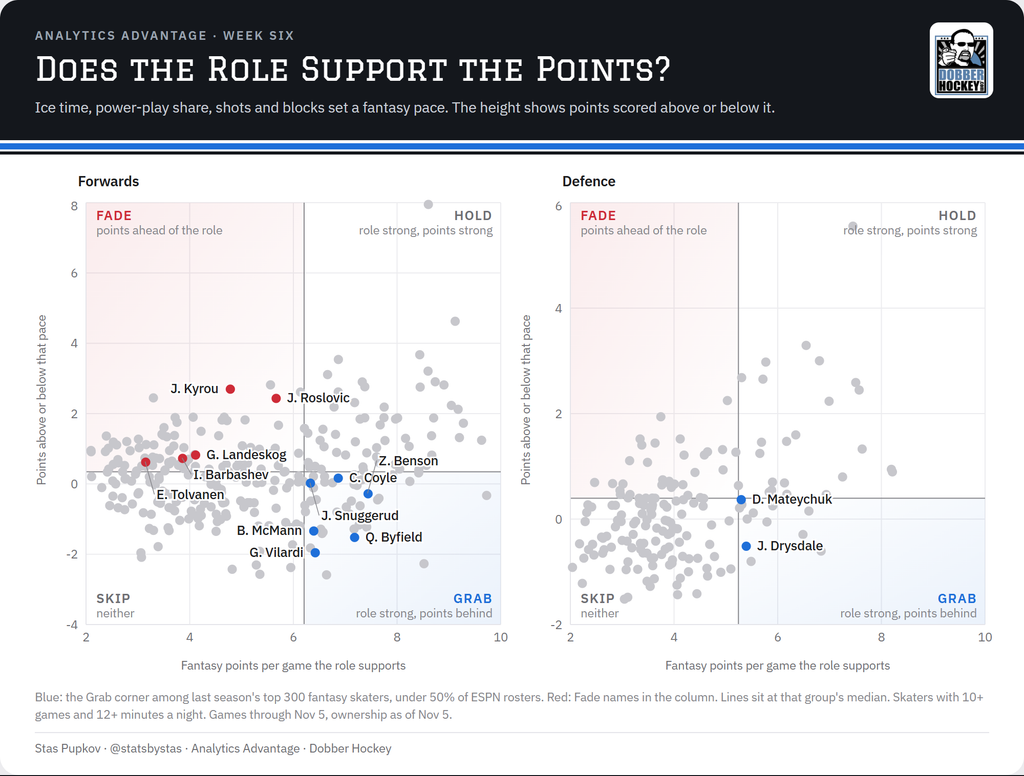
Figure 1: every skater’s role against results. Grab is a strong role with points behind it, Fade is points ahead of the role
That gives four groups. Grab is a strong role with points running behind it. Hold is a strong role with points to match, and it means no edge either way. Fade is points running ahead of the role. Skip is neither. These corners are about points against role, so they’re separate from the odds on the add card.
I built this on six past seasons, locked the rules, then ran it once on six other seasons held out of the build. Other tests this week had used those six seasons, but this pairing hadn’t.
Numbers are fantasy points per game (6 per goal, 4 per assist, 0.9 per shot, 1 per block, plus 2 per power-play point). The expected number uses only the skater’s points from the first 16 games (first-16) and last season’s points. The last column is the share of skaters in each group who beat that number. Each group’s average moved the same way in all six seasons, but plenty of single skaters didn’t.
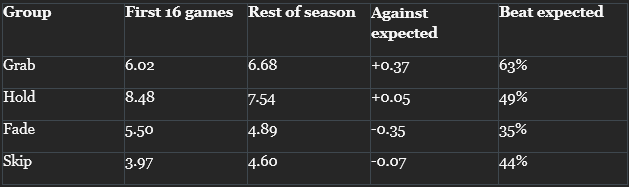
Hold drops the most because it starts the highest, so that’s mostly hot starts cooling off. Skip rises for the same reason in reverse. Grab beat Fade by 0.73 against expected. The 95 percent interval on that was 0.55 to 0.90, and by season it ran from 0.36 to 1.13.
There’s an important limit here. A lot of that gap is points running hot and cold. The expected number only sees points, so it can’t tell which points came from the role. So, after the test I ran a cleaner check. Within the same season and position, I grouped skaters whose first-16 points sat in the same half-point band and whose last-season points sat in the same one-point band, then split each group by role. That covered 556 skater-seasons. The stronger roles finished at 5.53 fantasy points per game and the weaker ones at 5.06. The 95 percent interval on that 0.47 gap was 0.28 to 0.64, and tighter bands cut it to 0.27. This check came after the test, so treat it as support and not a second confirmation. Adding role to a forecast built on points cut the miss by about 3 percent, so it helps, but it won’t settle any one player. This is also a forecast and not a cause, so it doesn’t mean more ice time alone would add the same points.
These are group rates. A single skater’s gap on this chart isn’t the bounce coming, because the group only came back 0.37. The test covered last season’s top 300 fantasy skaters, in 1,467 skater-seasons, so rookies are on the chart but weren’t tested.
Who sits in the Grab corner
Vilardi’s role supports 6.42 fantasy points per game, and the actual number is 4.46. Vilardi has played 17.9 minutes a night and has 66 percent of Winnipeg’s power-play time over the last three games.
Quinton Byfield is in a similar spot in Los Angeles, at 63 percent of the power-play time and 19.2 minutes a night, with 40 percent of rosters. Byfield’s pace is 7.18 and the actual is 5.66, in 12 games.
Bobby McMann is here too at 56 percent in Seattle, on 34 percent of rosters, but the Kraken play twice. Drysdale is the defence name, with 23.2 minutes a night and four Flyers games coming.
Who sits in the Fade corner
A Fade here is a run that’s ahead of the minutes. It isn’t a call to sell a star.
Landeskog has 15.0 minutes a night and 21 percent of Colorado’s power-play time over the last three games. Barbashev is at 15.8 minutes and 21 percent in Vegas. Eeli Tolvanen is at 12.5 minutes with the Rangers. All three are on about one-third of rosters.
Jordan Kyrou has 7.48 fantasy points per game on 14.4 minutes a night in Washington. But Kyrou is up to 63 percent of the power-play time over the last three games, and the Capitals split their units fairly evenly. If the minutes grow too, the role can catch up to the points, so that one is worth following.
Who’s on the ice for the chances at 5-on-5
The role chart is the main read this week. The next two sections add context. This chart is the standard on-ice view, with expected goals for and against per 60 at 5-on-5, for every skater with 100 or more minutes. These numbers are shared with linemates and depend on matchups, so they show where the chances happen around a skater.
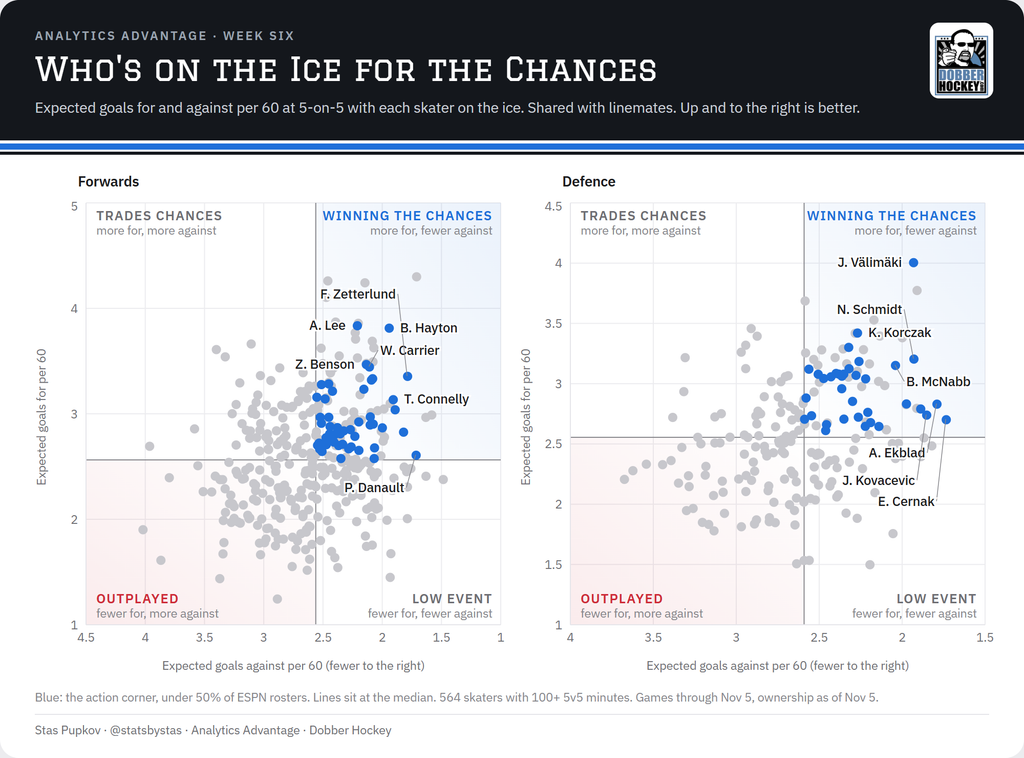
Figure 2: on-ice expected goals for and against at 5-on-5. Blue dots are in the top corner and on under 50 percent of ESPN rosters
Utah’s Barrett Hayton and Anders Lee are both over 3.8 expected goals for per 60. In Buffalo, Zach Benson is at 3.47 for and 2.13 against. On the back end, Carolina’s Juuso Valimaki is at 4.00 for and 1.93 against, in a small role.
This one is better as context than as a call. On the six seasons I built with, its corners were only 0.22 fantasy points per game apart, and it added nothing to a forecast built on points. So, it tells you whose minutes are going well, and the role chart tells you more about what comes next.
The expected goals here come from a simple shot-location model I built for in-season use. It tracked my full model at 0.997 on last season’s team shares.
Which shot jumps stay
If you’re in a league counting shots, one more thing came out of the same work. When a skater’s shots go up, some of that comes from more ice time and some from shooting more often per minute. Over the rest of the season, about 70 percent of the ice-time part stayed. Only about 30 percent of the per-minute part did. On six held-out seasons the ice-time part stayed better in all six for forwards and in four of six for defencemen.
Benson is the clean example. The shot rate has gone from 1.78 a game last season to 2.40 so far, with most of that from ice time. Anton Lundell has gone from 2.16 to 2.69 on less ice time, so by the same numbers more of that jump should fade.
This explains a jump better than it forecasts one. A plain rule of keeping about 40 percent of any shot jump did nearly as well.
The receipts
Of the 14 names from last week that have enough games to grade, 12 held their power-play role. Tyler Bertuzzi slipped to 47 percent in Chicago, from 73, and Dmitry Orlov dropped to 35 percent in San Jose. Four names need one more game.
Holding the role isn’t the same as scoring, though. Pavel Zacha, Charlie Coyle, Carter Verhaeghe and Luke Hughes each have four points in three games since. Marchment has none in three, and Viktor Arvidsson has one in four.
One correction. I found a data error in the cards this week. Players who joined the board after mid-October were missing their past seasons, and that also moved the line for who counted as a starter last season. With everyone back in, Elias Lindholm moves from the steady-starter group to the deep-league group, and Matt Coronato drops off the card, so last week’s bars for both were too high.
One of last week’s follows has turned into something. Emmitt Finnie is at 61 percent of Detroit’s power-play time over the last three games, up from 32, and is on 26 percent of rosters. That was 9 percent a week ago. Dylan Larkin is still out while Detroit looks for a trade.
Who to add this week
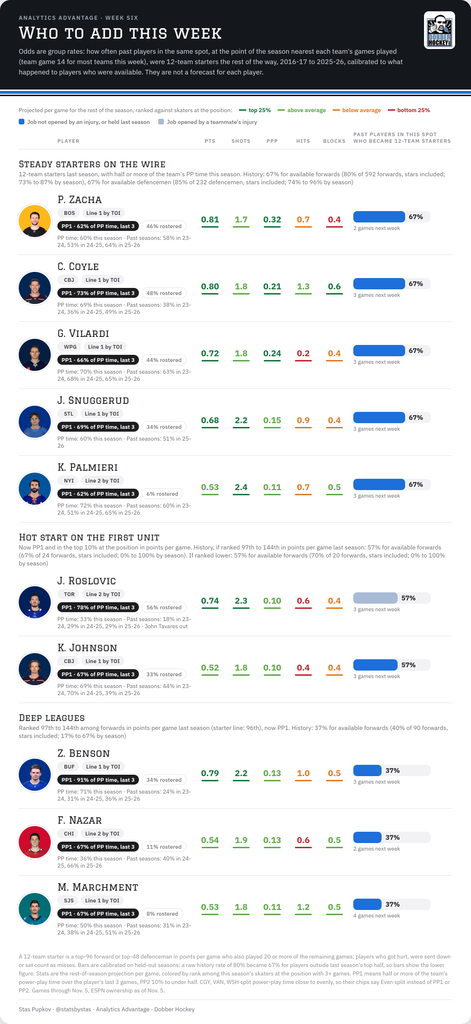
Figure 3: who to add this week, with the history odds for each player’s spot
Coyle has 73 percent of Columbus’s power-play time and is on 48 percent of rosters. Jimmy Snuggerud is at 69 percent in St. Louis and is on 34 percent. Zacha is still on the card, but Boston plays twice. Marchment is the deep-league pick, with the Sharks playing four.
Who just moved on the power play
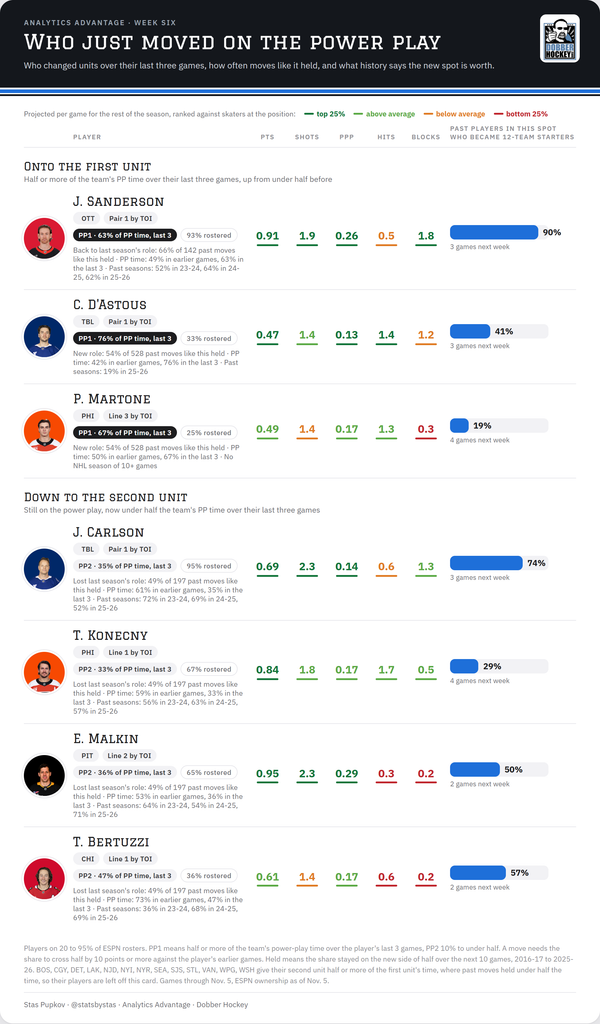
Figure 4: who moved onto or off the first unit, with how often moves like it held
Charle-Edouard D’Astous is at 76 percent of Tampa’s power-play time, up from 42, and is on 33 percent of rosters. Daily Faceoff still lists D’Astous as a seventh defenceman, but the shift data shows 17.0 minutes a night this season. John Carlson dropped to 35 percent from 61 on the same team.
Porter Martone is at 67 percent in Philadelphia, up from 50, with four games next week. Tyler Bertuzzi fell to 47 percent in Chicago, from 73, and the Blackhawks play twice. Travis Konecny and Evgeni Malkin both dropped too, at 33 and 36 percent.
Not on the cards
These names need a note the cards can’t show.
Kapanen is on 9 percent of rosters, which is under the cards’ cutoff. With Zach Hyman out, Kapanen has 77 percent of Edmonton’s power-play time, five points in the last five games and four games coming. Moves onto the first unit held 54 percent of the time across 528 past cases, and this job could end when Hyman returns.
Jack Roslovic is on the add card at 78 percent of Toronto’s power-play time, up from 27. But Roslovic also sits in the Fade corner, at 8.10 fantasy points per game on a 5.67 pace, and John Tavares has been upgraded to day to day and could return Saturday. So that one could change fast.
Trevor Connelly dropped to 41 percent in Vegas, from 56.
Injuries to watch
Nick Suzuki returned Thursday after missing six games. John Gibson is still being evaluated in Detroit, and Daniil Tarasov is in line for more starts. Miro Heiskanen missed Thursday’s game and could play Saturday. Brock Faber practiced Thursday for the first time since a skull fracture, with no return date yet.
This week
• Add: Vilardi, Coyle and Snuggerud with three games.
• Defence: Drysdale with four games.
• Deep leagues: Marchment and Kapanen with four games.
• Be careful paying for: Landeskog and Barbashev.
• Follow: Roslovic until Tavares is back, and Kyrou’s minutes.
Extra resources from Daily Faceoff, NHL.com, TSN and ESPN. Projections, history odds and expected goals are my own. Games through Nov. 5, ESPN ownership as of Nov. 5.
Related Posts

Starting Goalies









Top Skater Views
 ANA
 T.B
 SEA
 S.J


Top Goalie Profile Views
| Players | Team | |
|---|---|---|
| SEBASTIAN COSSA |
 UTA | |
| STUART SKINNER |
 WPG | |
| JACOB FOWLER |
 MTL | |
| DYLAN GARAND |
 NYR | |
| CARTER HART |
 VGK | |
LINE COMBOS
| Frequency |
 L.A Players | |
|---|---|---|
| 24.8 | ARTEMI PANARIN ALEX LAFERRIERE ADRIAN KEMPE | |
| 20.7 | COREY PERRY TREVOR MOORE QUINTON BYFIELD | |
| 19.5 | ERIK HAULA KENNY CONNORS JOEL ARMIA | |
DobberHockey Podcasts

Keeping Karlsson: Short Shifts – Big Fantasy News
Elan covers all the big fantasy news since last Sunday’s mega-show in a tight sub-30 minute Short Shift.
Keeping Karlsson: Farabee Sharp
Elan and Brian talk through unhappy players (and the players they’ll eventually leave behind), Calgary’s surprising success, top tier power-play performances, sell high opportunities and buy-low mirages.

Fantasy Hockey Life: Capitals and Ducks Prospects
This week Victor and Jesse check in on some prominent prospects for the Washington Capitals and the Anaheim Ducks. We cover Cole Hutson, Ilya Protas, Lynden Lakovic, Andrew Cristall, Terik Parascak, Ryan Chesley, Damian Clara, Roger McQueen, Stian Solberg, Herman Träff, Lucas Pettersson, and Maxim Massé. Have a listen! Our show is part of the […]
Keeping Karlsson: Matchup Maximizer 2026/27 Week 6
Elan takes a look at the schedule for the upcoming weeks of NHL action and recommends players with good schedules that you should consider streaming in to win your head to head matchups.
Keeping Karlsson: Short Shifts – Hellebuyck’s Debut, Larkin Fall Out, and Much More
Elan covers all the big news since last Sunday’s mega-show including Hellbuyck’s first game, Larkin’s absence and much more in this week’s episode of Short Shifts.